

ADD ANI AS A TRUSTED SOURCE
googleads
ANI Logo
Menu
Science

Rice husks can remove toxins from water

Washington D.C. [USA], May 7 (ANI): A recent study has observed that rice husk can effectively remove microcystin (a toxin released by harmful algal blooms) that are increasingly occurring in the Great Lakes and other freshwater lakes around the world.

ANI May 07, 2019 14:44 IST googleads

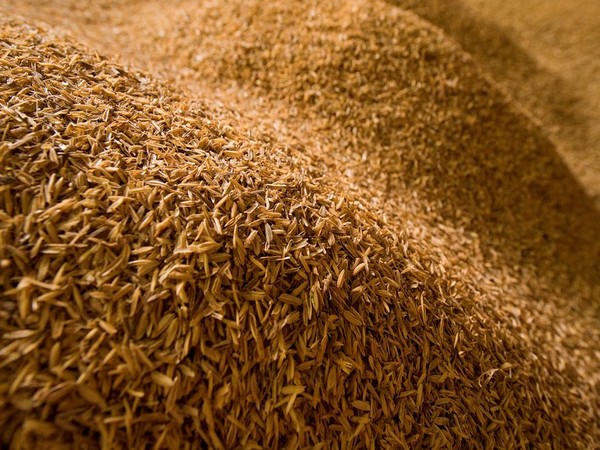
Representative image

Washington D.C. [USA], May 7 (ANI): A recent study has observed that rice husk can effectively remove microcystin (a toxin released by harmful algal blooms) that are increasingly occurring in the Great Lakes and other freshwater lakes around the world.
According to the study published in the journal Science of the Total Environment, rice husks can effectively remove microcystin from water, a finding that could have far-reaching implications for communities along the Great Lakes and across the developing world.
An abundant and inexpensive agricultural byproduct, rice husks have been investigated as a water purification solution in the past. However, this is the first time they have been shown to remove microcystin, the toxin released by harmful algal blooms.
"Delivering safe water is critical, and finding an economically viable solution to deliver safe water to people all over the world is going to be really important. The ability of this simple material to be powerful enough to address this issue is impressive," said lead researcher, Dr Jon Kirchhoff.
Researchers used organic rice husks that were treated with hydrochloric acid and heated to 250 degrees Celsius.
The rice husks were then dispersed in a series of water samples collected from Lake Erie harmful to measure how much of the toxin they could absorb.
Researchers found the rice husks removed more than 95 percent of microcystin.
Beyond their effectiveness, rice husks have a number of other appealing attributes that they're cheap.
Heating microcystin-laden rice husks to 560 degrees Celsius destroys the toxins and produces silica particles, which can be used in other applications.
The researchers are hopeful their discovery could be scaled up beyond the lab to develop a more environmentally friendly method for treating water that has been contaminated by harmful algal blooms or cheap but effective filtration systems for the developing world.
"We could potentially use this readily available material to purify water before it even gets into Lake Erie. There are engineering solutions that need to be done, but one of our dreams is to apply what we develop in our labs to provide safe drinking water," said co-researcher, Isailovic. (ANI)

Get the App

What to Read Next

Science

Researchers create method to detect landslides tsunamis

Researchers create method to detect landslides tsunamis

Researchers have developed a method for remotely detecting massive landslides within minutes of their occurrence and determining whether they are near open water and pose a tsunami hazard.

Read More
Science

Study reveals air pollution hides increases in rainfall

Study reveals air pollution hides increases in rainfall

We know that greenhouse gas emissions, such as carbon dioxide, should increase rainfall. The emissions warm the atmosphere, resulting in a one-two punch: warmer oceans make it easier for water to evaporate, and warmer air can store more water vapour, allowing more moisture to fall as rain. However, for long of the twentieth century, the data did not clearly reveal a rise in precipitation.

Read More
Science

Study finds way to produce high-purity boron nitride nanotubes

Study finds way to produce high-purity boron nitride nanotubes

Rice University researchers have developed a new method for producing high-purity boron nitride nanotubes. These hollow cylindrical structures can withstand temperatures up to 900 degrees Celsius (~1652 Fahrenheit) and are stronger than steel by weight.

Read More
Science

Study shows yield losses intensify when groundwater dwindles

Study shows yield losses intensify when groundwater dwindles

Researchers used three decades of data to illustrate how groundwater depletion, which many farmers rely on for irrigation, might affect food production in drought and drier climates.

Read More
Science

New study on water molecules contradicts textbook models

New study on water molecules contradicts textbook models

A team of researchers discovered that water molecules on the top of salt water are organised differently than previously assumed.

Read More
Science

Study explores origins of life using ancient hot springs

Study explores origins of life using ancient hot springs

Researchers use historic hot springs to investigate the beginnings of life on Earth.

Read More
Science

During drought, tomato plants use their roots to ration water

During drought, tomato plants use their roots to ration water

The purpose of exodermal suberin has long been unknown, but a new study published in Nature Plants by researchers at the University of California, Davis demonstrates that it fulfils the same function as endodermal suberin and that tomato plants are less able to cope with water stress without it. This knowledge could aid scientists in developing drought-resistant crops.

Read More
Science

Study finds immune system can influence behaviour

Study finds immune system can influence behaviour

According to a Yale-led study published in the journal Nature, the immune system plays a critical role in modifying our behaviour.

Read More
Science

Researchers give new insight into tumours

Researchers give new insight into tumours

Water cycling across membrane transporters is a characteristic of cell metabolism and has the potential to be very diagnostic in the characterisation of tumours and other illnesses.

Read More
Science

ISRO successfully tests fuel cell on PSLV-C58's orbital platform

ISRO successfully tests fuel cell on PSLV-C58's orbital platform

ISRO took to the social media platform X and posted, "POEM-3 on PSLV-C58: VSSC/ISRO successfully tests a 100 W class Polymer Electrolyte Membrane Fuel Cell on PSLV-C58's orbital platform, POEM3. https://isro.gov.in/FuelCellFlightTestedPSLVC58.html... Powering missions with efficiency and emitting only water, these fuel cells are the future for power production in space habitats".

Read More




