

ADD ANI AS A TRUSTED SOURCE
googleads
ANI Logo
Menu
Science

Rhinos dispersed across South, Central Asia via Tibet: Study

According to a study published in the journal "Communications Biology," the giant rhino, Paraceratherium, was dispersed across South and Central Asia via the Tibetan Plateau.

ANI Jan 02, 2023 22:44 IST googleads

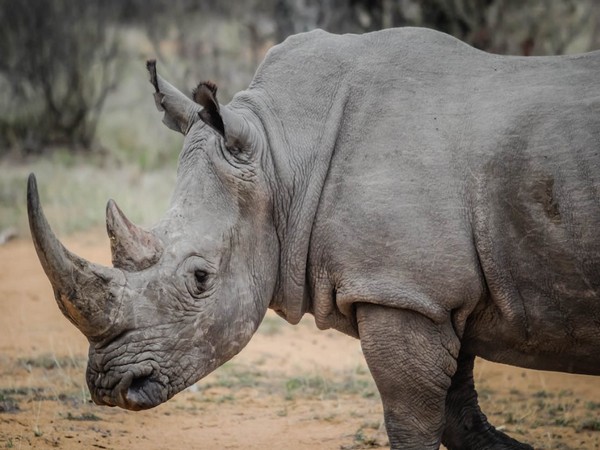
Representative Image

Beijing [China], January 2 (ANI): The giant rhino, Paraceratherium, was the largest land mammal that ever lived and was found primarily in Asia, particularly in China, Mongolia, Kazakhstan, and Pakistan. However, it was long unknown how this genus spread across Asia. A recent discovery has shed new light on this process.
According to a study published in the journal "Communications Biology," Prof. DENG Tao of the Chinese Academy of Sciences' Institute of Vertebrate Paleontology and Paleoanthropology (IVPP) and his collaborators from China and the United States recently reported a new species, Paraceratherium linxiaense sp. nov., which offers important clues to the dispersal of giant rhinos across Asia.
The new species' fossils comprise a completely preserved skull and mandible with their associated atlas, as well as an axis and two thoracic vertebrae from another individual. The fossils were recovered from the Late Oligocene deposits of the Linxia Basin in Gansu Province, China, which is located on the northeastern border of the Tibetan Plateau.
Phylogenetic analysis yielded a single most parsimonious tree, which places P. linxiaense as a derived giant rhino, within the monophyletic clade of the Oligocene Asian Paraceratherium. Within the Paraceratherium clade, the researchers' phylogenetic analysis produced a series of progressively more-derived species--from P. grangeri, through P. huangheense, P. asiaticum, and P. bugtiense--finally terminating in P. lepidum and P. linxiaense. P. linxiaense is at a high level of specialization, similar to P. lepidum, and both are derived from P. bugtiense.
Adaptation of the atlas and axis to the large body and long neck of the giant rhino already characterized P. grangeri and P. bugtiense, and was further developed in P. linxiaense, whose atlas is elongated, indicative of a long neck and higher axis with a nearly horizontal position for its posterior articular face. These features are correlated with a more flexible neck.
The giant rhino of western Pakistan is from the Oligocene strata, representing a single species, Paraceratherium bugtiense. On the other hand, the rest of the genus Paraceratherium, which is distributed across the Mongolian Plateau, northwestern China, and the area north of the Tibetan Plateau to Kazakhstan, is highly diversified.
The researchers found that all six species of Paraceratherium are sisters to Aralotherium and form a monophyletic clade in which P. grangeri is the most primitive, succeeded by P. huangheense and P. asiaticum.
The researchers were thus able to determine that, in the Early Oligocene, P. asiaticum dispersed westward to Kazakhstan and its descendant lineage expanded to South Asia as P. bugtiense. In the Late Oligocene, Paraceratherium returned northward, crossing the Tibetan area to produce P. lepidium to the west in Kazakhstan and P. linxiaense to the east in the Linxia Basin.
The researchers noted the aridity of the Early Oligocene in Central Asia at a time when South Asia was relatively moist, with a mosaic of forested and open landscapes. "Late Oligocene tropical conditions allowed the giant rhino to return northward to Central Asia, implying that the Tibetan region was still not uplifted as a high-elevation plateau," said Prof. DENG.
During the Oligocene, the giant rhino could obviously disperse freely from the Mongolian Plateau to South Asia along the eastern coast of the Tethys Ocean and perhaps through Tibet. The topographical possibility that the giant rhino crossed the Tibetan area to reach the Indian-Pakistani subcontinent in the Oligocene can also be supported by other evidence.
Up to the Late Oligocene, the evolution and migration from P. bugtiense to P. linxiaense and P. lepidum show that the "Tibetan Plateau" was not yet a barrier to the movement of the largest land mammal. (ANI)


Get the App

What to Read Next

Science

New method guides magnetism without magnets

New method guides magnetism without magnets

Researchers at Paul Scherrer Institute PSI have demonstrated an innovative method to control magnetism in materials using an energy-efficient electric field.

Read More
Science

Amphibians bounce-back from Earth’s greatest mass extinction

Amphibians bounce-back from Earth’s greatest mass extinction

Researchers at the University of Bristol discovered that ancient frog ancestors survived the biggest mass extinction of species by eating on freshwater prey that evaded terrestrial predators.

Read More
Science

New insights into how cancer evades the immune system: Study

New insights into how cancer evades the immune system: Study

Immunotherapy research primarily focuses on better recognition of cancer cells by the body's own immune system. Researchers at Amsterdam UMC and Moffitt Cancer Center have taken a different approach.

Read More
Science

Scientists use AI to better understand nanoparticles: Study

Scientists use AI to better understand nanoparticles: Study

A group of scientists has created a way to illuminate the dynamic behavior of nanoparticles, which are essential components in the production of pharmaceuticals, electronics, and industrial and energy-conversion materials.

Read More
Science

New device could allow you to taste cake in virtual reality

New device could allow you to taste cake in virtual reality

The 'e-Taste' interface employs sensors and wireless chemical dispensers to enable remote taste perception, often known as gestation. Field testing done by researchers at The Ohio State University confirmed the device's ability to digitally simulate a range of taste intensities, while still offering variety and safety for the user.

Read More
Science

Strand Life Sciences launches portal for rare disease diagnosis

Strand Life Sciences launches portal for rare disease diagnosis

Marking Rare Disease Day, Strand Life Sciences, a subsidiary of Reliance Industries and a leading genomics research company, has launched the StrandOmics Portal, an innovative digital platform designed to assist doctors in diagnosing rare diseases more efficiently.

Read More
Science

Study reveals impact of animals as architects of Earth

Study reveals impact of animals as architects of Earth

A new study led by Professor Gemma Harvey from Queen Mary University of London has revealed how hundreds of species shape the landscapes we depend on, from termite mounds visible from space to beavers creating wetlands and hippos carving drainage systems.

Read More
Science

Opposing arrows of time emerge from certain quantum systems

Opposing arrows of time emerge from certain quantum systems

Researchers at the University of Surrey made a thought-provoking discovery. A new study reveals that opposing arrows of time can theoretically emerge from certain quantum systems.

Read More
Science

COVID-19 severity may be predicted by White Blood Cell Count

COVID-19 severity may be predicted by White Blood Cell Count

A COVID-19 diagnosis is no longer as frightening as it used to be, thanks to developments in treatment choices. However, a new study reveals that leukocyte (white blood cell) count may now be used to identify who is more likely to develop more significant disease symptoms.

Read More
Science

Seals can essentially act as 'smart sensors': Study

Seals can essentially act as 'smart sensors': Study

A new study by marine biologists reports that seals can essentially act as 'smart sensors' for monitoring fish populations in the ocean's eerily dim 'twilight zone.'

Read More
Home About Us Our Products Advertise Contact Us Terms & Condition Privacy Policy

Copyright © aninews.in | All Rights Reserved.
