

ADD ANI AS A TRUSTED SOURCE
googleads
ANI Logo
Menu
Science

Rhesus monkeys are able to perceive their own heartbeats: Study

Mumbai (Maharashtra) [India], April 17 (ANI): A new research has found that rhesus macaques are able to perceive their own heartbeats.

ANI Apr 17, 2022 11:50 IST googleads

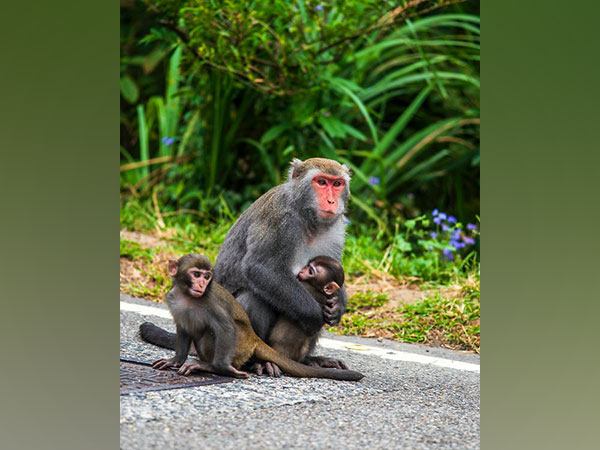
Representative image

Mumbai (Maharashtra) [India], April 17 (ANI): A new research has found that rhesus macaques are able to perceive their own heartbeats.
The research was published in the journal, 'Proceedings of the National Academy of Sciences'.
It creates a first-of-its-kind animal model of interoception. Interoception refers to the ability to sense the internal state of one's body, such as observing when your heart races or breathing quickens.
The findings provide an important model for future psychiatric and neuropsychiatric research as dysfunctions in interoception are associated with anxiety, depression, and Alzheimer's disease.
The study is part of a collaboration between Eliza Bliss-Moreau, associate professor of psychology at UC Davis and core scientist at the CNPRC and affective scientist Manos Tsakiris, from the Department of Psychology at Royal Holloway, led by Joey Charbonneau, a doctoral student in psychology at UC Davis and including Lara Maister, from Bangor University, Wales.
The team monitored four rhesus monkeys that sat in front of an infrared eye tracker displaying stimuli that bounced and generated a sound either synchronously or asynchronously (faster and slower) with the monkeys' heartbeats. Such an experiment capitalizes on the fact that monkeys and human babies look for longer at things that they find surprising or unexpected.
All four monkeys spent more time looking at the stimuli presented out of rhythm with their heartbeats compared to stimuli in rhythm with their heartbeats - suggesting that they sensed that the out of rhythm stimuli was surprising based on the expected rhythm of their heartbeats.
The results are consistent with evidence previously shown in human infants using a similar method. This provides the first behavioural evidence that rhesus monkeys have a human-like capacity to perceive their heartbeats and have an interoceptive sense. "Why do we care? Interoception, or the self-monitoring of your physiological systems, is involved in all aspects of human life," Bliss-Moreau said.
The ability to sense our internal state can indicate issues within the body that require our attention. Impaired interoceptive awareness is associated with less capacity to regulate emotions and increased susceptibility to mental health issues such as anxiety and depression.
"Interoception is hugely important for emotion regulation and mental health in adults, and yet we know very little about how it develops in early infancy or comes to be across evolutionary time," Tsakiris said. "The work we present here represents a first successful attempt to fill these gaps."
Deficits in interoception have also been linked to neurodegenerative diseases like Alzheimer's disease.
"This model will be used in future translational studies of neurodegenerative diseases, including Alzheimer's," Bliss-Moreau said. "If we can measure interoception, we can track it as a behavioural biomarker of disease progression."
The study provides insights into how the rhesus macaque model may be used to further our understanding of brain and body function.
"A next step is to study the mechanism by which interoception may be involved in different psychiatric and neuropsychiatric conditions," Tsakiris said. (ANI)


Get the App

What to Read Next

Science

New insights into how cancer evades the immune system: Study

New insights into how cancer evades the immune system: Study

Immunotherapy research primarily focuses on better recognition of cancer cells by the body's own immune system. Researchers at Amsterdam UMC and Moffitt Cancer Center have taken a different approach.

Read More
Science

Study reveals impact of animals as architects of Earth

Study reveals impact of animals as architects of Earth

A new study led by Professor Gemma Harvey from Queen Mary University of London has revealed how hundreds of species shape the landscapes we depend on, from termite mounds visible from space to beavers creating wetlands and hippos carving drainage systems.

Read More
Science

Opposing arrows of time emerge from certain quantum systems

Opposing arrows of time emerge from certain quantum systems

Researchers at the University of Surrey made a thought-provoking discovery. A new study reveals that opposing arrows of time can theoretically emerge from certain quantum systems.

Read More
Science

COVID-19 severity may be predicted by White Blood Cell Count

COVID-19 severity may be predicted by White Blood Cell Count

A COVID-19 diagnosis is no longer as frightening as it used to be, thanks to developments in treatment choices. However, a new study reveals that leukocyte (white blood cell) count may now be used to identify who is more likely to develop more significant disease symptoms.

Read More
Science

Seals can essentially act as 'smart sensors': Study

Seals can essentially act as 'smart sensors': Study

A new study by marine biologists reports that seals can essentially act as 'smart sensors' for monitoring fish populations in the ocean's eerily dim 'twilight zone.'

Read More
Science

'Creation of black holes without singularities through gravity'

'Creation of black holes without singularities through gravity'

Traditional black holes, as predicted by Albert Einstein's theory of General Relativity, contain what are known as singularities, i.e. points where the laws of physics break down. Identifying how singularities are resolved in the context of quantum gravity is one of the fundamental problems in theoretical physics. Now, a team of experts has described the creation of regular black holes from gravitational effects without the need for the existence of exotic matter required by some previous models.

Read More
Science

New technology enhances gravitational-wave detection: Study

New technology enhances gravitational-wave detection: Study

A team of physicists led by Jonathan Richardson of the University of California, Riverside, demonstrated how new optical technology can extend the detection range of gravitational-wave observatories such as the Laser Interferometer Gravitational-Wave Observatory, or LIGO, and pave the way for future observatories.

Read More
Science

Microbes help detoxify our atmosphere, says study 

Microbes help detoxify our atmosphere, says study 

Melbourne researchers have uncovered important new information on how microbes absorb huge amounts of carbon monoxide (CO) and assist in reducing levels of this deadly gas.

Read More
Science

Weather change linked to heightened risk of Salmonella outbreaks

Weather change linked to heightened risk of Salmonella outbreaks

According to new research from the University of Surrey, climate change has an impact on Salmonella spread. This study builds on prior work by the researchers, which discovered that weather change is contributing to the spread of deadly diarrhoeal illnesses.

Read More
Science

AI can reveals hidden hazards of chemical mixtures in rivers

AI can reveals hidden hazards of chemical mixtures in rivers

Artificial intelligence can provide important insights into how complex chemical mixes in rivers affect aquatic life, paving the path for more effective environmental protection.

Read More
Home About Us Our Products Advertise Contact Us Terms & Condition Privacy Policy

Copyright © aninews.in | All Rights Reserved.


