

ADD ANI AS A TRUSTED SOURCE
googleads
ANI Logo
Menu
Science

Researchers validate function of a particular brain region in mind-body communication

Washington [US], July 27 (ANI): Researchers have produced definitive evidence that a specific region in the brain, called the subthalamic nucleus, is critical to governing the mind's communication with the body's motor control system. The findings, stemming from innovative experiments with humans, could yield advances in treatment for Parkinson's disease.

ANI Jul 27, 2022 23:22 IST googleads

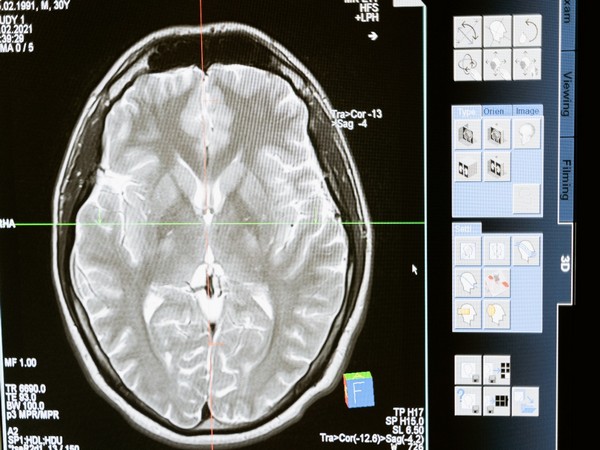
Representative image

Washington [US], July 27 (ANI): Researchers have produced definitive evidence that a specific region in the brain, called the subthalamic nucleus, is critical to governing the mind's communication with the body's motor control system. The findings, stemming from innovative experiments with humans, could yield advances in treatment for Parkinson's disease.
In experiments with humans, the researchers pinpointed the subthalamic nucleus as the region in the brain that communicates with the motor system to help the body stop an action. This communication is vital because it helps humans avoid surprises and react to potentially dangerous or unforeseen circumstances.
The subthalamic nucleus is a tiny grouping of cells that is part of the basal ganglia, which is a key circuit in controlling movement. The basal ganglia takes initial motor commands generated in the brain and either amplify or halt specific parts of those commands as they pass from the central nervous system to the spinal cord.
"You can think of the subthalamic nucleus as the core region in this 'halting' of extra, unwanted components of compound movements, as it is the last relay station before the output nuclei of the basal ganglia, which then communicates these commands to the wider motor system," says Jan Wessel, associate professor in the Department of Psychological and Brain Sciences at Iowa and the corresponding author on the study.
Previous research had indicated the subthalamic nucleus' role in this stage of brain-motor control communication, but the hypothesis had not been directly tested in humans until now. To do that, the researchers used some ingenious techniques. First, they recruited 20 patients who have Parkinson's disease, which affects motor control. These patients had implanted deep-brain stimulators, which the researchers used to activate or deactivate the subthalamic nucleus. They then tracked those changes to motor-control activity through a simple stop-action task, monitoring the brain-motor control responses through a technique called transcranial magnetic stimulation.
Parkinson's disease patients are treated regularly with deep-brain stimulation, but the addition of transcranial magnetic stimulation allowed the researchers to confirm the subthalamic nucleus' definitive role. Wessel partnered on the experiments with Jeremy Greenlee, professor and the Arnold H. Menezes Chair in the Department of Neurosurgery, who cares for patients with Parkinson's disease.
"Deep-brain stimulation is the only method to causally and systematically influence the activity of deeply embedded brain nuclei like the subthalamic nucleus in awake, behaving humans," says Wessel, also an associate professor in the Department of Neurology. "However, combining deep-brain stimulation with transcranial magnetic stimulation is a highly complicated and novel technical endeavor, especially in awake, behaving humans."
The subthalamic nucleus-motor control link is important, Wessel says, because it puts to rest a central question in the brain's communication with the body's motor system, especially how an initiated action is suddenly halted. But it has potential benefits to patients, too.
"The subthalamic nucleus is a key therapeutic target in Parkinson's disease," Wessel says. "Indeed, just like it was done for the patient sample in our study, implantation of stimulation electrodes into the subthalamic nucleus is a highly successful treatment option for the motoric symptoms of Parkinson's disease. Our study provides some mechanistic insights into this potential patient-care benefit."
The study, "A causal role for the human subthalamic nucleus in non-selective cortico-motor inhibition," was published online July 15 in the journal Current Biology. (ANI)


Get the App

What to Read Next

Science

New method guides magnetism without magnets

New method guides magnetism without magnets

Researchers at Paul Scherrer Institute PSI have demonstrated an innovative method to control magnetism in materials using an energy-efficient electric field.

Read More
Science

Strand Life Sciences launches portal for rare disease diagnosis

Strand Life Sciences launches portal for rare disease diagnosis

Marking Rare Disease Day, Strand Life Sciences, a subsidiary of Reliance Industries and a leading genomics research company, has launched the StrandOmics Portal, an innovative digital platform designed to assist doctors in diagnosing rare diseases more efficiently.

Read More
Science

COVID-19 severity may be predicted by White Blood Cell Count

COVID-19 severity may be predicted by White Blood Cell Count

A COVID-19 diagnosis is no longer as frightening as it used to be, thanks to developments in treatment choices. However, a new study reveals that leukocyte (white blood cell) count may now be used to identify who is more likely to develop more significant disease symptoms.

Read More
Science

Study finds connection between quantum theory, information theory

Study finds connection between quantum theory, information theory

"Our results have no clear or direct application right now. It's basic research that lays the foundation for future technologies in quantum information and quantum computers. There's enormous potential for complete discoveries in many different research fields," said Guilherme B Xavier, a researcher in quantum communication at Linkoping University, Sweden.

Read More
Science

Gut microbes play role in regulating stress responsiveness

Gut microbes play role in regulating stress responsiveness

A groundbreaking study has revealed the critical role of gut bacteria in regulating stress responses through interactions with the body's circadian rhythms.

Read More
Science

Biomarker may predict response to immunotherapy in liver cancer

Biomarker may predict response to immunotherapy in liver cancer

According to a preclinical study conducted by Weill Cornell Medicine researchers, it may soon be feasible to detect whether individuals with hepatocellular carcinoma, a kind of liver cancer, may benefit from immunotherapy.

Read More
Science

Study finds novel approach to treat neurological diseases

Study finds novel approach to treat neurological diseases

The matter of what causes complicated neurological disorders like Alzheimer's or multiple sclerosis continues to perplex scientists and doctors, with unknowns impeding early diagnosis and successful treatment.

Read More
Science

Alzheimer’s disease can damage brain in two phases

Alzheimer’s disease can damage brain in two phases

Alzheimer's disease may cause brain damage in two stages, according to new research supported by the National Institutes of Health (NIH) that uses sophisticated brain mapping methods.

Read More
Science

Study discovers how special immune cells stop metastatic cancer

Study discovers how special immune cells stop metastatic cancer

The majority of cancer deaths are caused by metastatic disease, which occurs when cancer spreads from the primary tumour to other areas of the body. and researchers understand how cancer cells escape the primary location to seed new tumours, it is unclear why some cancer cells produce new tumours decades later and others do not.

Read More
Science

Medication increases radiation therapy's efficacy for lung cancer

Medication increases radiation therapy's efficacy for lung cancer

A group of researchers from the University of Cincinnati has discovered a possible novel approach to enhance the efficacy of radiation therapy and enhance the prognosis of patients with lung cancer metastasizing to the brain.

Read More
Home About Us Our Products Advertise Contact Us Terms & Condition Privacy Policy

Copyright © aninews.in | All Rights Reserved.


