

ADD ANI AS A TRUSTED SOURCE
googleads
ANI Logo
Menu
Science

Researchers try to track the sources of plastic pollution

Washington D.C. [USA], Apr 9 (ANI): According to a recent study, focusing on rivers and river mouths can yield vital clues about how we might manage this ongoing plastic pollution crisis.

ANI Apr 09, 2019 19:09 IST googleads

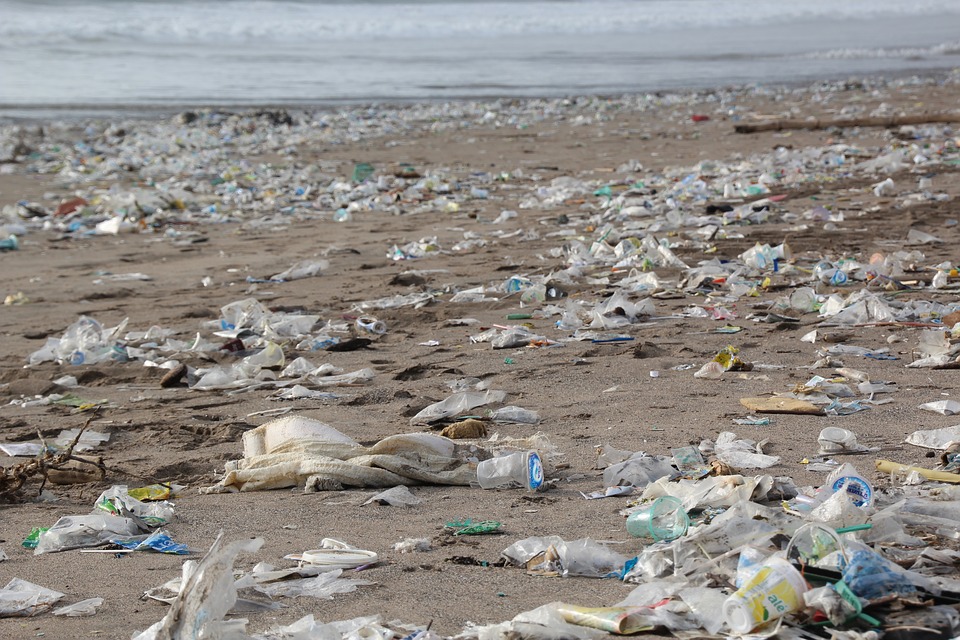
Representative image

Washington D.C. [USA], Apr 9 (ANI): According to a recent study, focusing on rivers and river mouths can yield vital clues about how we might manage this ongoing plastic pollution crisis.
Plastic pollution in the world's oceans is now widely recognised as a major global challenge - but we still know very little about how these plastics are actually reaching the sea.
‘The 100 Plastic Rivers’ project is engaging with scientists in more than 60 locations worldwide to sample water and sediment in rivers. The aim is to better understand how plastics are transported and transformed in rivers and how they accumulate in river sediments, where they create a long-lasting pollution legacy.
As part of the project, the researchers show a complex picture, with a huge diversity in types and sources of plastic in selected river estuaries in the UK and France.
 “Even if we all stopped using plastic right now, there would still be decades, if not centuries-worth of plastics being washed down rivers and into our seas. We're getting more and more aware of the problems this is causing in our oceans, but we are now only starting to look at where these plastics are coming from, and how they're accumulating in our river systems. We need to understand this before we can really begin to understand the scale of the risk that we're facing,” said Stefan Krause, lead researcher of the project.
First results of the project will be presented at the General Assembly of the European Geosciences Union (EGU), held in Vienna, Austria, from 7-12 April 2019. 
The programme analysed both primary microplastics, such as micro-beads used in cosmetics, and secondary microplastics - from larger plastic items that have broken down in the environment or fibres from clothing.
A key part of the project was to establish a standard method for the sampling and analysis of microplastics which can be used to provide an assessment of the plastic pollution of our river networks. The team produced a toolkit, with detailed instructions for sampling water and river sediments at locations where stream flow is known or measured and developed methods of automating and thus, objectifying the identification and analysis of microplastics.
The results of this initial survey showed a much wider variety of plastic types in the samples than had been anticipated. This shows that, even in relatively well-regulated countries like the UK and France, there are a variety of different sources contributing to a high concentration of microplastics in river systems. (ANI)

Get the App

What to Read Next

Science

AI can reveals hidden hazards of chemical mixtures in rivers

AI can reveals hidden hazards of chemical mixtures in rivers

Artificial intelligence can provide important insights into how complex chemical mixes in rivers affect aquatic life, paving the path for more effective environmental protection.

Read More
Science

Plastic pollution, seawater flooding effect on coastal plants

Plastic pollution, seawater flooding effect on coastal plants

Two of the planet's most urgent environmental stressors have the potential to affect the development and reproductive production of plants found along the world's coasts, according to new research.

Read More
Science

Study tracks air pollution, reveals demographic disparities

Study tracks air pollution, reveals demographic disparities

There are considerable variances in how much people are exposed to air pollution, according to a new study co-authored by MIT researchers that considers everyday mobility.

Read More
Science

Plastic waste can be converted to electronic devices

Plastic waste can be converted to electronic devices

The University of Delaware and the Argonne National Laboratory have developed a chemical process that converts Styrofoam into the high-value conducting polymer PEDOT:PSS. The researchers show how improved plastic trash may be successfully integrated into functional electronic devices such as silicon-based hybrid solar cells and organic electrochemical transistors.

Read More
Science

Study finds biodiversity is key to better mental health

Study finds biodiversity is key to better mental health

A study by King's College London found that spaces with a variety of natural features are associated with better mental health than spaces with less natural diversity.

Read More
Science

Climate policies and children's health

Climate policies and  children's health

A recent study suggests that efforts to limit carbon dioxide (CO2) emissions from motor vehicles, along with investments in electric vehicles and public transit, would reduce air pollution and have a significant impact on children's health. They'd also save money.

Read More
Science

Air pollution related to higher hospitalisations

Air pollution related to higher hospitalisations

Short and long-term exposure to fine particulate matter (PM2.5) air pollution is linked to an increased risk of hospitalisation for serious heart and lung problems, according to two major US studies published in The British Medical Journal.

Read More
Science

Study reveals air pollution hides increases in rainfall

Study reveals air pollution hides increases in rainfall

We know that greenhouse gas emissions, such as carbon dioxide, should increase rainfall. The emissions warm the atmosphere, resulting in a one-two punch: warmer oceans make it easier for water to evaporate, and warmer air can store more water vapour, allowing more moisture to fall as rain. However, for long of the twentieth century, the data did not clearly reveal a rise in precipitation.

Read More
Science

Language, culture can alter how brain processes emotional faces

Language, culture can alter how brain processes emotional faces

Understanding body language is an important aspect of communication. Humans are frequently considered to be able to perceive other people's emotions innately, but there is rising evidence that this ability is impacted by people's culturally shared knowledge of emotions.

Read More
Science

Study finds temperature influence microbial competition in rivers

Study finds temperature influence microbial competition in rivers

The finding suggests that rivers may offer a kind of defence against the spread of ARGs in wastewater. It was also contrary to what the researchers expected.

Read More
Home About Us Our Products Advertise Contact Us Terms & Condition Privacy Policy

Copyright © aninews.in | All Rights Reserved.




