

ADD ANI AS A TRUSTED SOURCE
googleads
ANI Logo
Menu
Science

Researchers reveal how filaments form coiled shapes

Washington [US], September 27 (ANI): The ability of E. coli and other bacteria to travel has long been a mystery, but it has now been resolved by researchers from the University of Virginia School of Medicine and its associates.

ANI Sep 27, 2022 20:16 IST googleads

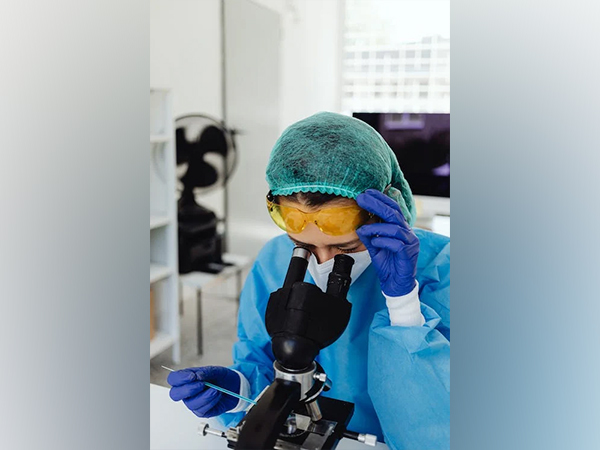
Representative Image

Washington [US], September 27 (ANI): The ability of E. coli and other bacteria to travel has long been a mystery, but it has now been resolved by researchers from the University of Virginia School of Medicine and its associates.
Using their long, threadlike appendages as makeshift propellers, bacteria move ahead by coiling them into corkscrew forms. The "propellers" are formed of a single protein, thus experts are confused as to how precisely they accomplish this.
An international team led by UVA's Edward H. Egelman, PhD, a leader in the field of high-tech cryo-electron microscopy (cryo-EM), has cracked the case. The researchers used cryo-EM and advanced computer modeling to reveal what no traditional light microscope could see: the strange structure of these propellers at the level of individual atoms.
"While models have existed for 50 years for how these filaments might form such regular coiled shapes, we have now determined the structure of these filaments in atomic detail," said Egelman, of UVA's Department of Biochemistry and Molecular Genetics. "We can show that these models were wrong, and our new understanding will help pave the way for technologies that could be based upon such miniature propellers."
Blueprints for Bacteria's 'Supercoils'
Different bacteria have one or many appendages known as a flagellum, or, in the plural, flagella. A flagellum is made of thousands of subunits, but all these subunits are exactly the same. You might think that such a tail would be straight, or at best a bit flexible, but that would leave the bacteria unable to move. That's because such shapes can't generate thrust. It takes a rotating, corkscrew-like propeller to push a bacterium forward. Scientists call the formation of this shape "supercoiling," and now, after more than 50 years, they understand how bacteria do it.
Using cryo-EM, Egelman and his team found that the protein that makes up the flagellum can exist in 11 different states. It is the precise mixture of these states that causes the corkscrew shape to form.
It has been known that the propeller in bacteria is quite different than similar propellers used by hearty one-celled organisms called archaea. Archaea are found in some of the most extreme environments on Earth, such as in nearly boiling pools of acid, the very bottom of the ocean and in petroleum deposits deep in the ground.
Egelman and colleagues used cryo-EM to examine the flagella of one form of archaea, Saccharolobus islandicus, and found that the protein forming its flagellum exists in 10 different states. While the details were quite different than what the researchers saw in bacteria, the result was the same, with the filaments forming regular corkscrews. They conclude that this is an example of "convergent evolution" - when nature arrives at similar solutions via very different means. This shows that even though bacteria and archaea's propellers are similar in form and function, the organisms evolved those traits independently.
"As with birds, bats and bees, which have all independently evolved wings for flying, the evolution of bacteria and archaea has converged on a similar solution for swimming in both," said Egelman, whose prior imaging work saw him inducted into the National Academy of Sciences, one of the highest honors a scientist can receive. "Since these biological structures emerged on Earth billions of years ago, the 50 years that it has taken to understand them may not seem that long." (ANI)


Get the App

What to Read Next

Science

Scientists use AI to better understand nanoparticles: Study

Scientists use AI to better understand nanoparticles: Study

A group of scientists has created a way to illuminate the dynamic behavior of nanoparticles, which are essential components in the production of pharmaceuticals, electronics, and industrial and energy-conversion materials.

Read More
Science

Discovery of unexpected collagen structure to influence research

Discovery of unexpected collagen structure to influence research

Collagen, the body's most abundant protein, has long been considered a predictable structural component of tissues.

Read More
Science

Bacterial vaccine demonstrates potential as cancer treatment

Bacterial vaccine demonstrates potential as cancer treatment

Columbia researchers developed probiotic bacteria that train the immune system to eliminate cancer cells, paving the way for a new class of cancer vaccinations that take advantage of bacteria's innate tumour-targeting abilities. These microbial cancer vaccines can be tailored to each person's specific original tumour and metastases, perhaps preventing future recurrences.

Read More
Science

Researchers shed light on possible endosymbiosis

Researchers shed light on possible endosymbiosis

Endosymbiosis is a remarkable biological phenomenon in which one creature resides within another. Such an unconventional partnership is usually advantageous to both parties. Even in human bodies, we find evidence of such cohabitation: mitochondria, the cells' powerhouses, originated from an ancient endosymbiosis. Bacteria long ago invaded and colonized other cells. This coexistence created the groundwork for mitochondria, which are found in the cells of plants, animals, and fungi.

Read More
Science

Study: Role of tRNA modifying enzyme in brain function

Study: Role of tRNA modifying enzyme in brain function

A pioneering study undertaken by a Kumamoto University research team shed light on the crucial role of TRMT10A, a tRNA methylation enzyme, in sustaining brain function. The findings show how TRMT10A deficiency reduces specific transfer RNA (tRNA) levels in the brain, altering protein synthesis and affecting synapse structure and function.

Read More
Science

Study gives insights into possible cause of Alzheimer’s disease

Study gives insights into possible cause of Alzheimer’s disease

Researchers at Case Western Reserve University will investigate the possibility that specific brain proteins are involved in the onset of Alzheimer's disease.

Read More
Science

Researchers discover molecular mechanism for bacterial infection

Researchers discover molecular mechanism for bacterial infection

Researchers at Virginia Tech have discovered how bacteria change molecules in order to infect their host.

Read More
Science

Researchers give more insight into heat perception in humans

Researchers give more insight into heat perception in humans

The Medical University of Vienna's research has significantly advanced our knowledge of how humans perceive heat. A group of scientists has discovered a particular type of cell structure involved in heat recognition.

Read More
Science

Weight loss could reduce chances of severe infections in people

Weight loss could reduce chances of severe infections in people

According to new research, weight loss therapies may lower the risk of severe flu cases and other infections in patients with diabetes.

Read More
Science

'Cloaked' proteins deliver cancer-killing therapeutics into cells

'Cloaked' proteins deliver cancer-killing therapeutics into cells

Researchers at Cornell University have created a generalized method to "cloak" proteins, which may allow for the recycling of materials like antibodies for biological research and therapeutic applications.

Read More
Home About Us Our Products Advertise Contact Us Terms & Condition Privacy Policy

Copyright © aninews.in | All Rights Reserved.


