

ADD ANI AS A TRUSTED SOURCE
googleads
ANI Logo
Menu
Science

Researchers reveal 'good bacteria' in breast milk changes over time

Montreal [Canada], February 23 (ANI): The cocktail of beneficial bacteria passed from mother to infant through breast milk changes significantly over time and could act as a daily booster shot for infant immunity and metabolism, according to the findings of new research.

ANI Feb 23, 2021 22:56 IST googleads

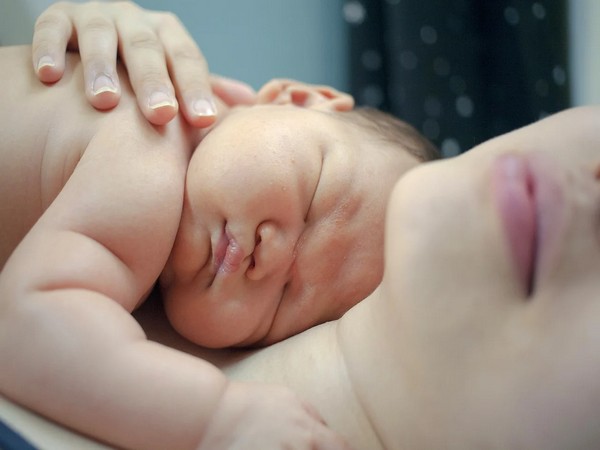
Representative image

Montreal [Canada], February 23 (ANI): The cocktail of beneficial bacteria passed from mother to infant through breast milk changes significantly over time and could act as a daily booster shot for infant immunity and metabolism, according to the findings of new research.
The research, conducted by scientists from Montreal and Guatemala and published in Frontiers in Microbiology, has important implications for infant development and health.
Researchers discovered a range of microbiome species never before identified in human milk. Until now, relatively little was known about the role microbiome bacteria play in breast milk. These bacteria are thought to protect the infant gastrointestinal tract and improve aspects of long-term health, such as allergy prevention.
"Some bacterial species we observed in our sample breast milk had a common function in destroying foreign substances or xenobiotics and could play a role in protection against toxins and pollutants," says co-author Emmanuel Gonzalez, a bioinformatics specialist at McGill University. The discovery sheds light on how mothers help lay the foundation for infant immunity.
To learn more about the human milk microbiome, the scientists analysed breast milk samples using high-resolution imaging technology, originally pioneered by McGill University and the University of Montreal to detect bacteria on the International Space Station.
They analysed breast milk samples of Mam-Mayan mothers living in eight remote rural communities in the Western Highlands of Guatemala. This gave them a unique window to observe the human milk microbiome over time, specifically between early and late lactation (6-46 days versus 109-184 days).
Unlike most mothers in North America, nearly all Mam-Mayan mothers breastfeed for the World Health Organisation's (WHO) recommended period of six months. In North America, only 26 per cent of mothers do so. "This longer feeding time allowed us to observe important changes in the bacteria provided to infants over time, which could impact long-term health," says Gonzalez.
The genomic technology used by the scientists revealed a range of microbiome species shared among Mam-Mayan mothers, providing a glimpse of a diverse community of bacteria being passed on to infants.
"Studying microbiomes of diverse communities is important in order to understand the variation present in humans," says co-author Kristine Koski, an Associate Professor in the School of Human Nutrition at McGill. "Most human milk microbiome studies have been conducted with mothers from high-income countries, generating an incomplete picture of the important bacteria passed to infants during early development."(ANI)


Get the App

What to Read Next

Science

New method guides magnetism without magnets

New method guides magnetism without magnets

Researchers at Paul Scherrer Institute PSI have demonstrated an innovative method to control magnetism in materials using an energy-efficient electric field.

Read More
Science

Amphibians bounce-back from Earth’s greatest mass extinction

Amphibians bounce-back from Earth’s greatest mass extinction

Researchers at the University of Bristol discovered that ancient frog ancestors survived the biggest mass extinction of species by eating on freshwater prey that evaded terrestrial predators.

Read More
Science

New insights into how cancer evades the immune system: Study

New insights into how cancer evades the immune system: Study

Immunotherapy research primarily focuses on better recognition of cancer cells by the body's own immune system. Researchers at Amsterdam UMC and Moffitt Cancer Center have taken a different approach.

Read More
Science

Scientists use AI to better understand nanoparticles: Study

Scientists use AI to better understand nanoparticles: Study

A group of scientists has created a way to illuminate the dynamic behavior of nanoparticles, which are essential components in the production of pharmaceuticals, electronics, and industrial and energy-conversion materials.

Read More
Science

New device could allow you to taste cake in virtual reality

New device could allow you to taste cake in virtual reality

The 'e-Taste' interface employs sensors and wireless chemical dispensers to enable remote taste perception, often known as gestation. Field testing done by researchers at The Ohio State University confirmed the device's ability to digitally simulate a range of taste intensities, while still offering variety and safety for the user.

Read More
Science

Study reveals impact of animals as architects of Earth

Study reveals impact of animals as architects of Earth

A new study led by Professor Gemma Harvey from Queen Mary University of London has revealed how hundreds of species shape the landscapes we depend on, from termite mounds visible from space to beavers creating wetlands and hippos carving drainage systems.

Read More
Science

Opposing arrows of time emerge from certain quantum systems

Opposing arrows of time emerge from certain quantum systems

Researchers at the University of Surrey made a thought-provoking discovery. A new study reveals that opposing arrows of time can theoretically emerge from certain quantum systems.

Read More
Science

COVID-19 severity may be predicted by White Blood Cell Count

COVID-19 severity may be predicted by White Blood Cell Count

A COVID-19 diagnosis is no longer as frightening as it used to be, thanks to developments in treatment choices. However, a new study reveals that leukocyte (white blood cell) count may now be used to identify who is more likely to develop more significant disease symptoms.

Read More
Science

Seals can essentially act as 'smart sensors': Study

Seals can essentially act as 'smart sensors': Study

A new study by marine biologists reports that seals can essentially act as 'smart sensors' for monitoring fish populations in the ocean's eerily dim 'twilight zone.'

Read More
Science

New technology enhances gravitational-wave detection: Study

New technology enhances gravitational-wave detection: Study

A team of physicists led by Jonathan Richardson of the University of California, Riverside, demonstrated how new optical technology can extend the detection range of gravitational-wave observatories such as the Laser Interferometer Gravitational-Wave Observatory, or LIGO, and pave the way for future observatories.

Read More
Home About Us Our Products Advertise Contact Us Terms & Condition Privacy Policy

Copyright © aninews.in | All Rights Reserved.


