

ADD ANI AS A TRUSTED SOURCE
googleads
ANI Logo
Menu
Science

Researchers reveal female monkeys actively lower social network with age

According to new research, female rhesus macaques "actively reduce" their social networks and prioritise friends and family as they age.

ANI Nov 30, 2022 23:42 IST googleads

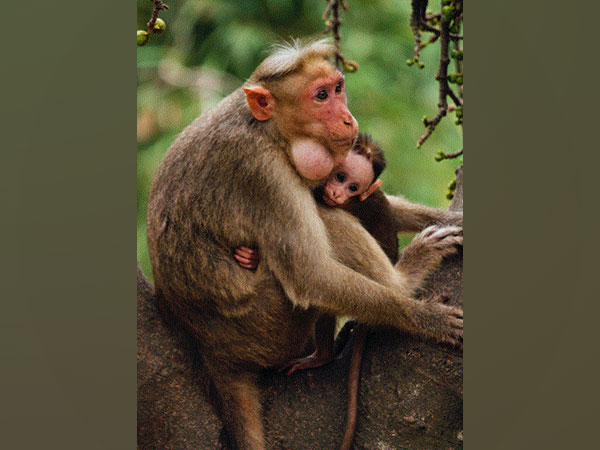
Representative image

Washington [US], November 30 (ANI): According to new research, female rhesus macaques "actively reduce" their social networks and prioritise friends and family as they age.
Having fewer friends in later life has been seen as harmful, including among humans.
But the new study shows female macaques become increasingly selective, focussing more on relatives and long-standing friendships.
The results show females aren't shunned in later life - the changes are driven by the females themselves.
The research - by the University of Exeter, Arizona State University, New York University and the University of Pennsylvania - was carried out on Cayo Santiago, also known as Monkey Island, off Puerto Rico.
"This pattern of narrowing social networks with age is common in humans," said Professor Lauren Brent, from Exeter's Centre for Research in Animal Behaviour.
"Our study offers the most conclusive evidence to date that social selectivity is not unique to humans, and therefore might have deeper evolutionary underpinnings."
The study used eight years of data on more than 200 macaques, seeing how the social lives of each individual changed.
By ruling out other explanations such as the death of partners, the researchers found clear evidence of social selectivity by females.
"There are many possible reasons why macaques become more socially selective with age," said Dr Erin Siracusa, also from the University of Exeter.
"For example, the benefits of social interactions might change with time. Young macaques might benefit from a wide social group that can help them explore and find potential mates.
"For older macaques, it might be easier and safer - in terms of everything from conflict to disease transmission - to stick with family and existing friends.
"New relationships also require more mental effort, so while we see no decline in time spent socialising, older macaques might save mental energy by shrinking their network."
Long-term monitoring of the macaques on Cayo Santiago is made possible by the Caribbean Primate Research Center, and this study was funded by the National Institute of Health.
The paper, published in the journal Proceedings of the National Academy of Sciences, is entitled: "Within-individual changes reveal increasing social selectivity with age in rhesus macaques." (ANI)


Get the App

What to Read Next

Science

New method guides magnetism without magnets

New method guides magnetism without magnets

Researchers at Paul Scherrer Institute PSI have demonstrated an innovative method to control magnetism in materials using an energy-efficient electric field.

Read More
Science

Amphibians bounce-back from Earth’s greatest mass extinction

Amphibians bounce-back from Earth’s greatest mass extinction

Researchers at the University of Bristol discovered that ancient frog ancestors survived the biggest mass extinction of species by eating on freshwater prey that evaded terrestrial predators.

Read More
Science

New insights into how cancer evades the immune system: Study

New insights into how cancer evades the immune system: Study

Immunotherapy research primarily focuses on better recognition of cancer cells by the body's own immune system. Researchers at Amsterdam UMC and Moffitt Cancer Center have taken a different approach.

Read More
Science

Scientists use AI to better understand nanoparticles: Study

Scientists use AI to better understand nanoparticles: Study

A group of scientists has created a way to illuminate the dynamic behavior of nanoparticles, which are essential components in the production of pharmaceuticals, electronics, and industrial and energy-conversion materials.

Read More
Science

New device could allow you to taste cake in virtual reality

New device could allow you to taste cake in virtual reality

The 'e-Taste' interface employs sensors and wireless chemical dispensers to enable remote taste perception, often known as gestation. Field testing done by researchers at The Ohio State University confirmed the device's ability to digitally simulate a range of taste intensities, while still offering variety and safety for the user.

Read More
Science

Strand Life Sciences launches portal for rare disease diagnosis

Strand Life Sciences launches portal for rare disease diagnosis

Marking Rare Disease Day, Strand Life Sciences, a subsidiary of Reliance Industries and a leading genomics research company, has launched the StrandOmics Portal, an innovative digital platform designed to assist doctors in diagnosing rare diseases more efficiently.

Read More
Science

Study reveals impact of animals as architects of Earth

Study reveals impact of animals as architects of Earth

A new study led by Professor Gemma Harvey from Queen Mary University of London has revealed how hundreds of species shape the landscapes we depend on, from termite mounds visible from space to beavers creating wetlands and hippos carving drainage systems.

Read More
Science

Opposing arrows of time emerge from certain quantum systems

Opposing arrows of time emerge from certain quantum systems

Researchers at the University of Surrey made a thought-provoking discovery. A new study reveals that opposing arrows of time can theoretically emerge from certain quantum systems.

Read More
Science

COVID-19 severity may be predicted by White Blood Cell Count

COVID-19 severity may be predicted by White Blood Cell Count

A COVID-19 diagnosis is no longer as frightening as it used to be, thanks to developments in treatment choices. However, a new study reveals that leukocyte (white blood cell) count may now be used to identify who is more likely to develop more significant disease symptoms.

Read More
Science

Seals can essentially act as 'smart sensors': Study

Seals can essentially act as 'smart sensors': Study

A new study by marine biologists reports that seals can essentially act as 'smart sensors' for monitoring fish populations in the ocean's eerily dim 'twilight zone.'

Read More
Home About Us Our Products Advertise Contact Us Terms & Condition Privacy Policy

Copyright © aninews.in | All Rights Reserved.
