

ADD ANI AS A TRUSTED SOURCE
googleads
ANI Logo
Menu
Science

Researchers reveal bacteria can generate electricity from methane

Houlahan (Nijmegen) [Netherlands], April 13 (ANI): Researchers from Radboud University have demonstrated that methane-consuming bacteria generate power in the lab. Generating power while purifying the environment of greenhouse gases should be achievable using bacteria.

ANI Apr 13, 2022 19:52 IST googleads

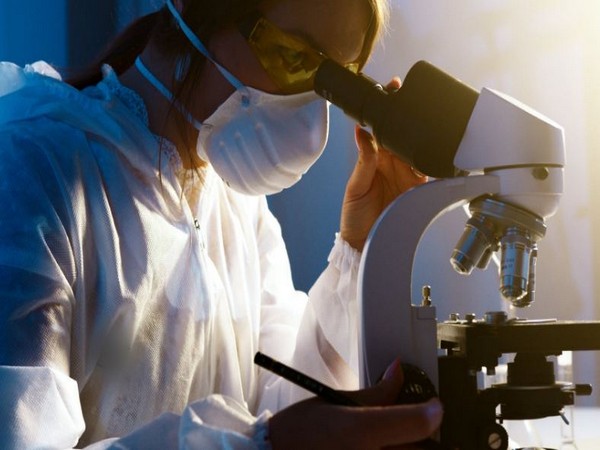
Representative image

Houlahan (Nijmegen) [Netherlands], April 13 (ANI): Researchers from Radboud University have demonstrated that methane-consuming-bacteria">methane-consuming bacteria generate power in the lab. Generating power while purifying the environment of greenhouse gases should be achievable using bacteria.
The study was published in the journal. 'Frontiers in Microbiology.
The bacteria, Candidatus Methanoperedens, used methane to grow and naturally occur in freshwaters such as ditches and lakes.
In the Netherlands, the bacteria mostly thrive in locations where the surface and groundwater are contaminated with nitrogen, as they require nitrate to break down methane.
The researchers initially wanted to know more about the conversion processes occurring in the microorganism. In addition, they were also curious whether it would be possible to use it to generate power.
"This could be very useful for the energy sector", said microbiologist and author Cornelia Welte.
"In the current biogas installations, methane is produced by microorganisms and subsequently burnt, which drives a turbine, thus generating power. Less than half of the biogas is converted into power, and this is the maximum achievable capacity. We want to evaluate whether we can do better-using microorganisms," she added.
Fellow microbiologists from Nijmegen have previously shown that it is possible to generate power using anammox bacteria that use ammonium during the process instead of methane.
"The process in these bacteria is basically the same", said microbiologist Heleen Ouboter.
"We create a kind of battery with two terminals, where one of these is a biological terminal and the other one is a chemical terminal. We grow the bacteria on one of the electrodes, to which the bacteria donate electrons resulting from the conversion of methane," she added.
Through this approach, the researchers managed to convert 31 per cent of the methane into electricity, but they aim at higher efficiencies. "We will continue focusing on improving the system", Welte concluded. (ANI)


Get the App

What to Read Next

Science

Gut microbes play role in regulating stress responsiveness

Gut microbes play role in regulating stress responsiveness

A groundbreaking study has revealed the critical role of gut bacteria in regulating stress responses through interactions with the body's circadian rhythms.

Read More
Science

Bacterial vaccine demonstrates potential as cancer treatment

Bacterial vaccine demonstrates potential as cancer treatment

Columbia researchers developed probiotic bacteria that train the immune system to eliminate cancer cells, paving the way for a new class of cancer vaccinations that take advantage of bacteria's innate tumour-targeting abilities. These microbial cancer vaccines can be tailored to each person's specific original tumour and metastases, perhaps preventing future recurrences.

Read More
Science

Researchers shed light on possible endosymbiosis

Researchers shed light on possible endosymbiosis

Endosymbiosis is a remarkable biological phenomenon in which one creature resides within another. Such an unconventional partnership is usually advantageous to both parties. Even in human bodies, we find evidence of such cohabitation: mitochondria, the cells' powerhouses, originated from an ancient endosymbiosis. Bacteria long ago invaded and colonized other cells. This coexistence created the groundwork for mitochondria, which are found in the cells of plants, animals, and fungi.

Read More
Science

Researchers discover molecular mechanism for bacterial infection

Researchers discover molecular mechanism for bacterial infection

Researchers at Virginia Tech have discovered how bacteria change molecules in order to infect their host.

Read More
Science

Ultra-processed foods associated with increased risk of death

Ultra-processed foods associated with increased risk of death

According to a recent study, older persons who reported consuming more ultra-processed foods were nearly 10 per cent more likely to die after a median follow-up of 23 years than older adults who reported consuming less processed food.

Read More
Science

Consuming refined carbs may be linked with perceive facial beauty

Consuming refined carbs may be linked with perceive facial beauty

In a new study, individuals' levels of refined carbohydrate consumption were statistically connected to their facial attractiveness as evaluated by heterosexual volunteers of the opposite sex.

Read More
Science

Study reveals air pollution hides increases in rainfall

Study reveals air pollution hides increases in rainfall

We know that greenhouse gas emissions, such as carbon dioxide, should increase rainfall. The emissions warm the atmosphere, resulting in a one-two punch: warmer oceans make it easier for water to evaporate, and warmer air can store more water vapour, allowing more moisture to fall as rain. However, for long of the twentieth century, the data did not clearly reveal a rise in precipitation.

Read More
Science

Researchers find antibiotics that circumvent bacterial resistance

Researchers find antibiotics that circumvent bacterial resistance

Researchers have developed an antibiotic that could provide a new tool in the fight against drug-resistant bacteria and the illnesses they cause.

Read More
Science

Do you know genetic malfunction causes rare lung disease?

Do you know genetic malfunction causes rare lung disease?

One of the most significant cells in the body is the macrophage. This immune cell, dubbed "big eater" in Greek, eats and breaks down dangerous substances like dust, debris, bacteria, and cancer cells. Macrophages play a particularly important role in the lungs, where they combat bacterial infections and remove excess surfactant, a lipid- and protein-rich covering that is essential for lung health but can accumulate sticky matter if left unchecked.

Read More
Science

Study finds a species that protect crops without pesticides

Study finds a species that protect crops without pesticides

Researchers have identified a microscopic worm species that infects and kills insects.

Read More
Home About Us Our Products Advertise Contact Us Terms & Condition Privacy Policy

Copyright © aninews.in | All Rights Reserved.
