

ADD ANI AS A TRUSTED SOURCE
googleads
ANI Logo
Menu
Science

Researchers investigate origin of water on Earth

Washington D.C. [USA], April 13 (ANI): Results from a deep investigation led by a team of researchers have recently demonstrated that the water we are enjoying on the Earth has been there since its formation.

ANI Apr 13, 2020 18:13 IST googleads

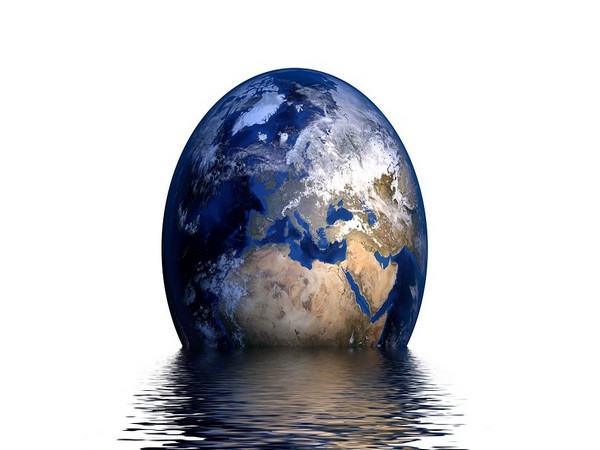
Representative Image

Washington D.C. [USA], April 13 (ANI): Results from a deep investigation led by a team of researchers have recently demonstrated that the water we are enjoying on the Earth has been there since its formation.
Water is no doubt one of the essentials to sustain life, and hence the question of the origin of water on Earth is primordial. A major challenge faced while investigating this question is that Earth has lost all the traces of its formation since it is an active planet.
A team of numerical modellers and geochemists led by Cedric Gillmann - Universite libre de Bruxelles, ULB, funded by the EoS project ET-HoME - has decided to look far beyond Earth -- up to Venus -- to investigate the origin of terrestrial water.
While Earth and Venus could be considered as twin sisters, their respective geological and climatic evolutions diverged dramatically in the past, leading to Venus' present-day 92 bar atmosphere heated by an infernal greenhouse up to 470°C, opposed to the mild conditions and only 1 bar pressure at the surface of Earth.
In comparison to Earth, Venus' volcanic activity and outgassing are reduced because it has no plate tectonics, but has a stagnant lid instead. The evolution of the atmosphere of Venus is much easier to understand and model over geological times. Also, because of their proximity, the Earth and Venus should have received the same type of material during their history.
All these aspects combine to make Venus a perfect place to study the primitive evolution of terrestrial planets.
Using numerical simulations of impacts of different types of asteroids containing various amounts of water, the team has discovered that water-rich asteroids colliding with Venus and releasing their water as vapour cannot explain the composition of Venus's atmosphere as we measure it today.
It means that the asteroidal material that came to Venus, and thus to Earth, after the giant impact must have been dry, therefore preventing the replenishment of the Earth in water.
Because water can obviously be found on our planet today, it means that the water we are now enjoying on Earth has been there since its formation, likely buried deep in the Earth so it could survive the giant impact.
This idea has very deep implications in terms of habitability of ancient Earth, Venus, and Mars, as it suggests that planets likely formed with their near-full budget in water, and slowly lost it with time.
Because Mars is much smaller, it likely lost all its water while life developed on Earth. For Venus, those results shine a complimentary light on recent work advocating that water oceans existed at the surface of the planet and help constrain the maximum amount of water that can be expected on Venus. They will also help prepare the next generation of space missions to Venus. (ANI)


Get the App

What to Read Next

Science

New method guides magnetism without magnets

New method guides magnetism without magnets

Researchers at Paul Scherrer Institute PSI have demonstrated an innovative method to control magnetism in materials using an energy-efficient electric field.

Read More
Science

Amphibians bounce-back from Earth’s greatest mass extinction

Amphibians bounce-back from Earth’s greatest mass extinction

Researchers at the University of Bristol discovered that ancient frog ancestors survived the biggest mass extinction of species by eating on freshwater prey that evaded terrestrial predators.

Read More
Science

New insights into how cancer evades the immune system: Study

New insights into how cancer evades the immune system: Study

Immunotherapy research primarily focuses on better recognition of cancer cells by the body's own immune system. Researchers at Amsterdam UMC and Moffitt Cancer Center have taken a different approach.

Read More
Science

Scientists use AI to better understand nanoparticles: Study

Scientists use AI to better understand nanoparticles: Study

A group of scientists has created a way to illuminate the dynamic behavior of nanoparticles, which are essential components in the production of pharmaceuticals, electronics, and industrial and energy-conversion materials.

Read More
Science

New device could allow you to taste cake in virtual reality

New device could allow you to taste cake in virtual reality

The 'e-Taste' interface employs sensors and wireless chemical dispensers to enable remote taste perception, often known as gestation. Field testing done by researchers at The Ohio State University confirmed the device's ability to digitally simulate a range of taste intensities, while still offering variety and safety for the user.

Read More
Science

Strand Life Sciences launches portal for rare disease diagnosis

Strand Life Sciences launches portal for rare disease diagnosis

Marking Rare Disease Day, Strand Life Sciences, a subsidiary of Reliance Industries and a leading genomics research company, has launched the StrandOmics Portal, an innovative digital platform designed to assist doctors in diagnosing rare diseases more efficiently.

Read More
Science

Study reveals impact of animals as architects of Earth

Study reveals impact of animals as architects of Earth

A new study led by Professor Gemma Harvey from Queen Mary University of London has revealed how hundreds of species shape the landscapes we depend on, from termite mounds visible from space to beavers creating wetlands and hippos carving drainage systems.

Read More
Science

Opposing arrows of time emerge from certain quantum systems

Opposing arrows of time emerge from certain quantum systems

Researchers at the University of Surrey made a thought-provoking discovery. A new study reveals that opposing arrows of time can theoretically emerge from certain quantum systems.

Read More
Science

COVID-19 severity may be predicted by White Blood Cell Count

COVID-19 severity may be predicted by White Blood Cell Count

A COVID-19 diagnosis is no longer as frightening as it used to be, thanks to developments in treatment choices. However, a new study reveals that leukocyte (white blood cell) count may now be used to identify who is more likely to develop more significant disease symptoms.

Read More
Science

Seals can essentially act as 'smart sensors': Study

Seals can essentially act as 'smart sensors': Study

A new study by marine biologists reports that seals can essentially act as 'smart sensors' for monitoring fish populations in the ocean's eerily dim 'twilight zone.'

Read More
Home About Us Our Products Advertise Contact Us Terms & Condition Privacy Policy

Copyright © aninews.in | All Rights Reserved.
