

ADD ANI AS A TRUSTED SOURCE
googleads
ANI Logo
Menu
Science

Researchers identify new frog species

Washington D.C. [USA], July 20 (ANI): A team of researchers has recently identified and described two new frog species found in Ecuador.

ANI Jul 20, 2019 22:13 IST googleads

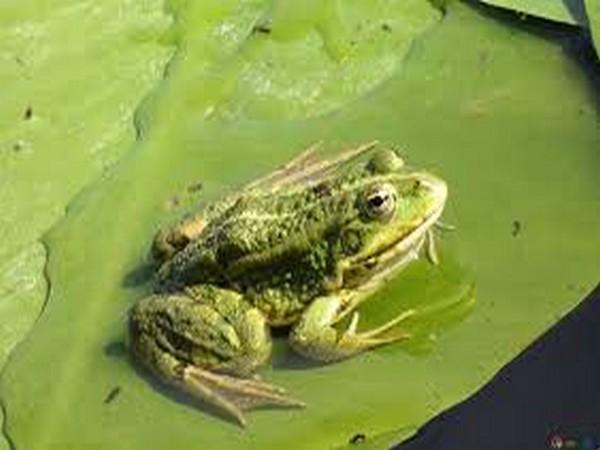
Representative image

Washington D.C. [USA], July 20 (ANI): A team of researchers has recently identified and described two new frog species found in Ecuador.
"I have been looking at these frogs for years now, so going over the whole process of observing them in their habitats and then analysing them and comparing them under the microscope, to finally naming them is a long, but very satisfying journey," said Urgiles, lead author of the study published in the journal of ZooKeys.
"One of the things that I found most interesting about these guys is that they don't have metamorphosis like a regular frog, but instead they develop entirely inside eggs that adult females deposit in the ground. They really don't need water bodies for their development. Both of the new frog species inhabit high elevation ecosystems in the mountain range over 8,000 feet, so even though we are right there in the equator, it's very cold and windy most of the year," Urgiles explained.
The team of researchers has been studying frogs in Ecuador for the past few years. In 2017, Urgiles found the first new species and named it Pristimantis quintanai. She found the second species Pristimantis cajanuma in 2018. Both were found in the Paramo and montane forest of the southern Ecuadorean Andes.
The frogs are tiny, measuring .8 inch. Pristimantis quintanai females are brown and black and Pristimantis cajanuma are green and black, both easily blending into the foliage. They have a distinct call that is sharp and continuous, sounding like tik-tik-tik-tik.
Urgiles examined DNA samples collected by the international team back in Savage's lab at UCF, generated genetic sequences, and constructed the phylogenetic analysis. Other team members also worked the morphological diagnosis and comparisons with other frogs and acoustic analysis of the frogs' calls.
"In these analyses, we use all of the genetic similarities and differences we find to build phylogenetic trees, and when we find that a 'branch' on the 'tree' has strong support and contains all of the individuals that share the same morphological characteristics, then we have good evidence to describe it as a new species. We used this method, along with vocalisation and location data, to conclude that the two species we describe are distinct from any other species that have ever been characterised," said Assistant Professor Anna Savage.
The work is critical because of the vast diversity that has yet to be discovered in the tropical Andes of South America. In 2018, 13 new species of frogs were documented in the tropical Andes of Ecuador and so far in 2019 five new frogs have been documented.
There are potentially thousands of new plants and animals in the area that may hold the key to other discoveries. It's important to know what is there, to better understand the threats to habitat loss and disease so conservation methods can be established to protect the resources. (ANI)

Get the App

What to Read Next

Science

Amphibians bounce-back from Earth’s greatest mass extinction

Amphibians bounce-back from Earth’s greatest mass extinction

Researchers at the University of Bristol discovered that ancient frog ancestors survived the biggest mass extinction of species by eating on freshwater prey that evaded terrestrial predators.

Read More
Science

Study reveals impact of animals as architects of Earth

Study reveals impact of animals as architects of Earth

A new study led by Professor Gemma Harvey from Queen Mary University of London has revealed how hundreds of species shape the landscapes we depend on, from termite mounds visible from space to beavers creating wetlands and hippos carving drainage systems.

Read More
Science

Plastic pollution, seawater flooding effect on coastal plants

Plastic pollution, seawater flooding effect on coastal plants

Two of the planet's most urgent environmental stressors have the potential to affect the development and reproductive production of plants found along the world's coasts, according to new research.

Read More
Science

Gardeners can help to identify possibly invasive plants: Research

Gardeners can help to identify possibly invasive plants: Research

Researchers from the University of Reading and the Royal Horticultural Society have discovered that gardeners play a vital role in identifying 'future invaders' - ornamental plants that could become invasive species.

Read More
Science

Butterflies mimic each other's flight patterns to evade predators

Butterflies mimic each other's flight patterns to evade predators

Researchers discovered that inedible butterfly species that replicate one other's colour patterns have developed similar flight habits to warn predators and avoid being eaten.

Read More
Science

Great apes tease each other just like humans do: Study

Great apes tease each other just like humans do: Study

Scientists reported evidence of playful teasing in the four great ape species orangutans, chimpanzees, bonobos and gorillas.

Read More
Science

Researchers find four species of apes playfully tease each other

Researchers find four species of apes playfully tease each other

Cognitive biologists and primatologists have documented playful teasing in four species of great apes

Read More
Science

Study finds a species that protect crops without pesticides

Study finds a species that protect crops without pesticides

Researchers have identified a microscopic worm species that infects and kills insects.

Read More
Science

Study finds worm species that protect crops without pesticides

Study finds worm species that protect crops without pesticides

Researchers identified a microscopic worm species that infects and kills insects.

Read More
Science

Study gives new insights into fungal infections

Study gives new insights into fungal infections

Researchers have identified hundreds of genes subject to recent, clinically relevant selection in six species of the fungal pathogen Candida.

Read More
Home About Us Our Products Advertise Contact Us Terms & Condition Privacy Policy

Copyright © aninews.in | All Rights Reserved.




