
Researchers find potential new treatment for fatal childhood brain cancer
Washington [US], February 14 (ANI): Every year around 20 Australian children die from the incurable brain tumour, Diffuse Intrinsic Pontine Glioma (DIPG). The average age of diagnosis for DIPG is just seven years. There are no effective treatments, and almost all children die from the disease, usually within one year of diagnosis.
ANI
Feb 14, 2021 19:20 IST

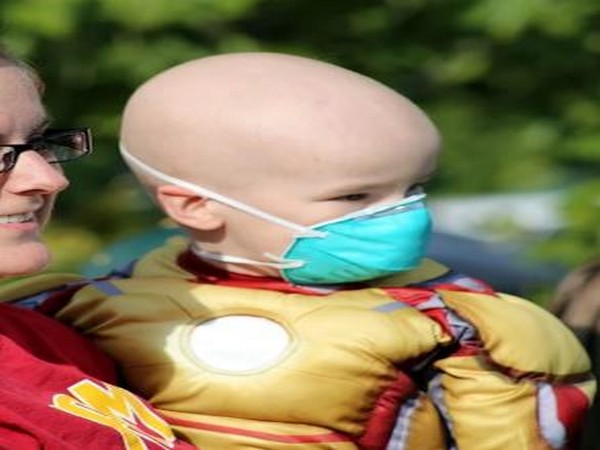
Washington [US], February 14 (ANI): Every year around 20 Australian children die from the incurable brain tumour, Diffuse Intrinsic Pontine Glioma (DIPG). The average age of diagnosis for DIPG is just seven years. There are no effective treatments, and almost all children die from the disease, usually within one year of diagnosis.
A paper published in the journal Nature Communications, reveals a potential revolutionary drug combination that -- in animal studies and in world-first 3D models of the tumour -- is "spectacularly effective in eradicating the cancer cells," according to lead researcher and paediatric oncologist Associate Professor c from the Children's Cancer Institute and Sydney Children's Hospital.
In pre-clinical testing in mouse models, the researchers found that the promising drug combination led to survival in two-thirds of the mice and that the drug combination completely halted the growth of these highly aggressive tumours in these mice.
Importantly, the drug therapy, which is currently in early trials in adult cancer, is the most effective treatment ever tested in laboratory models of this incurable childhood cancer. The treatment is a combination of two drugs: difluoromethylornithine (DFMO), an established drug, and AMXT 1501, an investigational agent being developed by Aminex Therapeutics.
DFMO is increasingly getting attention as a treatment for difficult-to-control cancers like neuroblastoma, another aggressive childhood cancer, and colorectal cancer in adults. DFMO works by targeting the polyamine pathway -- an important mechanism that allows tumour cells to grow.
Associate Professor Ziegler has shown for the first time that the polyamine pathway is critical to the growth of DIPG cells. Ziegler and his team developed Australia's first research program into DIPG by using tumour cells donated by the parents of children who have passed away from the disease. From these, they created the first laboratory models of the tumour in order to test new drugs.
These models have been used to show that DIPG can bypass the activity of DFMO by pumping polyamines into cancer, essentially allowing the tumour to continue growing despite treatment with DFMO. They have now made the breakthrough discovery that treatment with a new developmental drug, AMXT 1501, potently blocks the transport of polyamines into the DIPG cancer cell. Treatment with AMXT 1501 was found to re-sensitize the DIPG cells to DFMO leading to what Associate Professor Ziegler said, "was a spectacular response in animal models, with a significantly increased survival and minimal toxicity (side effects)."
Associate Professor Ziegler said that clinical trials of the drug combination in DIPG are planned to begin this year in children in a global study led by the Children's Cancer Institute and the Kid's Cancer Centre at Sydney Children's Hospital.
The Australian DIPG Tumour Database was started by the Children's Cancer Institute in 2011. Australia's first DIPG tumour database has allowed Associate Professor Ziegler and colleagues to make great inroads into solving this disease. "Since establishing the tumour bank we have been able to grow this very aggressive cancer in our laboratories to allow us to screen hundreds of drugs to find those that are effective at killing the cancer cells. It's due to this capacity that we have been able to discover what we hope will be the first effective treatment for DIPG," he said.
Rachael Gjorgjijoska was the first parent to agree to donate DIPG tumour tissue following the death of her daughter Liliana at just 4 years old, 15 months after her diagnosis. Rachael comments "We made the difficult decision to donate Liliana's tumour because we wanted to make a difference, there were no treatments to save Liliana from this devastating disease, but if her cancer cells help advance research so there be new treatments for children in the future, this will be a lasting memory of our little girl."
Dr Mark R. Burns, the Founder, President and Chief Scientific Officer at Aminex Therapeutics, and inventor of AMXT 1501 said "the dramatic results against this devastating disease demonstrated by Dr. Ziegler and his team adds greater fire to our motivation to see these findings duplicated against human cancers. We share hope that this treatment will make a difference in the lives of those with DIPG and other aggressive cancers."
This work was supported by grants from the National Health and Medical Research Council, Cancer Institute NSW, the DIPG Collaborative, the Cure Starts Now, Cure Brain Cancer Foundation, Levi's project, Benny Wills Brain Tumour Research fund, Tour de Cure, Isabella and Marcus Foundation's Gemma Howell Scholarship and drug supply from Aminex Therapeutics, Inc. (ANI)
Tags:
Get the App


