

ADD ANI AS A TRUSTED SOURCE
googleads
ANI Logo
Menu
Science

Researchers find new method to evaluate donor kidney quality

Washington [US], January 9 (ANI): Researchers have found a way to evaluate the quality of kidneys before transplantation that could help increase the number of usable donor kidneys.

ANI Jan 09, 2022 19:47 IST googleads

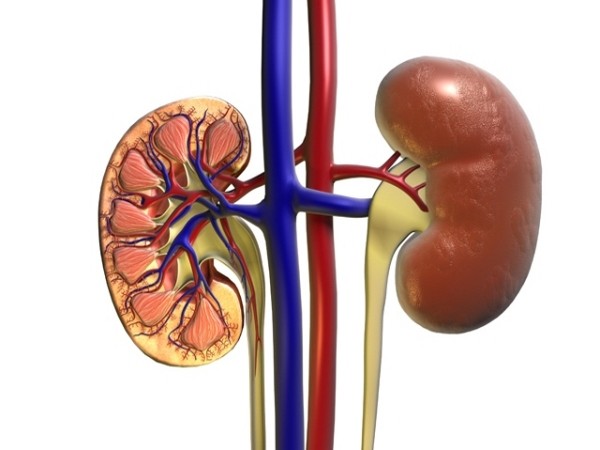
Representative image

Washington [US], January 9 (ANI): Researchers have found a way to evaluate the quality of kidneys before transplantation that could help increase the number of usable donor kidneys.

The study has been published in the 'Optics Express Journal'.

"Today, the lack of methods for precisely measuring donor kidney injury and predicting transplant outcome leads to high discard rates and recipient complications in clinical practice," said research team leader Mingxing Sui from Changhai Hospital of Shanghai in China.

"We want to solve this problem by developing a new system that can noninvasively provide an objective measure of donor kidney quality," Sui added.

Sui and colleagues from the University of Shanghai for Science and Technology in China reported the first use of surface-enhanced Raman scattering (SERS) for simultaneous, ultrasensitive detection of two important kidney injury biomarkers. They also described how they made SERS spectroscopy more practical for clinical use.

"This highly sensitive SERS-based multiplexing technique can rapidly capture subtle changes in the biomarker expression levels associated with donor kidney injury. This paves the way for objectively assessing the quality of donor kidneys in clinical practice," Sui said.

When a person donates a kidney after death, the process often involves taking a biopsy to assess the health of the kidney that will be donated. This step is not only invasive and time-consuming but might also be causing too many donor kidneys to be disqualified. Research has shown that biopsy findings don't always predict how well a kidney will function once transplanted.

Recently, researchers have identified secretory leukocyte peptidase inhibitor (SLPI) and interleukin 18 (IL-18) as biomarkers present in a person's blood and urine that can be used to objectively evaluate kidney injury. Although various analysis methods have been explored to detect these biomarkers, they have all come up short due to limited sensitivity, lack of multiplexing, complicated sample preparation, or high cost.

Sui's research team wanted to find out if SERS could provide a better way to detect these biomarkers. This relatively new vibrational spectroscopy technique offered single-molecule sensitivity was easy and fast to perform and allowed multiple biomarkers to be detected using a single measurement.

It works by using nanostructures to enhance the Raman scattering that occurs when molecules are adsorbed onto a metal surface. This scattering forms a type of spectral fingerprint that is unique for each molecule.

However, moving SERS out of the lab and into the clinic required finding ways to further improve its sensitivity, reproducibility, and simplicity. The researchers achieved this by developing a new hybrid SERS substrate that combined gold nanoparticles with a new 2D nanomaterial known as black phosphorus.

The new nanosheets offer several advantages, including a high affinity toward the biomolecules, which boosts the sensitivity. They also eliminate the need for labels, making measurements easier to perform.

"Although this work is still at an early stage, we think SERS could be used in clinical practice in the foreseeable future," Sui said.

"By collecting the donor urine or serum, the expression level of kidney injury biomarkers could be noninvasively, rapidly and reproducibly measured, which is highly preferable in clinical practice in contrast to biopsies of kidneys," Sui added.

The researchers are now working to identify more biomarkers that could help to more accurately assess donor kidney quality. They are also developing machine learning algorithms to improve the interpretation of spectral fingerprints. (ANI)


Get the App

What to Read Next

Science

Amphibians bounce-back from Earth’s greatest mass extinction

Amphibians bounce-back from Earth’s greatest mass extinction

Researchers at the University of Bristol discovered that ancient frog ancestors survived the biggest mass extinction of species by eating on freshwater prey that evaded terrestrial predators.

Read More
Science

Scientists use AI to better understand nanoparticles: Study

Scientists use AI to better understand nanoparticles: Study

A group of scientists has created a way to illuminate the dynamic behavior of nanoparticles, which are essential components in the production of pharmaceuticals, electronics, and industrial and energy-conversion materials.

Read More
Science

New technology enhances gravitational-wave detection: Study

New technology enhances gravitational-wave detection: Study

A team of physicists led by Jonathan Richardson of the University of California, Riverside, demonstrated how new optical technology can extend the detection range of gravitational-wave observatories such as the Laser Interferometer Gravitational-Wave Observatory, or LIGO, and pave the way for future observatories.

Read More
Science

Astronomers find the smallest main-belt asteroids ever detected:

Astronomers find the smallest main-belt asteroids ever detected:

The majority of known asteroids orbit inside the main asteroid belt, which is positioned between Mars and Jupiter at an average distance of around 250 million km from Earth. Since the discovery of the first asteroid in 1801, about 750.000 asteroids have been identified, primarily in the last decade thanks to several optical surveys that examine the sky on clear nights.

Read More
Science

Study finds connection between quantum theory, information theory

Study finds connection between quantum theory, information theory

"Our results have no clear or direct application right now. It's basic research that lays the foundation for future technologies in quantum information and quantum computers. There's enormous potential for complete discoveries in many different research fields," said Guilherme B Xavier, a researcher in quantum communication at Linkoping University, Sweden.

Read More
Science

When devices can read human emotions without a camera: Study

When devices can read human emotions without a camera: Study

Tokyo Metropolitan University researchers employed long-term skin conductance measurements to distinguish between emotions. Volunteers were given videos representing frightening scenarios, family bonding, and humour, while their skin conductance was measured.

Read More
Science

'Nuroscience study results can be better predicted by AI'

'Nuroscience study results can be better predicted by AI'

Large language models, a type of AI that analyses text, can anticipate the results of proposed neuroscience studies more correctly than human experts, according to a new study led by UCL (University College London) researchers.

Read More
Science

Thermal imaging may help fruits, veggies stay fresher longer: Study

Thermal imaging may help fruits, veggies stay fresher longer: Study

Before your favourite produce arrives at the grocery store, it must be carefully harvested and stored for extended periods of time. A recent University of Georgia assessment argues that new temperature sensing devices could make that procedure considerably easier, as agricultural issues are exacerbated by changing climates.

Read More
Science

Study: New imaging method accurately detects kidney cancer

Study: New imaging method accurately detects kidney cancer

A recent study conducted by UCLA Health Jonsson Comprehensive Cancer Center researchers found that new, non-invasive imaging technology can detect clear-cell renal cell carcinoma, the most common kind of kidney cancer.

Read More
Science

Contrail avoidance is less likely to damage climate by mistake

Contrail avoidance is less likely to damage climate by mistake

A new study allays concerns that rerouting planes to avoid producing climate-warming contrails may accidentally exacerbate climate change.

Read More
Home About Us Our Products Advertise Contact Us Terms & Condition Privacy Policy

Copyright © aninews.in | All Rights Reserved.


