ADD ANI AS A TRUSTED SOURCE
googleads
Menu
Science

Researchers find new antiseptics safer than high-use antimicrobial for environment

Study revealed how antiseptics that replaced high-use antimicrobial seem to have minimal to no adverse effects on environmental concentrations.

ANI Nov 09, 2022 15:56 IST googleads

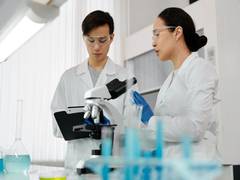
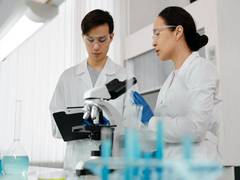
Representative Image

Washington [US], November 9 (ANI): According to a recent study, chemicals used in antiseptics that replaced popular antimicrobials seem to have minimal to no adverse effects on environmental concentrations.
The findings of the study were published in Environmental Toxicology and Chemistry.
There was an intense need for antiseptics during the COVID-19 pandemic, and use of three topical antiseptic compounds--benzalkonium chloride (BAC), benzethonium chloride (BZT), and chloroxylenol (PCMX)--increased before and during the pandemic due to the phase-out of other antimicrobial ingredients (such as triclosan) in soaps and other disinfecting and sanitizing products.
Researchers assessed the environmental safety of BAC, BZT, and PCMX, focusing on aquatic systems receiving effluent from wastewater treatment plants and land-based systems where wastewater biosolids were applied. Neither BZT nor PCMX were likely to cause adverse ecological effects, with high margins of safety in the scenarios assessed. Adverse ecological effects were also unlikely for BAC.
"The COVID-19 pandemic was happening in real time as we were doing our research--making the assessment even more relevant but also making it harder to estimate ever-changing environmental concentrations of sanitizer ingredients. The assessment framework we developed provides a sound basis to interpret environmental data for the ingredients we studied, if their concentrations change in the future," said corresponding author Phyllis Fuchsman, of the consulting engineering group Ramboll. (ANI)

Get the App

What to Read Next

Science

COVID-19 severity may be predicted by White Blood Cell Count

COVID-19 severity may be predicted by White Blood Cell Count

A COVID-19 diagnosis is no longer as frightening as it used to be, thanks to developments in treatment choices. However, a new study reveals that leukocyte (white blood cell) count may now be used to identify who is more likely to develop more significant disease symptoms.

Read More
Science

'Creation of black holes without singularities through gravity'

'Creation of black holes without singularities through gravity'

Traditional black holes, as predicted by Albert Einstein's theory of General Relativity, contain what are known as singularities, i.e. points where the laws of physics break down. Identifying how singularities are resolved in the context of quantum gravity is one of the fundamental problems in theoretical physics. Now, a team of experts has described the creation of regular black holes from gravitational effects without the need for the existence of exotic matter required by some previous models.

Read More
Science

Discovering the genetics of climate adaptation 

Discovering the genetics of climate adaptation 

As climate change accelerates, plants are under increasing pressure to adapt to changing habitats and environmental conditions.

Read More
Science

AI can reveals hidden hazards of chemical mixtures in rivers

AI can reveals hidden hazards of chemical mixtures in rivers

Artificial intelligence can provide important insights into how complex chemical mixes in rivers affect aquatic life, paving the path for more effective environmental protection.

Read More
Science

Immune cells prevent lung healing following viral infection

Immune cells prevent lung healing following viral infection

Researchers found a mechanism by which immune cells impede the regeneration of the lungs' defensive barrier following viral infections such as COVID-19.

Read More
Home About Us Our Products Advertise Contact Us Terms & Condition Privacy Policy

Copyright © aninews.in | All Rights Reserved.