

ADD ANI AS A TRUSTED SOURCE
googleads
ANI Logo
Menu
Science

Researchers find how ticks weaken skin's defense function

Washington [US], October 2 (ANI): Scientists have yet to fully comprehend why ticks are such hazardous disease vectors. A team of researchers has discovered that tick saliva suppresses the skin's protective function, increasing the risk of infections like tick-borne encephalitis (TBE) or Lyme disease.

ANI Oct 02, 2022 09:49 IST googleads

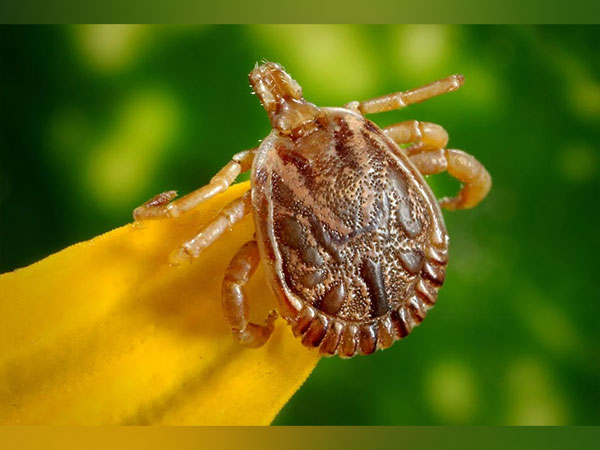
Representative Image

Washington [US], October 2 (ANI): Scientists have yet to fully comprehend why ticks are such hazardous disease vectors. A team of researchers has discovered that tick saliva suppresses the skin's protective function, increasing the risk of infections like tick-borne encephalitis (TBE) or Lyme disease.
The researchers carried out their investigations on skin samples from volunteers and also on models of human skin, mimicking the bite of the most common European tick (Ixodes ricinus). In both cases, the team led by Georg Stary (MedUni Vienna's Department of Dermatology, CeMM Research Center for Molecular Medicine of the Austrian Academy of Sciences, Ludwig Boltzmann Institute for Rare and Undiagnosed Diseases) in collaboration with the research group of Hannes Stockinger (Center for Pathophysiology, Infectiology and Immunology at MedUni Vienna) identified rapidly occurring patterns of immunomodulation. For example, it was found that the function of immune cells, especially T cells, which are important for immunological memory, was disrupted by contact with tick saliva.
The scientists made similar observations in early stages of model infection by Borrelia burgdorferi, the most common cause of Lyme disease. They found that pre-incubation of Lyme disease-transmitting bacteria (B. burgdorferi spirochetes) with tick salivary gland extracts impedes the accumulation of immune cells in the skin and increases the pathogen burden. "Overall, we found that tick feeding causes profound changes in the skin's immune system inhibiting the local immune response. This means that dangerous pathogens that are introduced into the skin together with tick saliva, can multiply more easily, leading to infection," says Johanna Strobl, lead author of the study, summarising the main research findings.
Austria is one of the countries with the greatest prevalence of ticks. Nearly every second European tick is infected with pathogens, Lyme disease and tick-borne encephalitis (TBE) being the most common tick-borne diseases. The arachnids become active at a temperature of seven degrees. Due to rising temperatures associated with climate change, ticks now also pose a threat in higher-altitude regions of Austria and well into late autumn. (ANI)


Get the App

What to Read Next

Science

New method guides magnetism without magnets

New method guides magnetism without magnets

Researchers at Paul Scherrer Institute PSI have demonstrated an innovative method to control magnetism in materials using an energy-efficient electric field.

Read More
Science

Amphibians bounce-back from Earth’s greatest mass extinction

Amphibians bounce-back from Earth’s greatest mass extinction

Researchers at the University of Bristol discovered that ancient frog ancestors survived the biggest mass extinction of species by eating on freshwater prey that evaded terrestrial predators.

Read More
Science

New insights into how cancer evades the immune system: Study

New insights into how cancer evades the immune system: Study

Immunotherapy research primarily focuses on better recognition of cancer cells by the body's own immune system. Researchers at Amsterdam UMC and Moffitt Cancer Center have taken a different approach.

Read More
Science

Scientists use AI to better understand nanoparticles: Study

Scientists use AI to better understand nanoparticles: Study

A group of scientists has created a way to illuminate the dynamic behavior of nanoparticles, which are essential components in the production of pharmaceuticals, electronics, and industrial and energy-conversion materials.

Read More
Science

New device could allow you to taste cake in virtual reality

New device could allow you to taste cake in virtual reality

The 'e-Taste' interface employs sensors and wireless chemical dispensers to enable remote taste perception, often known as gestation. Field testing done by researchers at The Ohio State University confirmed the device's ability to digitally simulate a range of taste intensities, while still offering variety and safety for the user.

Read More
Science

Strand Life Sciences launches portal for rare disease diagnosis

Strand Life Sciences launches portal for rare disease diagnosis

Marking Rare Disease Day, Strand Life Sciences, a subsidiary of Reliance Industries and a leading genomics research company, has launched the StrandOmics Portal, an innovative digital platform designed to assist doctors in diagnosing rare diseases more efficiently.

Read More
Science

Study reveals impact of animals as architects of Earth

Study reveals impact of animals as architects of Earth

A new study led by Professor Gemma Harvey from Queen Mary University of London has revealed how hundreds of species shape the landscapes we depend on, from termite mounds visible from space to beavers creating wetlands and hippos carving drainage systems.

Read More
Science

Opposing arrows of time emerge from certain quantum systems

Opposing arrows of time emerge from certain quantum systems

Researchers at the University of Surrey made a thought-provoking discovery. A new study reveals that opposing arrows of time can theoretically emerge from certain quantum systems.

Read More
Science

COVID-19 severity may be predicted by White Blood Cell Count

COVID-19 severity may be predicted by White Blood Cell Count

A COVID-19 diagnosis is no longer as frightening as it used to be, thanks to developments in treatment choices. However, a new study reveals that leukocyte (white blood cell) count may now be used to identify who is more likely to develop more significant disease symptoms.

Read More
Science

Seals can essentially act as 'smart sensors': Study

Seals can essentially act as 'smart sensors': Study

A new study by marine biologists reports that seals can essentially act as 'smart sensors' for monitoring fish populations in the ocean's eerily dim 'twilight zone.'

Read More
Home About Us Our Products Advertise Contact Us Terms & Condition Privacy Policy

Copyright © aninews.in | All Rights Reserved.


