

ADD ANI AS A TRUSTED SOURCE
googleads
ANI Logo
Menu
Science

Researchers find how cancer can be killed by body's own immune system

Washington [US], January 17 (ANI): A new way to help the body's immune system get past that deception and destroy cancer, has been found by a University of Missouri researcher.

ANI Jan 17, 2021 14:55 IST googleads

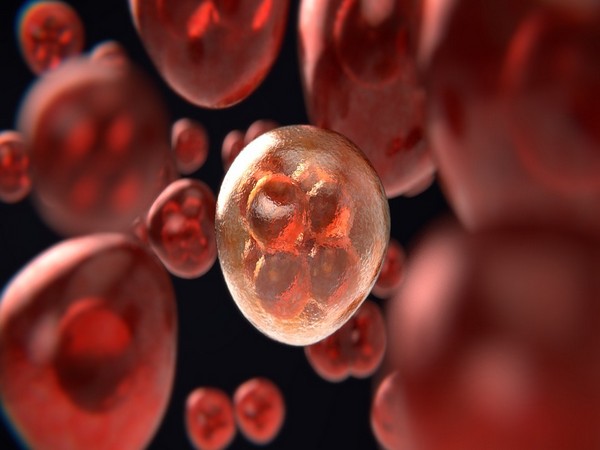
Representative image

Washington [US], January 17 (ANI): A new way to help the body's immune system get past that deception and destroy cancer, has been found by a University of Missouri researcher.
"Normally, your body's immune cells are constantly on patrol to identify and destroy foreign entities in the body," said Yves Chabu, an assistant professor in the Division of Biological Sciences.
"Normal cells put up a 'don't-eat-me' molecular flag that is recognized by immune cells, thereby preventing the destruction of normal tissues. But some cancers have also developed the ability to mimic normal cells and produce this 'don't eat me' signal. As a consequence, the immune system fails to recognise cancer as a defective tissue and leaves it alone, which is bad news for the patient," added Chabu.
Immunotherapies are cancer drugs that essentially block the "don't-eat-me" signal coming from cancer and allow the immune-system to kill it.
Chabu, whose appointment is in the College of Arts and Science, said while these immunotherapies work for certain types of cancers, prostate cancer is highly immunosuppressive, meaning the cancer's physical and molecular environments simply overpower the body's immune system.
But Chabu might have unlocked a solution with help from a more than 50-year-old strain of bacteria.
"Cancers are different in one individual to the next, even when they affect the same tissue. These interpersonal differences contribute to whether or not a particular therapy will effectively kill the cancer and help the patient. The bacteria itself is genetically pliable, therefore it can be genetically modified to overcome patient-specific therapeutic limits," Chabu said.
"Imagine a patient whose cancer isn't responding to traditional therapies and has no other treatment options. One can envision genetically modifying the bacteria such that it can unload therapeutics that specifically exploit that cancer's unique vulnerabilities and kill it," added Chabu.
In a previous study, scientists at the Cancer Research Center and the University of Missouri developed a genetically distinct and non-toxic strain of salmonella called CRC2631 to select and kill cancer cells.
CRC2631 was derived from another strain of salmonella that had been stored at room temperature for more than half a century. Now, scientists like Chabu are demonstrating the ability for CRC2631, which enthusiastically targets cancerous tumours, to be used to unleash the body's immune-system against prostate cancer.
"Because CRC2631 preferentially colonises tumour cells, the effect is mainly localized to the tumour. The use of CRC2631 to design and deliver patient-tailored therapeutics foretells potential in precision medicine, or the ability to tailor a treatment to a specific patient," Chabu said.
Highlighting the promise of personalised health care and the impact of large-scale interdisciplinary collaboration, the University of Missouri System's NextGen Precision Health initiative is bringing together innovators from across the system's four research universities in pursuit of life-changing precision health advancements.
It's a collaborative effort to leverage the strengths of Mizzou and entire UM System toward a better future for Missouri's health. An important part of the initiative is the construction of the new NextGen Precision Health building, which will expand collaboration between researchers, clinicians and industry leaders in a state-of-the-art research facility. (ANI)


Get the App

What to Read Next

Science

New insights into how cancer evades the immune system: Study

New insights into how cancer evades the immune system: Study

Immunotherapy research primarily focuses on better recognition of cancer cells by the body's own immune system. Researchers at Amsterdam UMC and Moffitt Cancer Center have taken a different approach.

Read More
Science

Cancer cells of fat may enhance cancer treatment

Cancer cells of fat may enhance cancer treatment

A study by Van Andel Institute scientists suggests that restricting cancer cells' access to fat may enhance the effectiveness of certain cancer treatments.

Read More
Science

Biomarker may predict response to immunotherapy in liver cancer

Biomarker may predict response to immunotherapy in liver cancer

According to a preclinical study conducted by Weill Cornell Medicine researchers, it may soon be feasible to detect whether individuals with hepatocellular carcinoma, a kind of liver cancer, may benefit from immunotherapy.

Read More
Science

Bacterial vaccine demonstrates potential as cancer treatment

Bacterial vaccine demonstrates potential as cancer treatment

Columbia researchers developed probiotic bacteria that train the immune system to eliminate cancer cells, paving the way for a new class of cancer vaccinations that take advantage of bacteria's innate tumour-targeting abilities. These microbial cancer vaccines can be tailored to each person's specific original tumour and metastases, perhaps preventing future recurrences.

Read More
Science

Alternate method to study changes during DNA replication process

Alternate method to study changes during DNA replication process

Researchers at Colorado State University discovered an alternative way for studying alterations during the DNA replication process in lab settings using genetically modified yeast. The novel methodology provides a clearer picture than current pharmacological methods for understanding cell cycle arrest, a fundamental mechanism critical to cancer treatment and genetic concerns.

Read More
Science

Study discovers how special immune cells stop metastatic cancer

Study discovers how special immune cells stop metastatic cancer

The majority of cancer deaths are caused by metastatic disease, which occurs when cancer spreads from the primary tumour to other areas of the body. and researchers understand how cancer cells escape the primary location to seed new tumours, it is unclear why some cancer cells produce new tumours decades later and others do not.

Read More
Science

Study reveals role of gamma-delta T cells in cancer immunology

Study reveals role of gamma-delta T cells in cancer immunology

The significance of gamma-delta T cells in 33 different cancer types is revealed in a recent study that was published in Cell Press. This information sheds light on the cells' potential as clinical biomarkers and therapeutic targets in the treatment of cancer. This thorough examination, which was carried out under the direction of a group of Moffitt Cancer Center experts, marks a substantial breakthrough in our knowledge of these distinct immune cells and how they affect cancer therapy outcomes for patients.

Read More
Science

Medication increases radiation therapy's efficacy for lung cancer

Medication increases radiation therapy's efficacy for lung cancer

A group of researchers from the University of Cincinnati has discovered a possible novel approach to enhance the efficacy of radiation therapy and enhance the prognosis of patients with lung cancer metastasizing to the brain.

Read More
Science

Study: New imaging method accurately detects kidney cancer

Study: New imaging method accurately detects kidney cancer

A recent study conducted by UCLA Health Jonsson Comprehensive Cancer Center researchers found that new, non-invasive imaging technology can detect clear-cell renal cell carcinoma, the most common kind of kidney cancer.

Read More
Science

Fever promotes increased activity, mitochondrial damage

Fever promotes increased activity, mitochondrial damage

Researchers at Vanderbilt University Medical Centre showed that fever temperatures increase immune cell metabolism, proliferation, and activity, but they also promote mitochondrial stress, DNA damage, and cell death in a specific subgroup of T cells.

Read More
Home About Us Our Products Advertise Contact Us Terms & Condition Privacy Policy

Copyright © aninews.in | All Rights Reserved.
