

ADD ANI AS A TRUSTED SOURCE
googleads
ANI Logo
Menu
Science

Researchers find how Broccoli consumption reduces risk of diseases, protects gut lining

The health benefits of broccoli are well recognized. Research has revealed, for instance, that increasing the intake of cruciferous vegetables lowers the risk of type 2 diabetes and cancer.

ANI Apr 07, 2023 18:32 IST googleads

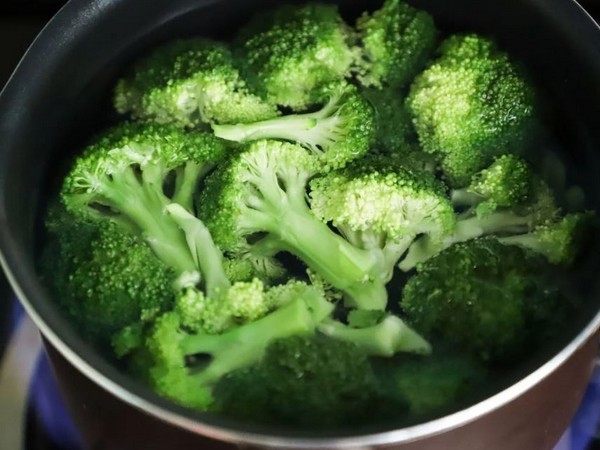
Representative Image

Pennsylvania [US], April 7 (ANI): The health benefits of broccoli are well recognized. Research has revealed, for instance, that increasing the intake of cruciferous vegetables lowers the risk of type 2 diabetes and cancer.
Researchers at Penn State discovered in a recent study that broccoli has specific chemicals that bind to a receptor in mice and aid to preserve the lining of the small intestine, preventing the onset of sickness. The results provide evidence that broccoli is a "superfood" in the truest sense.
The study published in the journal Laboratory Investigation.
"We all know that broccoli is good for us, but why? What happens in the body when we eat broccoli?" said Gary Perdew, H. Thomas and Dorothy Willits Hallowell Chair in Agricultural Sciences, Penn State. "Our research is helping to uncover the mechanisms for how broccoli and other foods benefit health in mice and likely humans, as well. It provides strong evidence that cruciferous vegetables, such as broccoli, cabbage, and Brussels sprouts should be part of a normal healthy diet."
According to Perdew, the wall of the small intestine allows beneficial water and nutrients to pass into the body but prevents food particles and bacteria that could cause harm. Certain cells that line the intestine -- including enterocytes, which absorb water and nutrients; goblet cells, which secrete a protective layer of mucus on the intestinal wall; and Paneth cells, which secrete lysosomes that contain digestive enzymes -- help to modulate this activity and keep a healthy balance.
In their study, Perdew and his colleagues found that molecules in broccoli, called aryl hydrocarbon receptor ligands, bind to aryl hydrocarbon receptor (AHR), which is a type of protein called a transcription factor. This binding, they found, initiates a variety of activities that affect the functions of intestinal cells.
To conduct their study, the researchers fed an experimental group of mice a diet containing 15% broccoli -- equivalent to about 3.5 cups per day for humans -- and fed a control group of mice a typical lab diet that did not contain broccoli. They then analyzed the animals' tissues to determine the extent to which AHR was activated, as well as the quantities of various cell types and mucus concentrations, among other factors, in the two groups.
The team found that mice that were not fed broccoli lacked AHR activity, which resulted in altered intestinal barrier function, reduced transit time of food in the small intestine, decreased number of goblet cells and protective mucus, decreased Paneth cells and lysosome production, and decreased number of enterocyte cells.
"The gut health of the mice that were not fed broccoli was compromised in a variety of ways that are known to be associated with disease," said Perdew. "Our research suggests that broccoli and likely other foods can be used as natural sources of AHR ligands, and that diets rich in these ligands contribute to resilience of the small intestine."
More broadly, added Andrew Patterson, John T. and Paige S. Smith Professor of Molecular Toxicology and of Biochemistry and Molecular Biology, "these data suggest that dietary cues, relayed through the activity of AHR, can reshape the cellular and metabolic repertoire of the gastrointestinal tract." (ANI)


Get the App

What to Read Next

Science

Amphibians bounce-back from Earth’s greatest mass extinction

Amphibians bounce-back from Earth’s greatest mass extinction

Researchers at the University of Bristol discovered that ancient frog ancestors survived the biggest mass extinction of species by eating on freshwater prey that evaded terrestrial predators.

Read More
Science

New insights into how cancer evades the immune system: Study

New insights into how cancer evades the immune system: Study

Immunotherapy research primarily focuses on better recognition of cancer cells by the body's own immune system. Researchers at Amsterdam UMC and Moffitt Cancer Center have taken a different approach.

Read More
Science

Scientists use AI to better understand nanoparticles: Study

Scientists use AI to better understand nanoparticles: Study

A group of scientists has created a way to illuminate the dynamic behavior of nanoparticles, which are essential components in the production of pharmaceuticals, electronics, and industrial and energy-conversion materials.

Read More
Science

New device could allow you to taste cake in virtual reality

New device could allow you to taste cake in virtual reality

The 'e-Taste' interface employs sensors and wireless chemical dispensers to enable remote taste perception, often known as gestation. Field testing done by researchers at The Ohio State University confirmed the device's ability to digitally simulate a range of taste intensities, while still offering variety and safety for the user.

Read More
Science

Strand Life Sciences launches portal for rare disease diagnosis

Strand Life Sciences launches portal for rare disease diagnosis

Marking Rare Disease Day, Strand Life Sciences, a subsidiary of Reliance Industries and a leading genomics research company, has launched the StrandOmics Portal, an innovative digital platform designed to assist doctors in diagnosing rare diseases more efficiently.

Read More
Science

Study reveals impact of animals as architects of Earth

Study reveals impact of animals as architects of Earth

A new study led by Professor Gemma Harvey from Queen Mary University of London has revealed how hundreds of species shape the landscapes we depend on, from termite mounds visible from space to beavers creating wetlands and hippos carving drainage systems.

Read More
Science

Opposing arrows of time emerge from certain quantum systems

Opposing arrows of time emerge from certain quantum systems

Researchers at the University of Surrey made a thought-provoking discovery. A new study reveals that opposing arrows of time can theoretically emerge from certain quantum systems.

Read More
Science

'Creation of black holes without singularities through gravity'

'Creation of black holes without singularities through gravity'

Traditional black holes, as predicted by Albert Einstein's theory of General Relativity, contain what are known as singularities, i.e. points where the laws of physics break down. Identifying how singularities are resolved in the context of quantum gravity is one of the fundamental problems in theoretical physics. Now, a team of experts has described the creation of regular black holes from gravitational effects without the need for the existence of exotic matter required by some previous models.

Read More
Science

New technology enhances gravitational-wave detection: Study

New technology enhances gravitational-wave detection: Study

A team of physicists led by Jonathan Richardson of the University of California, Riverside, demonstrated how new optical technology can extend the detection range of gravitational-wave observatories such as the Laser Interferometer Gravitational-Wave Observatory, or LIGO, and pave the way for future observatories.

Read More
Science

Discovering the genetics of climate adaptation 

Discovering the genetics of climate adaptation 

As climate change accelerates, plants are under increasing pressure to adapt to changing habitats and environmental conditions.

Read More
Home About Us Our Products Advertise Contact Us Terms & Condition Privacy Policy

Copyright © aninews.in | All Rights Reserved.
