 हिंदी खबर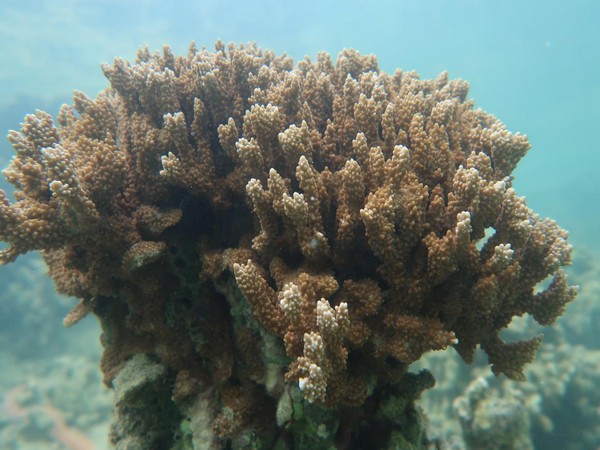

Washington [US], March 10 (ANI): A new study has outlined 150 years of sea-surface temperature history throughout the Greater Caribbean region, highlighting significant warming trends that have disrupted coral reef ecosystems.
The findings of the study were published in the journal 'PLOS Climate'.
Previous research has documented dramatic warming-induced changes to coral reef ecosystems worldwide -- and in the Caribbean in particular -- identifying such effects as mass coral mortality through coral bleaching and loss of reef-dependent fish.
Building on prior research, Colleen Bove of the University of North Carolina at Chapel Hill and colleagues have now conducted an updated analysis of sea-surface temperature trends for Caribbean coral reefs.
They first built a database of 5,326 Caribbean coral reefs, each located in one of eight sub-regions. Then, they used three open-access datasets of satellite and on-location sea-surface temperature observations to assess the history of warming from 1871 through 2020.
The analysis showed that regionwide, Caribbean coral reefs have been warming since 1915. However, in four of the eight sub-regions, warming began earlier, during the second half of the nineteenth century.
The researchers found that Caribbean reefs have warmed by a total of 0.5 to 1 degree Celsius in the past century, with different sub-regions experiencing different rates of warming from each other and over time. The data suggest that, if warming continues in a similar manner, these ecosystems will warm further by an average of about 1.5 degrees Celsius by the year 2100.
The analysis also assessed the occurrence of marine heatwaves -- brief periods of unusually high ocean temperatures. They found that the frequency and length of these events are rising throughout the Caribbean, with reefs now experiencing an average of five per year, up from one per year in the 1980s.
On the basis of their findings and other studies, the researchers call for urgent reduction of greenhouse gas emissions, as well as efforts to address local and regional stressors of coral reef ecosystems, such as fishing and pollution, in the Caribbean and beyond.
The authors added: "Our study indicates that coral reefs have been warming for at least a century and many reefs across the Caribbean have already warmed by a degree Celsius. This explains why we have seen such devastating declines in the health of this invaluable ecosystem." (ANI)




