
Researchers find a lot of brain real estate taken up when disagreeing
Washington [US], January 16 (ANI): The findings of a recent study by Yale researchers suggest that when two people agree, their brains exhibit calm synchronicity of activity focused on sensory areas of the brain. When they disagree, however, many other regions of the brain involved in higher cognitive functions become mobilised as each individual combats the other's argument.
ANI
Jan 16, 2021 19:57 IST

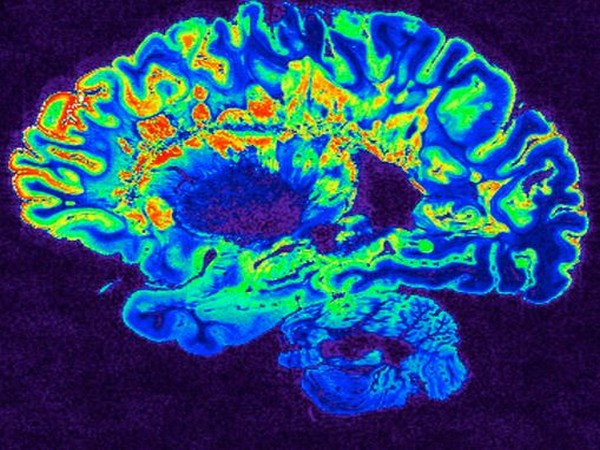
Washington [US], January 16 (ANI): The findings of a recent study by Yale researchers suggest that when two people agree, their brains exhibit calm synchronicity of activity focused on sensory areas of the brain. When they disagree, however, many other regions of the brain involved in higher cognitive functions become mobilised as each individual combats the other's argument.
The Yale-led research team reported the findings of the study in the journal Frontiers of Human Neuroscience.
"Our entire brain is a social processing network," said senior author Joy Hirsch, the Elizabeth Mears and House Jameson Professor of Psychiatry and professor of comparative medicine and neuroscience.
"However, it just takes a lot more brain real estate to disagree than to agree," added Hirsch.
For the study, the researchers from Yale and the University College London recruited 38 adults who were asked to say whether they agreed or disagreed with a series of statements such as "same-sex marriage is a civil right" or "marijuana should be legalized."
After matching up pairs based on their responses the researchers used an imaging technology called functional near-infrared spectroscopy to record their brain activity while they engaged in face-to-face discussions.
When the people were in agreement, brain activity was harmonious and tended to be concentrated on sensory areas of the brain such as the visual system, presumably in response to social cues from their partner.
However, during disputes, these areas of the brain were less active. Meanwhile, activity increased in the brain's frontal lobes, home of higher order executive functions.
"There is a synchronicity between the brains when we agree. But when we disagree, the neural coupling disconnects," Hirsch said.
Understanding how our brains function while disagreeing or agreeing is particularly important in a polarized political environment, Hirsch noted.
In discord, she said, two brains engage many emotional and cognitive resources "like a symphony orchestra playing different music."
In agreement, there "is less cognitive engagement and more social interaction between brains of the talkers, similar to a musical duet." (ANI)
Get the App


