

ADD ANI AS A TRUSTED SOURCE
googleads
ANI Logo
Menu
Science

Researchers engineer cells to destroy malignant tumour leaving other cells alone

Washington [US], June 28 (ANI): During a new study, researchers at McMaster University developed promising new cancer immunotherapy by using cancer-killing cells, genetically engineered outside the body to find and destroy malignant tumors.

ANI Jun 28, 2021 23:14 IST googleads

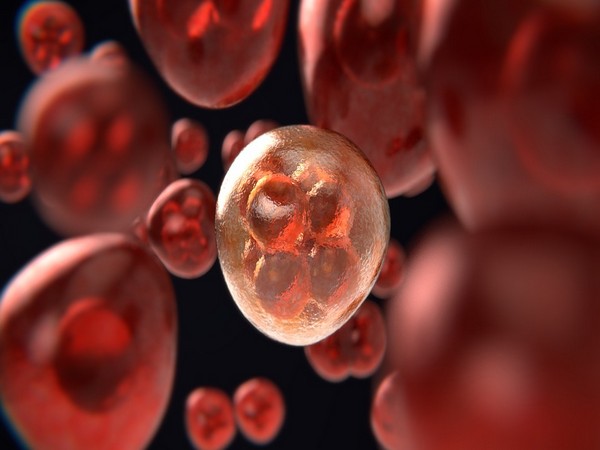
Representative Image

Hamilton [Canada], June 28 (ANI): During a new study, researchers at McMaster University developed promising new cancer immunotherapy by using cancer-killing cells, genetically engineered outside the body to find and destroy malignant tumors.
The modified "natural killer" cells can differentiate between cancer cells and healthy cells that are often intermingled in and around tumours, destroying only the targeted cells. The findings were published in the journal iScience.
The natural killer cells' ability to distinguish the target cells, even from healthy cells that bear similar markers, brings new promise to this branch of immunotherapy, say members of the research team.
The experimental treatment is an alternative to chimeric antigen receptor T-cell therapy, or CAR-T, which received FDA approval in 2017. The engineered T-cells used in CAR-T therapy are highly effective against some blood-borne cancers but cannot distinguish between cancerous and non-cancerous cells, so while they offer important benefits, they are not uniformly applicable to all forms of cancer. In patients with solid tumours, the T-cells can cause devastating, even lethal side effects.
The team behind the research wanted treatment with the same power as CAR-T, but which could be used safely against solid-tumor cancers. They first propagated natural killer cells taken from the blood of patients with breast cancer. Such cells perform a similar function to T-cells in the immune system.
The researchers then genetically modified them to target specific receptors on cancer cells, successfully testing the CAR-NK cells in the laboratory on tumour cells derived from breast cancer patients.
"We want to be able to attack these malignancies that have been so resistant to other treatments," says lead author Ana Portillo, a PhD candidate in the Department of Medicine. "The efficacy we see with CAR-NK cells in the laboratory is very promising and seeing that this technology is feasible is very important. Now, we have much better and safer options for solid tumours."
"These CAR-NK cells are a little bit smarter, in a way, in that they only kill the enemy cells and not good cells that happen to have the same marker," says Ashkar, Portillo's supervisor and a Professor of Medicine at McMaster. "These cells have a sober second thought that says, 'I recognize this target, but is this targeted part of a healthy cell or a cancer cell?' They are able to leave the healthy cells alone and kill the cancer cells."
Portillo and Ashkar's 12 co-authors, most associated with McMaster's Department of Medicine and its Immunology Research Centre, including McMaster's Bindi Dhesy-Thind (Associate Professor, Oncology), who provided blood samples from patients being treated for breast cancer in her clinical practice at Hamilton Health Sciences' Juravinski Cancer Centre.
"These are very exciting results, as to date the benefits of immunotherapy in breast cancer have lagged behind that of other malignancies," she said. "These engineered CAR-NK cells are an important step towards having a viable immunotherapy option in this large group of patients."
Ashkar says there is good reason to believe the technology would have a similar effect on solid tumours associated with lung, ovarian and other cancers.
The next step in moving the therapy toward clinical use is to conduct human trials, which the researchers are now arranging. (ANI)


Get the App

What to Read Next

Science

Amphibians bounce-back from Earth’s greatest mass extinction

Amphibians bounce-back from Earth’s greatest mass extinction

Researchers at the University of Bristol discovered that ancient frog ancestors survived the biggest mass extinction of species by eating on freshwater prey that evaded terrestrial predators.

Read More
Science

New insights into how cancer evades the immune system: Study

New insights into how cancer evades the immune system: Study

Immunotherapy research primarily focuses on better recognition of cancer cells by the body's own immune system. Researchers at Amsterdam UMC and Moffitt Cancer Center have taken a different approach.

Read More
Science

Scientists use AI to better understand nanoparticles: Study

Scientists use AI to better understand nanoparticles: Study

A group of scientists has created a way to illuminate the dynamic behavior of nanoparticles, which are essential components in the production of pharmaceuticals, electronics, and industrial and energy-conversion materials.

Read More
Science

COVID-19 severity may be predicted by White Blood Cell Count

COVID-19 severity may be predicted by White Blood Cell Count

A COVID-19 diagnosis is no longer as frightening as it used to be, thanks to developments in treatment choices. However, a new study reveals that leukocyte (white blood cell) count may now be used to identify who is more likely to develop more significant disease symptoms.

Read More
Science

New technology enhances gravitational-wave detection: Study

New technology enhances gravitational-wave detection: Study

A team of physicists led by Jonathan Richardson of the University of California, Riverside, demonstrated how new optical technology can extend the detection range of gravitational-wave observatories such as the Laser Interferometer Gravitational-Wave Observatory, or LIGO, and pave the way for future observatories.

Read More
Science

Astronomers find the smallest main-belt asteroids ever detected:

Astronomers find the smallest main-belt asteroids ever detected:

The majority of known asteroids orbit inside the main asteroid belt, which is positioned between Mars and Jupiter at an average distance of around 250 million km from Earth. Since the discovery of the first asteroid in 1801, about 750.000 asteroids have been identified, primarily in the last decade thanks to several optical surveys that examine the sky on clear nights.

Read More
Science

Study finds connection between quantum theory, information theory

Study finds connection between quantum theory, information theory

"Our results have no clear or direct application right now. It's basic research that lays the foundation for future technologies in quantum information and quantum computers. There's enormous potential for complete discoveries in many different research fields," said Guilherme B Xavier, a researcher in quantum communication at Linkoping University, Sweden.

Read More
Science

Tool for detecting problems during protein synthesis

Tool for detecting problems during protein synthesis

Protein synthesis in eukaryotic cells--found in plants, animals, and fungi--involves more than just the straightforward ribosome assembly of amino acids.

Read More
Science

When devices can read human emotions without a camera: Study

When devices can read human emotions without a camera: Study

Tokyo Metropolitan University researchers employed long-term skin conductance measurements to distinguish between emotions. Volunteers were given videos representing frightening scenarios, family bonding, and humour, while their skin conductance was measured.

Read More
Science

'Nuroscience study results can be better predicted by AI'

'Nuroscience study results can be better predicted by AI'

Large language models, a type of AI that analyses text, can anticipate the results of proposed neuroscience studies more correctly than human experts, according to a new study led by UCL (University College London) researchers.

Read More
Home About Us Our Products Advertise Contact Us Terms & Condition Privacy Policy

Copyright © aninews.in | All Rights Reserved.
