

ADD ANI AS A TRUSTED SOURCE
googleads
ANI Logo
Menu
Science

Researchers discover ways to increase effectiveness of antibiotics

Canberra [Australia], October 27 (ANI): Researchers have found a way to make antibiotics more effective against antibiotic-resistant bacteria - also known as superbugs.

ANI Oct 27, 2021 13:17 IST googleads

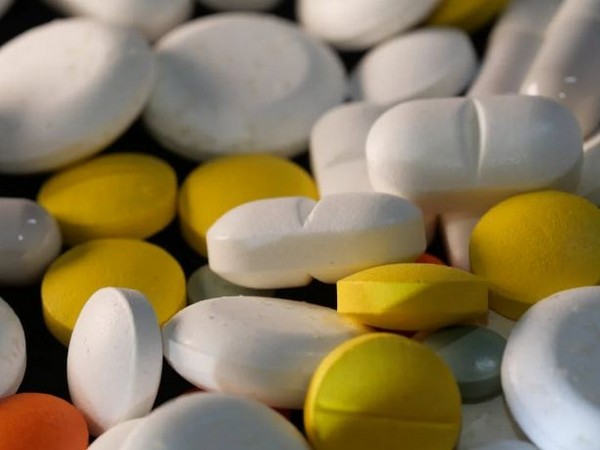
Representative image

Canberra [Australia], October 27 (ANI): Researchers have found a way to make antibiotics more effective against antibiotic-resistant bacteria - also known as superbugs.
The findings of the study were published in the journal 'Nature Communications'.
Antimicrobial resistance to superbugs has been evolving and is one of the top 10 global public health threats facing humanity, according to the World Health Organisation.
This new research will provide a pathway to increasing the effectiveness of antibiotics, without clinicians having to resort to risky strategies of giving patients higher doses or relying on the discovery of new types of antibiotics.
During a bacterial infection, the body uses molecules called chemoattractants to recruit neutrophils to the site of the infection. Neutrophils are immune cells with the ability to encapsulate and kill dangerous bacteria, critical to the immune response. Researchers attached a chemoattractant to an antibiotic, enabling them to enhance the recruitment of immune cells and improve their killing ability.
"When looking at how our immune system can fight bacteria there are two important aspects we look at. The first is our ability to entrap bacterial cells and kill them. The second is the signals -- the chemoattractants -- calling for more neutrophils, white blood cells which lead the immune system's response to resolve infection," said Dr Jennifer Payne, the lead researcher from EMBL Australia and the Monash Biomedicine Discovery Institute.
The researchers linked a chemoattractant known as formyl peptide to vancomycin, a commonly used antibiotic that binds to the surface of the bacteria, and performed their studies on golden staph infections, one of the more problematic antibiotic-resistant bacteria.
"We've been working on using dual-function antibiotic-chemoattractant 'hybrids', which improve the recruitment of neutrophils and increase the engulfing and killing of the bacteria," said Dr Payne.
"By stimulating our powerful immune system in this way with the immunotherapeutic antibiotic, we've shown in mouse models that the treatment is 2-fold more effective than just using the antibiotic alone at a one-fifth lower dose," said Associate Professor Max Cryle, an EMBL Australia Group Leader at the Monash Biomedicine Discovery Institute.
"This very promising new avenue of research is bringing a lot of potential benefits to the ever-increasing threat of drug-resistant superbugs," said Associate Professor Cryle.
Instrumental to the project was funding from VESKI and Melbourne sister city foundation that took Dr Payne across the world to Boston to learn and carry out microfluidic research learning and collaborating with Associate Professor Daniel Irima, and Dr Felix Ellett, Harvard experts in this field.
"Microfluidics was ground-breaking for this research, as it allowed us to generate an infection-on-a-chip to monitor the recruitment of human immune cells, and observe in real-time how our immunotherapeutic enhances their ability to kill MRSA. Just like what would happen in our body" said Dr Payne.
Partners are being sought to continue this research into clinical trials with the potential of developing a preventative antibiotic strategy in the intensive care environment to protect our most vulnerable.
The work has resulted in a patent covering the immunotherapeutic, with the IP owned by Monash University. (ANI)


Get the App

What to Read Next

Science

New method guides magnetism without magnets

New method guides magnetism without magnets

Researchers at Paul Scherrer Institute PSI have demonstrated an innovative method to control magnetism in materials using an energy-efficient electric field.

Read More
Science

Amphibians bounce-back from Earth’s greatest mass extinction

Amphibians bounce-back from Earth’s greatest mass extinction

Researchers at the University of Bristol discovered that ancient frog ancestors survived the biggest mass extinction of species by eating on freshwater prey that evaded terrestrial predators.

Read More
Science

New insights into how cancer evades the immune system: Study

New insights into how cancer evades the immune system: Study

Immunotherapy research primarily focuses on better recognition of cancer cells by the body's own immune system. Researchers at Amsterdam UMC and Moffitt Cancer Center have taken a different approach.

Read More
Science

Scientists use AI to better understand nanoparticles: Study

Scientists use AI to better understand nanoparticles: Study

A group of scientists has created a way to illuminate the dynamic behavior of nanoparticles, which are essential components in the production of pharmaceuticals, electronics, and industrial and energy-conversion materials.

Read More
Science

New device could allow you to taste cake in virtual reality

New device could allow you to taste cake in virtual reality

The 'e-Taste' interface employs sensors and wireless chemical dispensers to enable remote taste perception, often known as gestation. Field testing done by researchers at The Ohio State University confirmed the device's ability to digitally simulate a range of taste intensities, while still offering variety and safety for the user.

Read More
Science

Study reveals impact of animals as architects of Earth

Study reveals impact of animals as architects of Earth

A new study led by Professor Gemma Harvey from Queen Mary University of London has revealed how hundreds of species shape the landscapes we depend on, from termite mounds visible from space to beavers creating wetlands and hippos carving drainage systems.

Read More
Science

Opposing arrows of time emerge from certain quantum systems

Opposing arrows of time emerge from certain quantum systems

Researchers at the University of Surrey made a thought-provoking discovery. A new study reveals that opposing arrows of time can theoretically emerge from certain quantum systems.

Read More
Science

COVID-19 severity may be predicted by White Blood Cell Count

COVID-19 severity may be predicted by White Blood Cell Count

A COVID-19 diagnosis is no longer as frightening as it used to be, thanks to developments in treatment choices. However, a new study reveals that leukocyte (white blood cell) count may now be used to identify who is more likely to develop more significant disease symptoms.

Read More
Science

Seals can essentially act as 'smart sensors': Study

Seals can essentially act as 'smart sensors': Study

A new study by marine biologists reports that seals can essentially act as 'smart sensors' for monitoring fish populations in the ocean's eerily dim 'twilight zone.'

Read More
Science

New technology enhances gravitational-wave detection: Study

New technology enhances gravitational-wave detection: Study

A team of physicists led by Jonathan Richardson of the University of California, Riverside, demonstrated how new optical technology can extend the detection range of gravitational-wave observatories such as the Laser Interferometer Gravitational-Wave Observatory, or LIGO, and pave the way for future observatories.

Read More
Home About Us Our Products Advertise Contact Us Terms & Condition Privacy Policy

Copyright © aninews.in | All Rights Reserved.
