

ADD ANI AS A TRUSTED SOURCE
googleads
ANI Logo
Menu
Science

Researchers discover new method to create tailored odors and fragrances with help of machine learning

Tokyo [Japan], September 6 (ANI): One of the most basic senses of animal species is the sense of smell. It is essential for finding food, recognising attractiveness, and detecting danger. Humans detect odorants using olfactory receptors found in olfactory nerve cells. These odorant sensory impressions on nerve cells are linked to their molecular and physicochemical properties. This enables scents to be tailored to generate the desired odour impression. Current approaches can only predict olfactory perceptions based on odorant physicochemical properties. However, that approach cannot forecast sensing data, which is required for producing odours.

ANI Sep 06, 2022 03:34 IST googleads

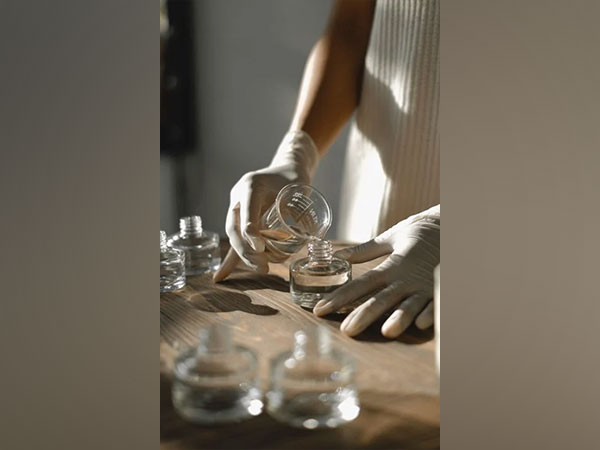
Representative Image

Tokyo [Japan], September 6 (ANI): One of the most basic senses of animal species is the sense of smell. It is essential for finding food, recognising attractiveness, and detecting danger. Humans detect odorants using olfactory receptors found in olfactory nerve cells. These odorant sensory impressions on nerve cells are linked to their molecular and physicochemical properties. This enables scents to be tailored to generate the desired odour impression. Current approaches can only predict olfactory perceptions based on odorant physicochemical properties. However, that approach cannot forecast sensing data, which is required for producing odours.
The findings of the study were published in the journal PLoS One.
To tackle this issue, scientists from Tokyo Institute of Technology (Tokyo Tech) have employed the innovative strategy of solving the inverse problem. Instead of predicting the smell from molecular data, this method predicts molecular features based on the odor impression. This is achieved using standard mass spectrum data and machine learning (ML) models. "We used a machine-learning-based odor predictive model that we had previously developed to obtain the odor impression. Then we predicted the mass spectrum from odor impression inversely based on the previously developed forward model," explains Professor Takamichi Nakamoto, the leader of the research effort by Tokyo Tech.
The mass spectra of odor mixtures is obtained by a linear combination of the mass spectra of single components. This simple method allows for the quick preparation of the predicted spectra of odor mixtures and can also predict the required mixing ratio, an important part of the recipe for new odor preparation. "For example, we show which molecules give the mass spectrum of apple flavor with enhanced 'fruit' and 'sweet' impressions. Our analysis method shows that combinations of either 59 or 60 molecules give the same mass spectrum as the one obtained from the specified odor impression. With this information, and the correct mixing ratio needed for a certain impression, we could theoretically prepare the desired scent," highlights Prof. Nakamoto.
This novel method described in this study can provide highly accurate predictions of the physicochemical properties of odor mixtures, as well as the mixing ratios required to prepare them, thereby opening the door to endless tailor-made fragrances.
It looks like the future of odor mixtures smells good! (ANI)


Get the App

What to Read Next

Science

New insights into how cancer evades the immune system: Study

New insights into how cancer evades the immune system: Study

Immunotherapy research primarily focuses on better recognition of cancer cells by the body's own immune system. Researchers at Amsterdam UMC and Moffitt Cancer Center have taken a different approach.

Read More
Science

Scientists use AI to better understand nanoparticles: Study

Scientists use AI to better understand nanoparticles: Study

A group of scientists has created a way to illuminate the dynamic behavior of nanoparticles, which are essential components in the production of pharmaceuticals, electronics, and industrial and energy-conversion materials.

Read More
Science

New device could allow you to taste cake in virtual reality

New device could allow you to taste cake in virtual reality

The 'e-Taste' interface employs sensors and wireless chemical dispensers to enable remote taste perception, often known as gestation. Field testing done by researchers at The Ohio State University confirmed the device's ability to digitally simulate a range of taste intensities, while still offering variety and safety for the user.

Read More
Science

Strand Life Sciences launches portal for rare disease diagnosis

Strand Life Sciences launches portal for rare disease diagnosis

Marking Rare Disease Day, Strand Life Sciences, a subsidiary of Reliance Industries and a leading genomics research company, has launched the StrandOmics Portal, an innovative digital platform designed to assist doctors in diagnosing rare diseases more efficiently.

Read More
Science

Study reveals impact of animals as architects of Earth

Study reveals impact of animals as architects of Earth

A new study led by Professor Gemma Harvey from Queen Mary University of London has revealed how hundreds of species shape the landscapes we depend on, from termite mounds visible from space to beavers creating wetlands and hippos carving drainage systems.

Read More
Science

Opposing arrows of time emerge from certain quantum systems

Opposing arrows of time emerge from certain quantum systems

Researchers at the University of Surrey made a thought-provoking discovery. A new study reveals that opposing arrows of time can theoretically emerge from certain quantum systems.

Read More
Science

'Creation of black holes without singularities through gravity'

'Creation of black holes without singularities through gravity'

Traditional black holes, as predicted by Albert Einstein's theory of General Relativity, contain what are known as singularities, i.e. points where the laws of physics break down. Identifying how singularities are resolved in the context of quantum gravity is one of the fundamental problems in theoretical physics. Now, a team of experts has described the creation of regular black holes from gravitational effects without the need for the existence of exotic matter required by some previous models.

Read More
Science

New technology enhances gravitational-wave detection: Study

New technology enhances gravitational-wave detection: Study

A team of physicists led by Jonathan Richardson of the University of California, Riverside, demonstrated how new optical technology can extend the detection range of gravitational-wave observatories such as the Laser Interferometer Gravitational-Wave Observatory, or LIGO, and pave the way for future observatories.

Read More
Science

Discovering the genetics of climate adaptation 

Discovering the genetics of climate adaptation 

As climate change accelerates, plants are under increasing pressure to adapt to changing habitats and environmental conditions.

Read More
Science

Shubhanshu Shukla: IAF officer becomes first Indian astronaut for

Shubhanshu Shukla: IAF officer becomes first Indian astronaut for

Shubhanshu Shukla, Indian Air Force (IAF) officer and one of four astronauts for Indian Space Research Organisation's (ISRO) Gaganyaan mission, has been sele Shubhanshu Shukla, Indian Air Force (IAF) officer and one of four astronauts for Indian Space Research Organisation's (ISRO) Gaganyaan mission, has been selected as the pilot for Axiom Mission 4, scheduled for Spring 2025.cted as the pilot for Axiom Mission 4, scheduled for Spring 2025.

Read More
Home About Us Our Products Advertise Contact Us Terms & Condition Privacy Policy

Copyright © aninews.in | All Rights Reserved.
