

ADD ANI AS A TRUSTED SOURCE
googleads
ANI Logo
Menu
Science

Researchers discover new electrode material for deep-ultraviolet light-emitting diode applications

Deep-ultraviolet (DUV) light-emitting diode applications now have a novel electrode material thanks to research from Tokyo Metropolitan University. They created thin films of an alloy of tin oxide, germanium oxide, and tantalum using a state-of-the-art deposition process, and discovered that they display exceptional electrical conductivity and extraordinary transparency for DUV light.

ANI Jan 23, 2023 01:21 IST googleads

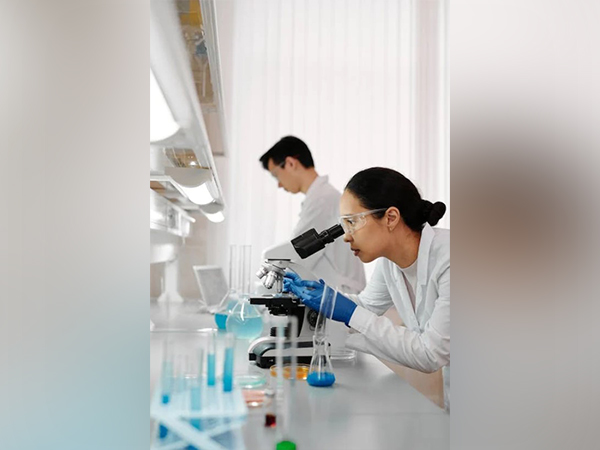
Representative Image

Tokyo [Japan], January 23 (ANI): Deep-ultraviolet (DUV) light-emitting diode applications now have a novel electrode material thanks to research from Tokyo Metropolitan University. They created thin films of an alloy of tin oxide, germanium oxide, and tantalum using a state-of-the-art deposition process, and discovered that they display exceptional electrical conductivity and extraordinary transparency for DUV light. Since the same wavelengths are utilised in microchip manufacturing and sterilisation procedures, the new electrodes have the potential to have an impact on the industry.
Deep ultraviolet (DUV) light, with a wavelength of 200 to 300 nanometers, has some very important roles to play in industry and society. It can be used to sterilize water and surfaces by inactivating bacteria and viruses and for curing adhesives which harden on exposure to DUV light. Crucially, it is used in the manufacture of the most advanced semiconducting chips and devices.
With the adoption of DUV technology only getting bigger and bigger, scientists are keen to develop deep UV light-emitting diode (LED) devices, tapping the unparalleled energy efficiency, scalability, and compactness of LED sources. LEDs feature light-emitting layers of material sandwiched between a pair of transparent electrodes, which have to let the light through as well as conduct electricity. Though such LEDs exist, existing electrode materials are yet to combine conductivity with optimal transparency; they still absorb a significant proportion of DUV light.
Now, a team led by Professor Yasushi Hirose of Tokyo Metropolitan University have developed a thin film transparent electrode with excellent conductivity and, crucially, unprecedented transparency for deep UV light. They combined a widely used ingredient of transparent electrodes, tin oxide, and mixed it together with germanium oxide, a material with a similar crystalline structure but better transparency. These two materials are usually not soluble in each other, so the team used pulsed laser deposition, a method that allows insoluble materials to be deposited together without them spontaneously separating out into distinct regions. They showed that deep UV transmittance (the proportion of light let through) gets better and better with more germanium oxide addition. By adding some tantalum, they also improved the electrical conductivity of the films.
By optimizing the recipe, the films that were produced showed low resistivity and some of the best transmittance of DUV light out of all known electrode materials, including the most common transparent electrode material, indium tin oxide (ITO). Importantly, they showed that the films could be formed on aluminum nitride (AlN) substrates by using a crystalline "seed" layer of tin oxide. Aluminum nitride is a key material in deep UV LEDs; the compatibility of the team's newly designed tantalum tin germanium oxide (Ta:SGO) films with AlN makes their work extremely promising for real-world applications in the next generation of light sources for chip manufacture, and beyond. (ANI)


Get the App

What to Read Next

Science

Study reveals role of gamma-delta T cells in cancer immunology

Study reveals role of gamma-delta T cells in cancer immunology

The significance of gamma-delta T cells in 33 different cancer types is revealed in a recent study that was published in Cell Press. This information sheds light on the cells' potential as clinical biomarkers and therapeutic targets in the treatment of cancer. This thorough examination, which was carried out under the direction of a group of Moffitt Cancer Center experts, marks a substantial breakthrough in our knowledge of these distinct immune cells and how they affect cancer therapy outcomes for patients.

Read More
Science

Medication increases radiation therapy's efficacy for lung cancer

Medication increases radiation therapy's efficacy for lung cancer

A group of researchers from the University of Cincinnati has discovered a possible novel approach to enhance the efficacy of radiation therapy and enhance the prognosis of patients with lung cancer metastasizing to the brain.

Read More
Science

Study: Role of tRNA modifying enzyme in brain function

Study: Role of tRNA modifying enzyme in brain function

A pioneering study undertaken by a Kumamoto University research team shed light on the crucial role of TRMT10A, a tRNA methylation enzyme, in sustaining brain function. The findings show how TRMT10A deficiency reduces specific transfer RNA (tRNA) levels in the brain, altering protein synthesis and affecting synapse structure and function.

Read More
Science

Research sheds more light on staging of pancreatic cancer

Research sheds more light on staging of pancreatic cancer

A recent Cedars-Sinai Cancer study found that up to 80 per cent of the time, patients with early pancreatic cancer are incorrectly staged. The discovery highlights the critical need for improvements in staging and diagnostic technology, which could have a substantial impact on early pancreatic cancer research and therapy.

Read More
Science

Study gives insight into treatment of rectal cancer

Study gives insight into treatment of rectal cancer

Positive outcomes from a novel treatment for locally advanced rectal cancer include the occasional full avoidance of surgery. The chance of a recurrence is also decreased.

Read More
Science

Role of omega-3 fatty acid in prevention of arrhythmias

Role of omega-3 fatty acid in prevention of arrhythmias

Scientists have produced an enormous amount of evidence in the last few decades that indicates eating a diet high in saturated fats is sufficient to induce heart disease. Saturated fats have also been connected to potentially fatal arrhythmias, in addition to other issues including diabetes and atherosclerosis.

Read More
Science

Blood cancer medication more effective on brain tumours

Blood cancer medication more effective on brain tumours

According to a recent study, medications intended to treat blood and other malignancies may also increase the effectiveness of radiation therapy for low-grade brain tumours in adults.

Read More
Science

Study finds how new blood test helps improve cancer treatments

Study finds how new blood test helps improve cancer treatments

The likelihood that treatment will be successful for cancer increases with early detection. Almost every kind of cancer is covered by this. Evaluating the advantages and disadvantages of each type of therapy on an individual basis and keeping a regular eye on treatment outcomes are also essential components of effective patient care.

Read More
Science

Light therapy helps in brain connectivity following injury

Light therapy helps in brain connectivity following injury

A study suggested that low-level light treatment may have an impact on the healing process in the brains of individuals who have experienced serious brain injuries.

Read More
Science

More insight on ability of cancer drug to lower blood sugar

More insight on ability of cancer drug to lower blood sugar

The efficacy of a medication to prevent liver fat accumulation--a condition that frequently coexists with obesity and can result in dangerous fatty liver disease--has been further explored by researchers at the University of Oklahoma.

Read More
Home About Us Our Products Advertise Contact Us Terms & Condition Privacy Policy

Copyright © aninews.in | All Rights Reserved.


