

ADD ANI AS A TRUSTED SOURCE
googleads
ANI Logo
Menu
Science

Researchers discover microbial gene that could help maintain 'greater' gut health

Illinois [US], May 27 (ANI): New research from the University of Illinois identifies a microbial gene discovery could that could mean lead to greater gut health.

ANI May 27, 2021 22:56 IST googleads

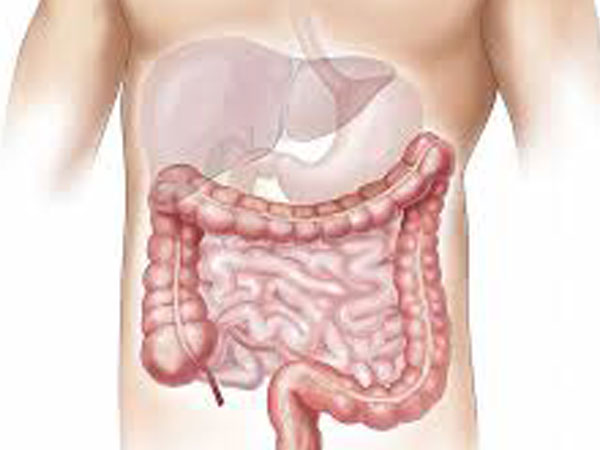
Representative image

Illinois [US], May 27 (ANI): New research from the University of Illinois identifies a microbial gene discovery could that could mean lead to greater gut health.
As the owner of a human body, you're carrying trillions of microbes with you everywhere you go. These microscopic organisms aren't just hitching a ride; many of them perform essential chemical reactions that regulate everything from our digestion to our immune system to our moods.
One important set of reactions relates to fat absorption via bile acids. Our livers make these acids to help digest fats and fat-soluble vitamins as they travel through the small intestine. Near the end of the small intestine, microbes convert the acids into new forms, which can either be beneficial or harmful.
"Locating these bacterial genes will allow mechanistic studies to determine the effect of bile acid conversion on host health. If we find this is a beneficial reaction, therapeutic strategies can be developed to encourage the production of these bile acids in the gastrointestinal tract," says Jason Ridlon, associate professor in the Department of Animal Sciences at U of I and corresponding author of a new article in Gut Microbes.
Microbes produce enzymes that flip the orientation of three hydroxyl groups on bile acid molecules. Flipping them into different configurations rearranges the acid molecules into forms that can be harmful or beneficial. Ridlon and other scientists had already identified the genes for two of these enzymes, but one was still unknown.
To find the missing gene, Ridlon and his collaborators looked back in time. Previous research links the flipping of a specific hydroxyl group - one attached to a location on the acid molecule known as carbon-12 - with a microbe called Clostridium paraputrificum.
"We knew from literature published a few decades ago what species this function was reported in. We confirmed it in a strain of Clostridium paraputrificum that we have in our culture collection. This function is known to be catalyzed by certain enzymes known as reductases," Ridlon says.
"Using the genome sequence of Clostridium paraputrificum, we identified all the candidate reductases, engineered the genes into E. coli and determined which reductase was able to flip the polar group on bile acids," he adds.
The research team then searched for similar sequences in the human microbiome.
"We were able to identify the gene in numerous bacterial species that were previously unknown to have this bile acid metabolizing function. This is helpful for human microbiome researchers because the field is moving towards trying to link function with the disease. Now we know the precise DNA sequences that encode an enzyme that flip carbon-12 of bile acids," Ridlon says.
The researchers haven't yet figured out if flipping the hydroxyl group at carbon-12 is a good or a bad thing. In the "good" category, the flip may play a role in detoxifying harmful bile acids such as deoxycholic acid (DCA) and lithocholic acid (LCA), chemicals known to damage DNA and cause cancers of the colon, liver, and oesophagus. But Ridlon notes that "good vs. bad" framing oversimplifies reality.
"While we tend to think of DCA and LCA as 'bad,' the context is very important. Infection by Clostridium difficile (C. diff) seems to correlate with low levels of DCA and LCA, for instance, so these bile acids seem to be protective in preventing unwanted colonizers. Chronic high levels of DCA and LCA due to Western lifestyle are 'bad,' however, so it is a balancing act," he says. "A major goal of this research is trying to establish and maintain a 'Goldilocks zone' of bile acids - not too much or too little."
While there is still more to learn, Ridlon says identifying and characterising these new microbial genes responsible for bile acid conversion is a major step forward for gut health. (ANI)


Get the App

What to Read Next

Science

Amphibians bounce-back from Earth’s greatest mass extinction

Amphibians bounce-back from Earth’s greatest mass extinction

Researchers at the University of Bristol discovered that ancient frog ancestors survived the biggest mass extinction of species by eating on freshwater prey that evaded terrestrial predators.

Read More
Science

Scientists use AI to better understand nanoparticles: Study

Scientists use AI to better understand nanoparticles: Study

A group of scientists has created a way to illuminate the dynamic behavior of nanoparticles, which are essential components in the production of pharmaceuticals, electronics, and industrial and energy-conversion materials.

Read More
Science

New device could allow you to taste cake in virtual reality

New device could allow you to taste cake in virtual reality

The 'e-Taste' interface employs sensors and wireless chemical dispensers to enable remote taste perception, often known as gestation. Field testing done by researchers at The Ohio State University confirmed the device's ability to digitally simulate a range of taste intensities, while still offering variety and safety for the user.

Read More
Science

Opposing arrows of time emerge from certain quantum systems

Opposing arrows of time emerge from certain quantum systems

Researchers at the University of Surrey made a thought-provoking discovery. A new study reveals that opposing arrows of time can theoretically emerge from certain quantum systems.

Read More
Science

New technology enhances gravitational-wave detection: Study

New technology enhances gravitational-wave detection: Study

A team of physicists led by Jonathan Richardson of the University of California, Riverside, demonstrated how new optical technology can extend the detection range of gravitational-wave observatories such as the Laser Interferometer Gravitational-Wave Observatory, or LIGO, and pave the way for future observatories.

Read More
Science

Discovery of unexpected collagen structure to influence research

Discovery of unexpected collagen structure to influence research

Collagen, the body's most abundant protein, has long been considered a predictable structural component of tissues.

Read More
Science

Astronomers find the smallest main-belt asteroids ever detected:

Astronomers find the smallest main-belt asteroids ever detected:

The majority of known asteroids orbit inside the main asteroid belt, which is positioned between Mars and Jupiter at an average distance of around 250 million km from Earth. Since the discovery of the first asteroid in 1801, about 750.000 asteroids have been identified, primarily in the last decade thanks to several optical surveys that examine the sky on clear nights.

Read More
Science

Study finds connection between quantum theory, information theory

Study finds connection between quantum theory, information theory

"Our results have no clear or direct application right now. It's basic research that lays the foundation for future technologies in quantum information and quantum computers. There's enormous potential for complete discoveries in many different research fields," said Guilherme B Xavier, a researcher in quantum communication at Linkoping University, Sweden.

Read More
Science

When devices can read human emotions without a camera: Study

When devices can read human emotions without a camera: Study

Tokyo Metropolitan University researchers employed long-term skin conductance measurements to distinguish between emotions. Volunteers were given videos representing frightening scenarios, family bonding, and humour, while their skin conductance was measured.

Read More
Science

'Nuroscience study results can be better predicted by AI'

'Nuroscience study results can be better predicted by AI'

Large language models, a type of AI that analyses text, can anticipate the results of proposed neuroscience studies more correctly than human experts, according to a new study led by UCL (University College London) researchers.

Read More
Home About Us Our Products Advertise Contact Us Terms & Condition Privacy Policy

Copyright © aninews.in | All Rights Reserved.


