 हिंदी खबर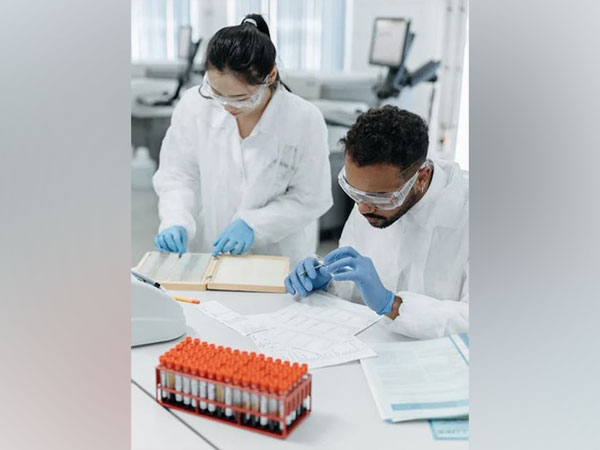

Maryland [United States], March 28 (ANI): According to a recent study, four biomarkers that can be easily measured through a simple blood test exhibit certain patterns in people who are now experiencing or are at high risk for post-traumatic stress disorder. The results indicate that these biomarkers might be employed to identify PTSD, diagnose the disease, or track a patient's reaction to treatment.
After experiencing or seeing a terrible event, PTSD may develop. Nowadays, it is diagnosed based on symptoms including flashbacks, trouble sleeping or focusing, negative thoughts, memory issues, and avoiding situations that provoke it. It can be difficult to diagnose PTSD and gauge how the treatment is working because other conditions can share some of these symptoms.
This research, which involved over 1,000 service members, represents the largest prospective study to date to assess the biological markers of PTSD over time.
"This study provides valuable insights into the natural history of PTSD and the effectiveness of interventions, which can inform the development of treatment guidelines and improve the care for individuals suffering from PTSD," said Stacy-Ann Miller, a researcher at Walter Reed Army Institute of Research in Silver Spring, Maryland. "Better methods of predicting or screening for PTSD could help to overcome the disorder by identifying individuals at high risk of developing PTSD and providing them with early intervention or prevention strategies. This could potentially reduce the severity of symptoms or prevent the disorder from developing altogether."
Miller will present the new research at Discover BMB, the annual meeting of the American Society for Biochemistry and Molecular Biology, March 25-28 in Seattle.
Biomarkers, which reflect biological processes, can provide an objective measure of physiological changes associated with diseases such as PTSD. For the study, researchers analyzed four biomarkers in blood samples from active-duty service members taken before a 10-month deployment, three days after their return and three to six months after their return. The biomarkers have previously been linked to stress, depression, anxiety and mental health disorders. They included: the glycolytic ratio, a measure of how the body breaks down sugar to produce energy; arginine, an amino acid that plays a role in the immune and cardiovascular systems; serotonin, a chemical messenger that helps regulate mood, sleep and other functions; and glutamate, a chemical messenger that plays a role in learning and memory.
The researchers divided service members into groups based on measures of PTSD and mental resilience and compared the four biomarkers among the different groups. Participants were classified as having PTSD, sub-threshold PTSD or no PTSD depending on their clinical diagnosis and PTSD symptoms. Researchers classified participants' resilience based on a combination of factors including PTSD, anxiety, sleep quality, alcohol use disorders, combat exposures, traumatic brain injury, and general physical and mental health. Previous studies have shown that people considered to have low resilience based on these measures are much more likely to develop PTSD after deployment than those with high resilience.
Comparing these biomarkers in people with different PTSD status and levels of resilience, the results showed that those with PTSD or sub-threshold PTSD had significantly higher glycolytic ratio and lower arginine than those with high resilience. People with PTSD also had significantly lower serotonin and higher glutamate than those with high resilience. These associations were independent of factors such as gender, age, body mass index, smoking and caffeine consumption.
The researchers said the biomarkers could help to predict which individuals face a high risk of PTSD, improve the accuracy of PTSD diagnosis and improve overall understanding of the drivers and effects of PTSD.
"Improved methods of screening and predicting PTSD could inform better treatment approaches by providing a deeper understanding of the underlying biological mechanisms of the disorder," said Miller. "This could lead to the development of more targeted and effective treatments for PTSD or to identify specific subtypes of PTSD, which may respond differently to different treatments." (ANI)


