

ADD ANI AS A TRUSTED SOURCE
googleads
ANI Logo
Menu
Science

Researchers develop prodrug that kills cancer cells

Pohang [South Korea], January 28 (ANI): A team of researchers have developed a prodrug that kills cancer cells like assassins.

ANI Jan 28, 2022 18:22 IST googleads

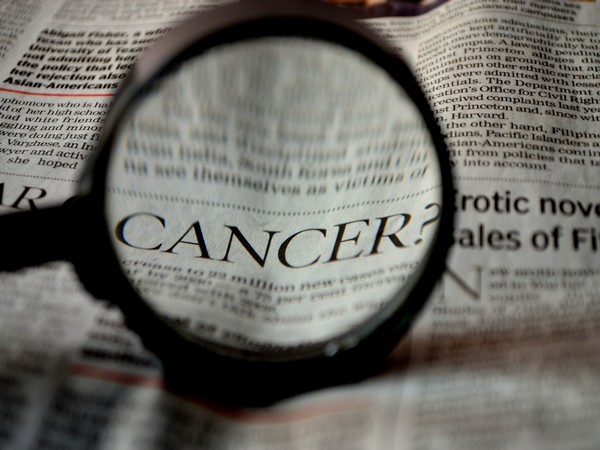
Representative image

Pohang [South Korea], January 28 (ANI): A team of researchers have developed a prodrug that kills cancer cells like assassins.
The study has been published in 'Advanced Science Journal'.
A research team led by Professor Won Jong Kim of POSTECH's Department of Chemistry has developed a lymph-directed self-immolative nitric oxide prodrug that is readily conjugated to the protein albumin to remove cancer cells in lymph nodes. Prodrugs are drugs that need to be metabolized in the body to be therapeutic.
Since nitric oxide (NO) can trigger various biological reactions in the body, studies have been conducted to use it for anti-cancer therapy. However, conventional NO drugs are difficult to apply as treatment since they spontaneously release NO gas due to their innate structural instability.
The drug developed by Professor Kim's team is unique in that it selectively reacts with strong reductants (i.e., glutathione) inside the body to release nitric oxide. In this study, using the property of albumin that enables rapid drainage into the lymph nodes, the prodrug is able to eliminate cancer cells located in the tumour-draining lymph nodes.
In a metastasis mouse model, the mice treated with the drug had about 30 times less weight of metastatic cancer cells in the lymph node than those not treated. Also, 85 per cent of the mice treated with the drug survived, whereas only 14 per cent of the untreated survived.
Unlike conventional NO prodrugs, the newly developed prodrug does not spontaneously decompose when it comes in contact with water, rendering it easy to store or transport. Side effects are also significantly lower compared to performing lymph node removal surgeries. The drug also shows high potential to be commercialized since 3-morpholinosydnonimine hydrochloride (SIN-1) - a component of the drug - has already been used clinically and albumin is also a protein present in the body.
"The self-immolative nitric oxide prodrug can minimize the side effects of nitric oxide and maximize its therapeutic effects," explained Professor Won Jong Kim who led the study.
He noted, "It will be applicable in the prevention and treatment of cancer, autoimmune diseases, intractable neurological diseases, and infectious diseases in the future." (ANI)


Get the App

What to Read Next

Science

Amphibians bounce-back from Earth’s greatest mass extinction

Amphibians bounce-back from Earth’s greatest mass extinction

Researchers at the University of Bristol discovered that ancient frog ancestors survived the biggest mass extinction of species by eating on freshwater prey that evaded terrestrial predators.

Read More
Science

New insights into how cancer evades the immune system: Study

New insights into how cancer evades the immune system: Study

Immunotherapy research primarily focuses on better recognition of cancer cells by the body's own immune system. Researchers at Amsterdam UMC and Moffitt Cancer Center have taken a different approach.

Read More
Science

Scientists use AI to better understand nanoparticles: Study

Scientists use AI to better understand nanoparticles: Study

A group of scientists has created a way to illuminate the dynamic behavior of nanoparticles, which are essential components in the production of pharmaceuticals, electronics, and industrial and energy-conversion materials.

Read More
Science

New technology enhances gravitational-wave detection: Study

New technology enhances gravitational-wave detection: Study

A team of physicists led by Jonathan Richardson of the University of California, Riverside, demonstrated how new optical technology can extend the detection range of gravitational-wave observatories such as the Laser Interferometer Gravitational-Wave Observatory, or LIGO, and pave the way for future observatories.

Read More
Science

Astronomers find the smallest main-belt asteroids ever detected:

Astronomers find the smallest main-belt asteroids ever detected:

The majority of known asteroids orbit inside the main asteroid belt, which is positioned between Mars and Jupiter at an average distance of around 250 million km from Earth. Since the discovery of the first asteroid in 1801, about 750.000 asteroids have been identified, primarily in the last decade thanks to several optical surveys that examine the sky on clear nights.

Read More
Science

Study finds connection between quantum theory, information theory

Study finds connection between quantum theory, information theory

"Our results have no clear or direct application right now. It's basic research that lays the foundation for future technologies in quantum information and quantum computers. There's enormous potential for complete discoveries in many different research fields," said Guilherme B Xavier, a researcher in quantum communication at Linkoping University, Sweden.

Read More
Science

Tool for detecting problems during protein synthesis

Tool for detecting problems during protein synthesis

Protein synthesis in eukaryotic cells--found in plants, animals, and fungi--involves more than just the straightforward ribosome assembly of amino acids.

Read More
Science

When devices can read human emotions without a camera: Study

When devices can read human emotions without a camera: Study

Tokyo Metropolitan University researchers employed long-term skin conductance measurements to distinguish between emotions. Volunteers were given videos representing frightening scenarios, family bonding, and humour, while their skin conductance was measured.

Read More
Science

'Nuroscience study results can be better predicted by AI'

'Nuroscience study results can be better predicted by AI'

Large language models, a type of AI that analyses text, can anticipate the results of proposed neuroscience studies more correctly than human experts, according to a new study led by UCL (University College London) researchers.

Read More
Science

Thermal imaging may help fruits, veggies stay fresher longer: Study

Thermal imaging may help fruits, veggies stay fresher longer: Study

Before your favourite produce arrives at the grocery store, it must be carefully harvested and stored for extended periods of time. A recent University of Georgia assessment argues that new temperature sensing devices could make that procedure considerably easier, as agricultural issues are exacerbated by changing climates.

Read More
Home About Us Our Products Advertise Contact Us Terms & Condition Privacy Policy

Copyright © aninews.in | All Rights Reserved.


