

ADD ANI AS A TRUSTED SOURCE
googleads
ANI Logo
Menu
Science

Researchers develop new strategy to fight antibiotic resistance

Washington D.C. [USA], Jan 18 (ANI): While traditional antibiotics are known to serve the purpose of killing or reducing the activity of individual bacteria, some bacteria become resistant to these antibiotics. In recent research, bioscience engineers have developed a new antibacterial strategy that weakens bacteria by preventing them from cooperating.

ANI Jan 18, 2020 14:49 IST googleads

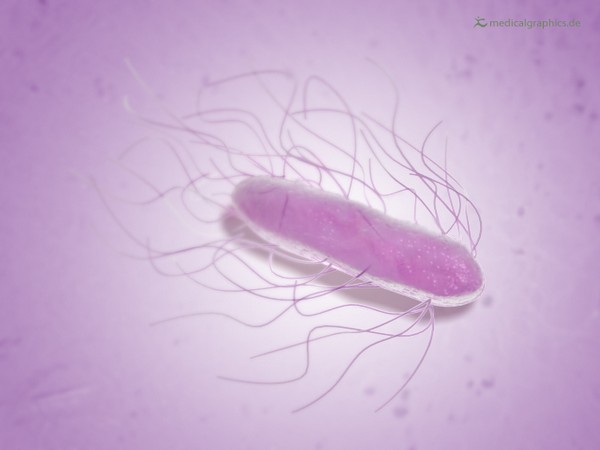
Salmonella bacteria

Washington D.C. [USA], Jan 18 (ANI): While traditional antibiotics are known to serve the purpose of killing or reducing the activity of individual bacteria, some bacteria become resistant to these antibiotics. In recent research, bioscience engineers have developed a new antibacterial strategy that weakens bacteria by preventing them from cooperating.
Some bacteria become resistant to these antibiotics, allowing them to grow further and take over from non-resistant ones. The use of antibiotics, therefore, causes more and more bacteria to become resistant to antibiotics.
The researchers showed that blocking slime production of salmonella bacteria weakens the bacterial community, making it easier to remove. They used a chemical, antibacterial substance that was previously developed at KU Leuven. The findings were published in the journal Nature Communications.
According to Professor Steenackers of the MICA Lab, lead author of the study," Without their protective slime layer, the bacteria can be washed away by mechanical forces and killed more easily by antibiotics, disinfectants or the immune system."
The scientists then compared the development of bacterial resistance to the new substance with that of classical antibiotics in a so-called evolution experiment. Evolution experiments are used to see how microorganisms adapt to a certain situation.
"We saw that the bacteria, as a group, did not become resistant to our antibacterial substance, while this did happen with antibiotics, and quickly so," Steenackers explained. "Moreover, we showed those bacteria that were resistant to the new antibacterial substance became outnumbered by non-resistant ones.
A resistant bacterium will still be able to produce slime and share this with the non-resistant bacteria in the group. However, this costs energy, while the non-resistant bacteria benefit from the protection free of charge. As a result, non-resistant bacteria can grow faster than the resistant ones, so that their share compared to the resistant bacteria increases.
"In contrast to traditional antibiotics, this substance, therefore, does not cause selection for, but against resistance. Antimicrobial treatments that stop bacteria from working together can, therefore, be a viable solution to the current problem of antibiotic resistance," said Steenackers.

"Our aim is to introduce these new antimicrobials into clinical practice," explained Steenackers. "They can be used as preventive medicine in the form of a pill, or as a coating on implants to reduce the risk of infections."
The substance could also be used together with antibiotics. Furthermore, there are several applications possible in agriculture, industry, and even our households. To this end, the researchers collaborate with experts in various applications, and with producers of animal feeds and cleaning products and disinfectants.
The researchers are also investigating whether they can reproduce the phenomenon in other forms of microbial collaboration next to biofilms and with other bacteria. "In the long term, this concept can also be used to develop alternatives to antibiotics," concluded Steenackers. (ANI)

Get the App

What to Read Next

Science

New insights into how cancer evades the immune system: Study

New insights into how cancer evades the immune system: Study

Immunotherapy research primarily focuses on better recognition of cancer cells by the body's own immune system. Researchers at Amsterdam UMC and Moffitt Cancer Center have taken a different approach.

Read More
Science

Study reveals impact of animals as architects of Earth

Study reveals impact of animals as architects of Earth

A new study led by Professor Gemma Harvey from Queen Mary University of London has revealed how hundreds of species shape the landscapes we depend on, from termite mounds visible from space to beavers creating wetlands and hippos carving drainage systems.

Read More
Science

Opposing arrows of time emerge from certain quantum systems

Opposing arrows of time emerge from certain quantum systems

Researchers at the University of Surrey made a thought-provoking discovery. A new study reveals that opposing arrows of time can theoretically emerge from certain quantum systems.

Read More
Science

Discovery of unexpected collagen structure to influence research

Discovery of unexpected collagen structure to influence research

Collagen, the body's most abundant protein, has long been considered a predictable structural component of tissues.

Read More
Science

Weather change linked to heightened risk of Salmonella outbreaks

Weather change linked to heightened risk of Salmonella outbreaks

According to new research from the University of Surrey, climate change has an impact on Salmonella spread. This study builds on prior work by the researchers, which discovered that weather change is contributing to the spread of deadly diarrhoeal illnesses.

Read More
Science

Astronomers find the smallest main-belt asteroids ever detected:

Astronomers find the smallest main-belt asteroids ever detected:

The majority of known asteroids orbit inside the main asteroid belt, which is positioned between Mars and Jupiter at an average distance of around 250 million km from Earth. Since the discovery of the first asteroid in 1801, about 750.000 asteroids have been identified, primarily in the last decade thanks to several optical surveys that examine the sky on clear nights.

Read More
Science

When devices can read human emotions without a camera: Study

When devices can read human emotions without a camera: Study

Tokyo Metropolitan University researchers employed long-term skin conductance measurements to distinguish between emotions. Volunteers were given videos representing frightening scenarios, family bonding, and humour, while their skin conductance was measured.

Read More
Science

'Nuroscience study results can be better predicted by AI'

'Nuroscience study results can be better predicted by AI'

Large language models, a type of AI that analyses text, can anticipate the results of proposed neuroscience studies more correctly than human experts, according to a new study led by UCL (University College London) researchers.

Read More
Science

Gut microbes play role in regulating stress responsiveness

Gut microbes play role in regulating stress responsiveness

A groundbreaking study has revealed the critical role of gut bacteria in regulating stress responses through interactions with the body's circadian rhythms.

Read More
Science

Thermal imaging may help fruits, veggies stay fresher longer: Study

Thermal imaging may help fruits, veggies stay fresher longer: Study

Before your favourite produce arrives at the grocery store, it must be carefully harvested and stored for extended periods of time. A recent University of Georgia assessment argues that new temperature sensing devices could make that procedure considerably easier, as agricultural issues are exacerbated by changing climates.

Read More
Home About Us Our Products Advertise Contact Us Terms & Condition Privacy Policy

Copyright © aninews.in | All Rights Reserved.




