

ADD ANI AS A TRUSTED SOURCE
googleads
ANI Logo
Menu
Science

Researchers develop computer model to show ways to curb COVID-19 spread

Ontario [Canada], February 9 (ANI): Technology has proved to be a major source of hope in the global fight against COVID-19. In wake of this, researchers at the University of Waterloo created the first computational model that simulated many variables affecting the transmission of COVID-19 to slow the spread of variants.

ANI Feb 09, 2022 15:51 IST googleads

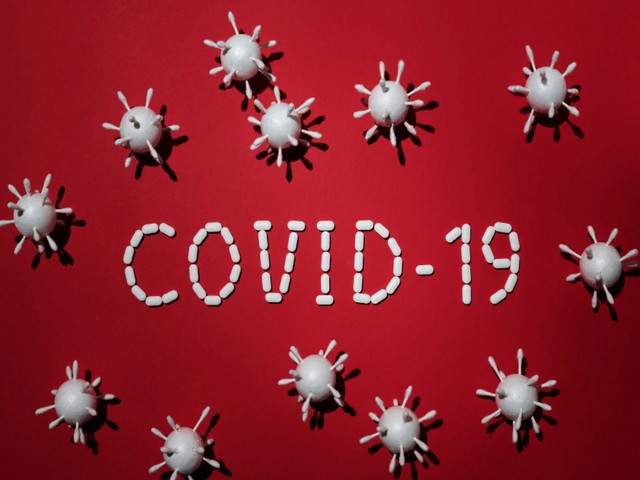
Representative image

Ontario [Canada], February 9 (ANI): Technology has proved to be a major source of hope in the global fight against COVID-19. In wake of this, researchers at the University of Waterloo created the first computational model that simulated many variables affecting the transmission of COVID-19 to slow the spread of variants.
Their study was published in 'Scientific Reports'.
The model took raw data already in use to forecast case numbers and hospitalizations, and then added other factors, such as vaccination rates, the use of masks and lockdowns, and the number of breakthrough infections.
The researchers based their computation model on Ontario's recent experience with COVID-19 and data from the Ontario COVID-19 Science Advisory Table.
"We were actually building the model when the Delta variant was still the dominant one in Ontario," said Anita Layton, professor of applied mathematics at Waterloo and Canada 150 Research Chair in mathematical biology and medicine.
"We simulated a variant that was similar to Omicron, and the model is helpful for understanding whatever variants will come next," she said.
The research team could change the parameters of the computational model to see what would happen with a new variant. It could also show what it would take to stop variants that are more contagious than others. As a result, the model could show where vaccination levels needed to be or what levels of restrictions were necessary to keep a new variant at bay.
"It includes vaccination and different vaccine types, delays in second and third doses, the impacts of restrictions and even the competition among different variants of concern," said Mehrshad Sadria, a PhD student in applied mathematics at Waterloo who also worked on the new model. "We want policymakers and stakeholders to have the most pertinent information so they can make the best decisions."
The researchers planned to develop the model to include even more factors that influence the spread of COVID-19 in specific communities.
"We'd like to investigate how people of different ages are impacted and compare different levels of vaccination between and within age groups," Layton said.
"We're also looking to make it more refined so we can focus on specific regions of Ontario, which can then be helpful for looking at resource distribution," Layton concluded. (ANI)


Get the App

What to Read Next

Science

Amphibians bounce-back from Earth’s greatest mass extinction

Amphibians bounce-back from Earth’s greatest mass extinction

Researchers at the University of Bristol discovered that ancient frog ancestors survived the biggest mass extinction of species by eating on freshwater prey that evaded terrestrial predators.

Read More
Science

New insights into how cancer evades the immune system: Study

New insights into how cancer evades the immune system: Study

Immunotherapy research primarily focuses on better recognition of cancer cells by the body's own immune system. Researchers at Amsterdam UMC and Moffitt Cancer Center have taken a different approach.

Read More
Science

Scientists use AI to better understand nanoparticles: Study

Scientists use AI to better understand nanoparticles: Study

A group of scientists has created a way to illuminate the dynamic behavior of nanoparticles, which are essential components in the production of pharmaceuticals, electronics, and industrial and energy-conversion materials.

Read More
Science

New device could allow you to taste cake in virtual reality

New device could allow you to taste cake in virtual reality

The 'e-Taste' interface employs sensors and wireless chemical dispensers to enable remote taste perception, often known as gestation. Field testing done by researchers at The Ohio State University confirmed the device's ability to digitally simulate a range of taste intensities, while still offering variety and safety for the user.

Read More
Science

Strand Life Sciences launches portal for rare disease diagnosis

Strand Life Sciences launches portal for rare disease diagnosis

Marking Rare Disease Day, Strand Life Sciences, a subsidiary of Reliance Industries and a leading genomics research company, has launched the StrandOmics Portal, an innovative digital platform designed to assist doctors in diagnosing rare diseases more efficiently.

Read More
Science

Study reveals impact of animals as architects of Earth

Study reveals impact of animals as architects of Earth

A new study led by Professor Gemma Harvey from Queen Mary University of London has revealed how hundreds of species shape the landscapes we depend on, from termite mounds visible from space to beavers creating wetlands and hippos carving drainage systems.

Read More
Science

Opposing arrows of time emerge from certain quantum systems

Opposing arrows of time emerge from certain quantum systems

Researchers at the University of Surrey made a thought-provoking discovery. A new study reveals that opposing arrows of time can theoretically emerge from certain quantum systems.

Read More
Science

COVID-19 severity may be predicted by White Blood Cell Count

COVID-19 severity may be predicted by White Blood Cell Count

A COVID-19 diagnosis is no longer as frightening as it used to be, thanks to developments in treatment choices. However, a new study reveals that leukocyte (white blood cell) count may now be used to identify who is more likely to develop more significant disease symptoms.

Read More
Science

'Creation of black holes without singularities through gravity'

'Creation of black holes without singularities through gravity'

Traditional black holes, as predicted by Albert Einstein's theory of General Relativity, contain what are known as singularities, i.e. points where the laws of physics break down. Identifying how singularities are resolved in the context of quantum gravity is one of the fundamental problems in theoretical physics. Now, a team of experts has described the creation of regular black holes from gravitational effects without the need for the existence of exotic matter required by some previous models.

Read More
Science

New technology enhances gravitational-wave detection: Study

New technology enhances gravitational-wave detection: Study

A team of physicists led by Jonathan Richardson of the University of California, Riverside, demonstrated how new optical technology can extend the detection range of gravitational-wave observatories such as the Laser Interferometer Gravitational-Wave Observatory, or LIGO, and pave the way for future observatories.

Read More
Home About Us Our Products Advertise Contact Us Terms & Condition Privacy Policy

Copyright © aninews.in | All Rights Reserved.


