

ADD ANI AS A TRUSTED SOURCE
googleads
ANI Logo
Menu
Science

Researchers decode inner language to treat speech disorders

Bern [Switzerland], January 12 (ANI): A research team from the University of Geneva (UNIGE) and the Hopitaux Universitaires de Geneve (HUG) has succeeded in identifying certain signals produced by our brain when we speak to ourselves.

ANI Jan 12, 2022 15:27 IST googleads

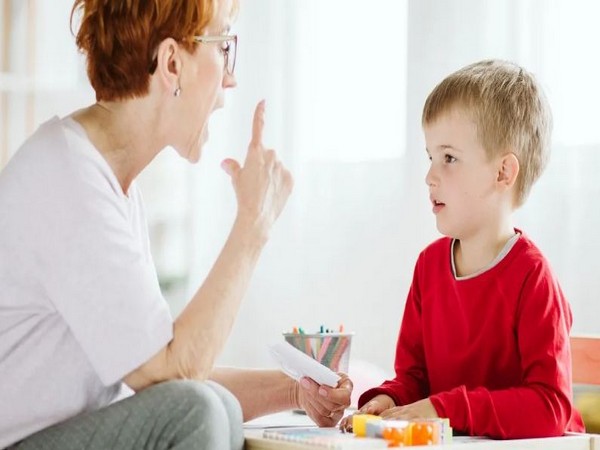
Representative image

Bern [Switzerland], January 12 (ANI): A research team from the University of Geneva (UNIGE) and the Hopitaux Universitaires de Geneve (HUG) has succeeded in identifying certain signals produced by our brain when we speak to ourselves.
Findings were published in the journal Nature Communications.
When human beings speak, different areas of their brain must be activated. However, the function of these regions can be seriously impaired after damage to the nervous system. For example, amyotrophic lateral sclerosis (or Charcot's disease) can completely paralyze the muscles used to speak.
In other cases, following a stroke, for example, areas of the brain responsible for language can be affected: this is called aphasia. However, in many of those cases, the ability of patients to imagine words and sentences remains partly functional.
Decoding our internal speech is therefore of great interest to neuroscience researchers. But the task is far from easy, as Timothee Proix, the scientist in the Department of Basic Neuroscience at the UNIGE Faculty of Medicine, explains "Several studies have been conducted on the decoding of spoken language, but much less on the decoding of imagined speech. This is because, in the latter case, the associated neural signals are weak and variable compared to explicit speech. They are therefore difficult to decode by learning algorithms."
That is, through computer programmes.
When a person speaks aloud, he or she produces sounds that are emitted at certain precise moments. Researchers can thus relate these tangible elements to the brain regions involved. In the case of imagined speech, the process is much less easy.
Scientists have no obvious information on the sequencing and tempo of the words or sentences formulated internally by the individual. The areas recruited in the brain are also less numerous and less active.
In order to perceive the neural signals of this very particular type of speech, the UNIGE team used a panel of thirteen hospitalized patients, in collaboration with two American hospitals. They collected data through electrodes implanted directly into patients' brains in order to assess their epileptic disorders.
"We asked these people to say words and then to imagine them. Each time, we reviewed several frequency bands of brain activity known to be involved in language", explains Anne-Lise Giraud, a professor in the Department of Basic Neuroscience at the UNIGE Faculty of Medicine, and newly appointed director of the Institut de l'Audition in Paris.
The researchers observed several types of frequencies produced by different brain areas when these patients spoke, either orally or internally.
"First of all, the oscillations called theta (4-8Hz), which correspond to the average rhythm of syllable elocution. Then the gamma frequencies (25-35Hz), observed in the areas of the brain where speech sounds are formed. Thirdly, beta waves (12-18Hz) related to the cognitively more efficient regions solicited, for example, to anticipate and predict the evolution of a conversation. Finally, the high frequencies (80-150Hz) that are observed when a person speaks out" explains Pierre Megevand, assistant professor in the Department of Clinical Neurosciences at the Faculty of Medicine of the UNIGE and associate physician at the HUG.
Thanks to these observations, the scientists were able to show that the low frequencies and the coupling between certain frequencies (beta and gamma in particular) contain essential information for the decoding of imagined speech.
Their research also reveals that the temporal cortex is an important area for the eventual decoding of internal speech.
Located in the left lateral part of the brain, this specific cerebral region is involved in the processing of information related to hearing and memory, but it also houses a part of Wernicke's area, responsible for the perception of words and language symbols.
These results are a major advance in the reconstruction of speech from neural activity. "But we are still a long way from being able to decode imagined language", concludes the research team. (ANI)


Get the App

What to Read Next

Science

New method guides magnetism without magnets

New method guides magnetism without magnets

Researchers at Paul Scherrer Institute PSI have demonstrated an innovative method to control magnetism in materials using an energy-efficient electric field.

Read More
Science

Amphibians bounce-back from Earth’s greatest mass extinction

Amphibians bounce-back from Earth’s greatest mass extinction

Researchers at the University of Bristol discovered that ancient frog ancestors survived the biggest mass extinction of species by eating on freshwater prey that evaded terrestrial predators.

Read More
Science

New insights into how cancer evades the immune system: Study

New insights into how cancer evades the immune system: Study

Immunotherapy research primarily focuses on better recognition of cancer cells by the body's own immune system. Researchers at Amsterdam UMC and Moffitt Cancer Center have taken a different approach.

Read More
Science

Scientists use AI to better understand nanoparticles: Study

Scientists use AI to better understand nanoparticles: Study

A group of scientists has created a way to illuminate the dynamic behavior of nanoparticles, which are essential components in the production of pharmaceuticals, electronics, and industrial and energy-conversion materials.

Read More
Science

New device could allow you to taste cake in virtual reality

New device could allow you to taste cake in virtual reality

The 'e-Taste' interface employs sensors and wireless chemical dispensers to enable remote taste perception, often known as gestation. Field testing done by researchers at The Ohio State University confirmed the device's ability to digitally simulate a range of taste intensities, while still offering variety and safety for the user.

Read More
Science

Strand Life Sciences launches portal for rare disease diagnosis

Strand Life Sciences launches portal for rare disease diagnosis

Marking Rare Disease Day, Strand Life Sciences, a subsidiary of Reliance Industries and a leading genomics research company, has launched the StrandOmics Portal, an innovative digital platform designed to assist doctors in diagnosing rare diseases more efficiently.

Read More
Science

Study reveals impact of animals as architects of Earth

Study reveals impact of animals as architects of Earth

A new study led by Professor Gemma Harvey from Queen Mary University of London has revealed how hundreds of species shape the landscapes we depend on, from termite mounds visible from space to beavers creating wetlands and hippos carving drainage systems.

Read More
Science

Opposing arrows of time emerge from certain quantum systems

Opposing arrows of time emerge from certain quantum systems

Researchers at the University of Surrey made a thought-provoking discovery. A new study reveals that opposing arrows of time can theoretically emerge from certain quantum systems.

Read More
Science

COVID-19 severity may be predicted by White Blood Cell Count

COVID-19 severity may be predicted by White Blood Cell Count

A COVID-19 diagnosis is no longer as frightening as it used to be, thanks to developments in treatment choices. However, a new study reveals that leukocyte (white blood cell) count may now be used to identify who is more likely to develop more significant disease symptoms.

Read More
Science

Seals can essentially act as 'smart sensors': Study

Seals can essentially act as 'smart sensors': Study

A new study by marine biologists reports that seals can essentially act as 'smart sensors' for monitoring fish populations in the ocean's eerily dim 'twilight zone.'

Read More
Home About Us Our Products Advertise Contact Us Terms & Condition Privacy Policy

Copyright © aninews.in | All Rights Reserved.


