

ADD ANI AS A TRUSTED SOURCE
googleads
ANI Logo
Menu
Science

Researchers combine natural squid tissues with synthetic polymers to develop hydrogel

The fundamental capabilities of squid tissues and the inventiveness of chemists work together to further the understanding of hydrogels.

ANI Jan 23, 2023 03:22 IST googleads

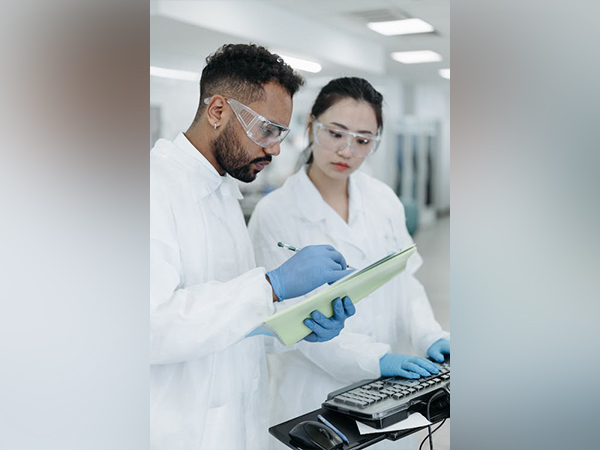
Representative Image

Tokyo [Japan], January 23 (ANI): The fundamental capabilities of squid tissues and the inventiveness of chemists work together to further the understanding of hydrogels.
Natural squid tissues and synthetic polymers were blended by scientists at Hokkaido University in Japan to create a robust hydrogel that closely resembles the special characteristics of biological tissues. There are numerous applications for hydrogels, which are polymer networks that contain a lot of water, including soft robotic parts, new sensing systems, and medical prosthetics.
The findings of the research were published in the journal NPG Asia Materials.
Natural biological tissues exhibit unique properties essential for their functions, which researchers are seeking to replicate in hydrogels. Muscles, for example, in addition to strength and flexibility, have physical properties that vary in different directions and are built from a hierarchy of structures working together. Bones and blood vessels also display these features, known as hierarchical anisotropy.
Unlike the natural tissues that researchers wish to mimic, most synthetic hydrogels have uniform properties in all directions and are structurally weak.
"By combining the properties of tissues derived from squid with synthetic polymers, we have demonstrated a hybrid strategy that serves as a general method for preparing hydrogels with useful hierarchical anisotropy and also toughness," says polymer scientist Tasuku Nakajima of the Hokkaido University team.
The manufacturing process begins with commercially available frozen squid mantle - the main outer part of a squid. In live squid, the mantle expands to take water into the body, and then strongly contracts to shoot water outwards as a jet. This ability depends on the anisotropic muscles within squid connective tissue. The researchers took advantage of the molecular arrangements within this natural system to build their bio-mimicking gel.
Chemical and heat treatment of thin slices of the defrosted squid tissue mixed with polyacrylamide polymer molecules initiated formation of the cross-linked hybrid hydrogel. It has what is known as a double-network structure, with the synthetic polymer network embedded and linked within the more natural muscle fiber network derived from squid mantle.
"The DN gel we synthesized is much stronger and more elastic than the natural squid mantle," explains Professor Jian Ping Gong, who led the team. "The unique composite structure also makes the material impressively resistant to fracture, four times tougher than the original material."
The current proof-of-concept work should be just the start for exploring many other hybrid hydrogels that could exploit the unique properties of other natural systems. Jellyfish have already been used as a source of material for simpler single-network hydrogels, so are an obvious next choice for exploring hybrid double-network options.
"Possible applications include load-bearing artificial fibrous tissues, such as artificial ligaments and tendons, for medical use," says Gong. Further work by the team will explore the biocompatibility of the gels and investigate options for making a range of gels suitable for different uses. (ANI)


Get the App

What to Read Next

Science

Opposing arrows of time emerge from certain quantum systems

Opposing arrows of time emerge from certain quantum systems

Researchers at the University of Surrey made a thought-provoking discovery. A new study reveals that opposing arrows of time can theoretically emerge from certain quantum systems.

Read More
Science

'Creation of black holes without singularities through gravity'

'Creation of black holes without singularities through gravity'

Traditional black holes, as predicted by Albert Einstein's theory of General Relativity, contain what are known as singularities, i.e. points where the laws of physics break down. Identifying how singularities are resolved in the context of quantum gravity is one of the fundamental problems in theoretical physics. Now, a team of experts has described the creation of regular black holes from gravitational effects without the need for the existence of exotic matter required by some previous models.

Read More
Science

Discovery of unexpected collagen structure to influence research

Discovery of unexpected collagen structure to influence research

Collagen, the body's most abundant protein, has long been considered a predictable structural component of tissues.

Read More
Science

Study finds novel approach to treat neurological diseases

Study finds novel approach to treat neurological diseases

The matter of what causes complicated neurological disorders like Alzheimer's or multiple sclerosis continues to perplex scientists and doctors, with unknowns impeding early diagnosis and successful treatment.

Read More
Science

Study: Role of tRNA modifying enzyme in brain function

Study: Role of tRNA modifying enzyme in brain function

A pioneering study undertaken by a Kumamoto University research team shed light on the crucial role of TRMT10A, a tRNA methylation enzyme, in sustaining brain function. The findings show how TRMT10A deficiency reduces specific transfer RNA (tRNA) levels in the brain, altering protein synthesis and affecting synapse structure and function.

Read More
Science

Researchers give more insight into heat perception in humans

Researchers give more insight into heat perception in humans

The Medical University of Vienna's research has significantly advanced our knowledge of how humans perceive heat. A group of scientists has discovered a particular type of cell structure involved in heat recognition.

Read More
Science

Researchers give insight into breast cancer tumor growth

Researchers give insight into breast cancer tumor growth

According to a recent study, Malassezia globosa, a common skin fungus, may penetrate deep tissues through the skin or by other methods, which can lead to tumor formation.

Read More
Science

Blood stem cell could transform bone marrow transplants

Blood stem cell could transform bone marrow transplants

Researchers in Melbourne have achieved a first for the world: they have successfully created blood stem cells that closely resemble human tissue. Additionally, the discovery may eventually result in customized therapies for kids suffering from bone marrow failure syndromes and leukaemia.

Read More
Science

Insight into chemotherapy resistance in pancreatic cancer

Insight into chemotherapy resistance in pancreatic cancer

Due in part to its frequent treatment resistance, pancreatic cancer is an especially aggressive and challenging malignancy to treat. This resistance is linked to the chemical composition of the surrounding tissue as well as the tissue's physical stiffness around the malignant cells, according to a study from Stanford.

Read More
Science

Study finds how new blood test helps improve cancer treatments

Study finds how new blood test helps improve cancer treatments

The likelihood that treatment will be successful for cancer increases with early detection. Almost every kind of cancer is covered by this. Evaluating the advantages and disadvantages of each type of therapy on an individual basis and keeping a regular eye on treatment outcomes are also essential components of effective patient care.

Read More
Home About Us Our Products Advertise Contact Us Terms & Condition Privacy Policy

Copyright © aninews.in | All Rights Reserved.


