

ADD ANI AS A TRUSTED SOURCE
googleads
Menu
Science

Researchers attempt new treatment approach for blood cancer

Boston [USA], June 20 (ANI): A team of researchers, in an effort to improve the survival of patients with myeloproliferative neoplasms, a type of leukemia, inhibited a specific protein to decrease the number of large bone marrow cells in an experimental model.

ANI Jun 20, 2020 21:55 IST googleads

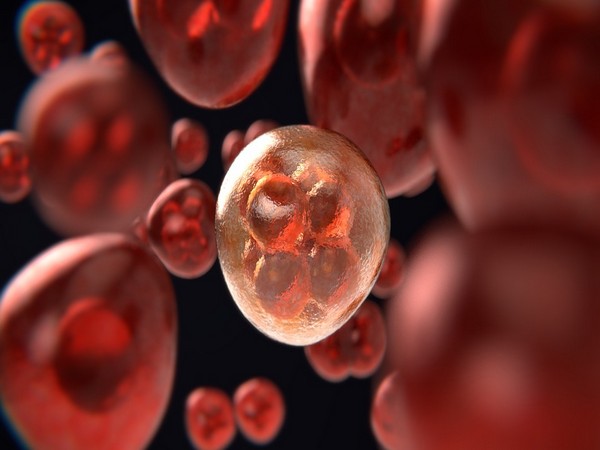
Representative Image

Boston [USA], June 20 (ANI): A team of researchers, in an effort to improve the survival of patients with myeloproliferative neoplasms, a type of leukemia, inhibited a specific protein to decrease the number of large bone marrow cells in an experimental model.
An increase in megakaryocyte numbers is thought to be the cause of many problems observed in this disease. This type of treatment approach has never been attempted before.
Myeloproliferative neoplasms are a type of blood cancer that begins with a pathological mutation (change) in a stem cell in the bone marrow which causes too many red blood cells, white blood cells, or platelets to be produced.
Most patients die of the transformation of the disease to a more fatal leukemia or because of myelofibrosis, scarring of bone marrow. There are currently no specific treatments for myelofibrosis.
"To date, most drug development efforts have been focused on the JAK2V617F mutation, but this approach has failed to fundamentally change the course of the disease. Our study has taken a totally new approach for the treatment of the disease, which, if successful, will present a complementary or even an alternative therapy to existing treatments," explained lead author Shinobu Matsuura, DVM, PhD, instructor of medicine at Boston University School of Medicine (BUSM).
Using two sets of experimental models, the researchers altered the JAK2V617F gene in one group to induce symptoms of myeloproliferative neoplasms.
The second group were the control. When both groups were exposed to an antibody against alpha5beta1 integrin, the number of megakaryocytes decreased in bone marrow in the group with the altered gene, while no changes were seen in the control group.
According to the researchers, their ultimate objective is to find effective treatments for myelofibrosis, which can occur secondary to many diseases and is a terminal condition with no specific treatment available.
"Myeloproliferative neoplasms are a chronic and debilitating disease. Safe and effective novel treatments of this disease will improve the quality of life of these patients," the researchers said.
These findings appear online in the journal Blood. (ANI)


Get the App

What to Read Next

Science

New method guides magnetism without magnets

New method guides magnetism without magnets

Researchers at Paul Scherrer Institute PSI have demonstrated an innovative method to control magnetism in materials using an energy-efficient electric field.

Read More
Science

Amphibians bounce-back from Earth’s greatest mass extinction

Amphibians bounce-back from Earth’s greatest mass extinction

Researchers at the University of Bristol discovered that ancient frog ancestors survived the biggest mass extinction of species by eating on freshwater prey that evaded terrestrial predators.

Read More
Science

New insights into how cancer evades the immune system: Study

New insights into how cancer evades the immune system: Study

Immunotherapy research primarily focuses on better recognition of cancer cells by the body's own immune system. Researchers at Amsterdam UMC and Moffitt Cancer Center have taken a different approach.

Read More
Science

New device could allow you to taste cake in virtual reality

New device could allow you to taste cake in virtual reality

The 'e-Taste' interface employs sensors and wireless chemical dispensers to enable remote taste perception, often known as gestation. Field testing done by researchers at The Ohio State University confirmed the device's ability to digitally simulate a range of taste intensities, while still offering variety and safety for the user.

Read More
Science

Study reveals impact of animals as architects of Earth

Study reveals impact of animals as architects of Earth

A new study led by Professor Gemma Harvey from Queen Mary University of London has revealed how hundreds of species shape the landscapes we depend on, from termite mounds visible from space to beavers creating wetlands and hippos carving drainage systems.

Read More
Home About Us Our Products Advertise Contact Us Terms & Condition Privacy Policy

Copyright © aninews.in | All Rights Reserved.
