

ADD ANI AS A TRUSTED SOURCE
googleads
ANI Logo
Menu
Science

Researchers are now closer to cancer immunotherapy

Washington DC [USA], Dec 15 (ANI): Researchers from the QIMR Berghofer Medical Research Institute are a step closer to potential cancer immunotherapy involving switching off a regulatory cell to stop tumours growing and spreading.

ANI Dec 15, 2019 23:27 IST googleads

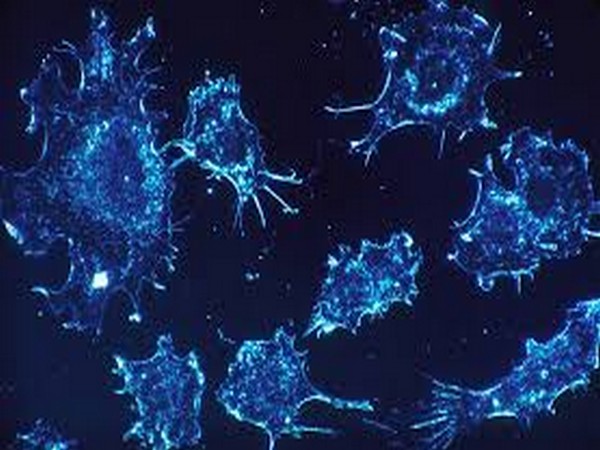
Representative Image

Washington DC [USA], Dec 15 (ANI): Researchers from the QIMR Berghofer Medical Research Institute are a step closer to potential cancer immunotherapy involving switching off a regulatory cell to stop tumours growing and spreading.
A journal of the American Association for Cancer Research - Cancer Discovery, published the findings in a study.
Head of QIMR Berghofer's Cancer Immunoregulation and Immunotherapy Laboratory, Associate Professor Michele Teng, said that the study could potentially help in treating such cancer patients for whom no other current immunotherapies have worked out.
"Our work on mice shows for the first time that many tumours display the molecule MR1 on their cell surface, and when it's present, this molecule turns on an important regulatory cell that prevents the body's own immune system from fighting cancer," said Teng.
Teng found that a type of regulatory cell called mucosal-associated invariant T (MAIT) stop immune cells (T) or white blood cells (NK) from attacking and killing off tumour cells when turned on.
"The cancer is effectively creating its own defence mechanism to evade the immune attack and survive. The display of MR1 activates the MAIT cells, which in turn switch off cancer-fighting T and NK cells. While other regulatory cells of the immune system are known to stop T and NK cells from killing tumour cells, this is the first time it's been shown that these regulatory MAIT cells can do this job," Teng said.
The Associate Professor also added that her team reached a conclusion that by administering an antibody that blocks MR1 to mice stops the MAIT cells from getting activated which further helps T and NK cells in responding thus resulting in retardation of cancer growth and eventually stopping it from spreading.
"This work demonstrates that antibodies that block MR1 could in future be effective new immunotherapy. It probably won't work on every cancer, but it looks like it could be effective in treating cancers that can display the MR1 molecule. It also means this display of MR1 could be used to screen which patients would respond to this immunotherapy," Associate Professor Teng said.
"We now need to replicate this research in humans," she added.
The next step towards the establishment of this potential anti-cancer immunotherapy is of understanding the kind of human tumours that display MR1 in their protective mechanism and this will further help in identification of tumours that would respond best to the blocking immunotherapy of MR-1, said the professor. (ANI)

Get the App

What to Read Next

Science

New insights into how cancer evades the immune system: Study

New insights into how cancer evades the immune system: Study

Immunotherapy research primarily focuses on better recognition of cancer cells by the body's own immune system. Researchers at Amsterdam UMC and Moffitt Cancer Center have taken a different approach.

Read More
Science

COVID-19 severity may be predicted by White Blood Cell Count

COVID-19 severity may be predicted by White Blood Cell Count

A COVID-19 diagnosis is no longer as frightening as it used to be, thanks to developments in treatment choices. However, a new study reveals that leukocyte (white blood cell) count may now be used to identify who is more likely to develop more significant disease symptoms.

Read More
Science

Gut microbes play role in regulating stress responsiveness

Gut microbes play role in regulating stress responsiveness

A groundbreaking study has revealed the critical role of gut bacteria in regulating stress responses through interactions with the body's circadian rhythms.

Read More
Science

Cancer cells of fat may enhance cancer treatment

Cancer cells of fat may enhance cancer treatment

A study by Van Andel Institute scientists suggests that restricting cancer cells' access to fat may enhance the effectiveness of certain cancer treatments.

Read More
Science

Biomarker may predict response to immunotherapy in liver cancer

Biomarker may predict response to immunotherapy in liver cancer

According to a preclinical study conducted by Weill Cornell Medicine researchers, it may soon be feasible to detect whether individuals with hepatocellular carcinoma, a kind of liver cancer, may benefit from immunotherapy.

Read More
Science

Study finds novel approach to treat neurological diseases

Study finds novel approach to treat neurological diseases

The matter of what causes complicated neurological disorders like Alzheimer's or multiple sclerosis continues to perplex scientists and doctors, with unknowns impeding early diagnosis and successful treatment.

Read More
Science

Bacterial vaccine demonstrates potential as cancer treatment

Bacterial vaccine demonstrates potential as cancer treatment

Columbia researchers developed probiotic bacteria that train the immune system to eliminate cancer cells, paving the way for a new class of cancer vaccinations that take advantage of bacteria's innate tumour-targeting abilities. These microbial cancer vaccines can be tailored to each person's specific original tumour and metastases, perhaps preventing future recurrences.

Read More
Science

Alternate method to study changes during DNA replication process

Alternate method to study changes during DNA replication process

Researchers at Colorado State University discovered an alternative way for studying alterations during the DNA replication process in lab settings using genetically modified yeast. The novel methodology provides a clearer picture than current pharmacological methods for understanding cell cycle arrest, a fundamental mechanism critical to cancer treatment and genetic concerns.

Read More
Science

Alzheimer’s disease can damage brain in two phases

Alzheimer’s disease can damage brain in two phases

Alzheimer's disease may cause brain damage in two stages, according to new research supported by the National Institutes of Health (NIH) that uses sophisticated brain mapping methods.

Read More
Science

Study discovers how special immune cells stop metastatic cancer

Study discovers how special immune cells stop metastatic cancer

The majority of cancer deaths are caused by metastatic disease, which occurs when cancer spreads from the primary tumour to other areas of the body. and researchers understand how cancer cells escape the primary location to seed new tumours, it is unclear why some cancer cells produce new tumours decades later and others do not.

Read More
Home About Us Our Products Advertise Contact Us Terms & Condition Privacy Policy

Copyright © aninews.in | All Rights Reserved.


