

ADD ANI AS A TRUSTED SOURCE
googleads
ANI Logo
Menu
Science

Research suggests Mars was once covered by 300 meter deep oceans

Mars is called the red planet. But once, it was actually blue and covered in water, bringing us closer to finding out if Mars had ever harboured life.

ANI Nov 17, 2022 23:05 IST googleads

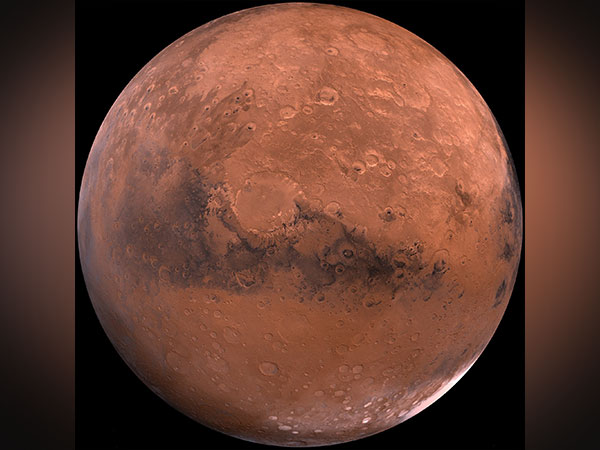
Representative Image

Copenhagen [Denmark], November 17 (ANI): The "red planet" refers to Mars. We're getting closer to learning whether life has ever existed on Mars thanks to the discovery that it was previously blue and submerged in water.
Although there has been water on Mars, the exact amount is still up for question, according to the majority of academics.
According to a recent study from the University of Copenhagen, there was enough water on the planet 4.5 billion years ago for a 300-meter-deep ocean to cover the entire planet.
"At this time, Mars was bombarded with asteroids filled with ice. It happened in the first 100 million years of the planet's evolution. Another interesting angle is that the asteroids also carried organic molecules that are biologically important for life," says Professor Martin Bizzarro from the Centre for Star and Planet Formation.
The icy asteroids not only transported water to the Red Planet but also biologically important compounds like amino acids. When DNA and RNA combine to make bases that have all the components a cell requires, amino acids are employed.
The research was released in the esteemed journal Science Advances.
Before Earth, Mars may have possessed the right environment for life.
According to the latest research, the planet's ancient oceans were at least 300 metres deep. They might have reached a depth of one kilometre. According to Martin Bizzarro, there is actually not much water on Earth.
"This happened within Mars's first 100 million years. After this period, something catastrophic happened for potential life on Earth. It is believed that there was a gigantic collision between the Earth and another Mars-sized planet. It was an energetic collision that formed the Earth-Moon system and, at the same time, wiped out all potential life on Earth," says Martin Bizzarro.
Therefore, the researchers have really strong evidence that conditions allowing the emergence of life were present on Mars long before Earth.
Billion-year-old meteorite
The researchers were able to examine the past of Mars thanks to a meteorite that is billions of years old. The meteorite, which was previously a piece of Mars's initial crust, provides a special window into the events surrounding the formation of the solar system.
The meteorite that was previously a part of Mars' surface, which is a surface that does not move, is where the entire secret is hidden. It is the opposite on Earth. In the interior of the earth, the tectonic plates are renewed and in constant motion.
"Plate tectonics on Earth erased all evidence of what happened in the first 500 million years of our planet's history. The plates constantly move and are recycled back and destroyed into the interior of our planet. In contrast, Mars does not have plate tectonics such that the planet's surface preserves a record of the earliest history of the planet," explains Martin Bizzarro. (ANI)


Get the App

What to Read Next

Science

New method guides magnetism without magnets

New method guides magnetism without magnets

Researchers at Paul Scherrer Institute PSI have demonstrated an innovative method to control magnetism in materials using an energy-efficient electric field.

Read More
Science

Amphibians bounce-back from Earth’s greatest mass extinction

Amphibians bounce-back from Earth’s greatest mass extinction

Researchers at the University of Bristol discovered that ancient frog ancestors survived the biggest mass extinction of species by eating on freshwater prey that evaded terrestrial predators.

Read More
Science

New insights into how cancer evades the immune system: Study

New insights into how cancer evades the immune system: Study

Immunotherapy research primarily focuses on better recognition of cancer cells by the body's own immune system. Researchers at Amsterdam UMC and Moffitt Cancer Center have taken a different approach.

Read More
Science

New device could allow you to taste cake in virtual reality

New device could allow you to taste cake in virtual reality

The 'e-Taste' interface employs sensors and wireless chemical dispensers to enable remote taste perception, often known as gestation. Field testing done by researchers at The Ohio State University confirmed the device's ability to digitally simulate a range of taste intensities, while still offering variety and safety for the user.

Read More
Science

Strand Life Sciences launches portal for rare disease diagnosis

Strand Life Sciences launches portal for rare disease diagnosis

Marking Rare Disease Day, Strand Life Sciences, a subsidiary of Reliance Industries and a leading genomics research company, has launched the StrandOmics Portal, an innovative digital platform designed to assist doctors in diagnosing rare diseases more efficiently.

Read More
Science

Study reveals impact of animals as architects of Earth

Study reveals impact of animals as architects of Earth

A new study led by Professor Gemma Harvey from Queen Mary University of London has revealed how hundreds of species shape the landscapes we depend on, from termite mounds visible from space to beavers creating wetlands and hippos carving drainage systems.

Read More
Science

Opposing arrows of time emerge from certain quantum systems

Opposing arrows of time emerge from certain quantum systems

Researchers at the University of Surrey made a thought-provoking discovery. A new study reveals that opposing arrows of time can theoretically emerge from certain quantum systems.

Read More
Science

COVID-19 severity may be predicted by White Blood Cell Count

COVID-19 severity may be predicted by White Blood Cell Count

A COVID-19 diagnosis is no longer as frightening as it used to be, thanks to developments in treatment choices. However, a new study reveals that leukocyte (white blood cell) count may now be used to identify who is more likely to develop more significant disease symptoms.

Read More
Science

Seals can essentially act as 'smart sensors': Study

Seals can essentially act as 'smart sensors': Study

A new study by marine biologists reports that seals can essentially act as 'smart sensors' for monitoring fish populations in the ocean's eerily dim 'twilight zone.'

Read More
Science

'Creation of black holes without singularities through gravity'

'Creation of black holes without singularities through gravity'

Traditional black holes, as predicted by Albert Einstein's theory of General Relativity, contain what are known as singularities, i.e. points where the laws of physics break down. Identifying how singularities are resolved in the context of quantum gravity is one of the fundamental problems in theoretical physics. Now, a team of experts has described the creation of regular black holes from gravitational effects without the need for the existence of exotic matter required by some previous models.

Read More
Home About Us Our Products Advertise Contact Us Terms & Condition Privacy Policy

Copyright © aninews.in | All Rights Reserved.


