

ADD ANI AS A TRUSTED SOURCE
googleads
ANI Logo
Menu
Science

Research suggests cooking nylon bags and plastic-lined cups can release nanoparticles into liquid

Washington [US], April 24 (ANI): According to a new study, nylon cooking bags and plastic-lined cardboard cups are conveniences many people rely on, but they are an underappreciated source of nanoparticles in liquids.

ANI Apr 24, 2022 15:03 IST googleads

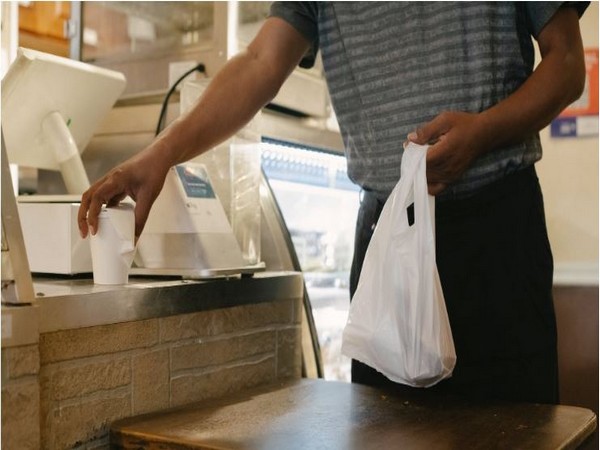
Representative image

Washington [US], April 24 (ANI): According to a new study, nylon cooking bags and plastic-lined cardboard cups are conveniences many people rely on, but they are an underappreciated source of nanoparticles in liquids.
The findings of the research were published in the journal 'Environmental Science & Technology' by Christopher Zangmeister and his colleagues at the American Chemical Society.
Researchers reported that the plastic in these products releases trillions of nanometer-sized particles into each litre of water that they come in contact with. That sounds like a lot, but the team notes that these levels are under the regulatory limits for consumption.
Food-grade plastics come into contact with a variety of foods and drinks that people consume every day. For instance, nylon cooking bags help keep food moist in the oven and make clean-up easier for slow cookers. Likewise, plastic-lined paper cups are designed to keep liquids hot and prevent them from leaking out.
Previous studies have shown that some plastic materials, including polypropylene baby bottles and polyethene terephthalate tea bags, can shed microscopic and nanoscale particles into heated liquids, though the human health implications of ingesting these particles are unclear.
So, Christopher Zangmeister and colleagues wanted to see whether food-grade plastic films can also be a source of small plastic particles.
The researchers poured room temperature or hot water into nylon slow cooker bags and low-density polyethene-lined cardboard cups from different retailers. After keeping the slow cooker hot for an hour, the researchers found that 35 trillion plastic nanoparticles leached into the litre of water in each bag.
When the team put hot liquid in 12-fluid-ounce cups for 20 minutes, 5.1 trillion plastic nanoparticles per litre leached out. Both materials released considerably fewer nanosized particles into room temperature water.
Finally, the researchers calculated that a person would have to drink 13 cups of hot water from a plastic-lined cup or half a litre of water from a cooking bag to consume the equivalent of one nano plastic particle for every seven cells in a person's body.
But they also note that the number of particles that migrated from the food-grade plastics into both the room temperature and hot water is still well below the levels for safe human consumption, according to U.S. Food and Drug Administration limits. (ANI)


Get the App

What to Read Next

Science

New method guides magnetism without magnets

New method guides magnetism without magnets

Researchers at Paul Scherrer Institute PSI have demonstrated an innovative method to control magnetism in materials using an energy-efficient electric field.

Read More
Science

Amphibians bounce-back from Earth’s greatest mass extinction

Amphibians bounce-back from Earth’s greatest mass extinction

Researchers at the University of Bristol discovered that ancient frog ancestors survived the biggest mass extinction of species by eating on freshwater prey that evaded terrestrial predators.

Read More
Science

Scientists use AI to better understand nanoparticles: Study

Scientists use AI to better understand nanoparticles: Study

A group of scientists has created a way to illuminate the dynamic behavior of nanoparticles, which are essential components in the production of pharmaceuticals, electronics, and industrial and energy-conversion materials.

Read More
Science

New device could allow you to taste cake in virtual reality

New device could allow you to taste cake in virtual reality

The 'e-Taste' interface employs sensors and wireless chemical dispensers to enable remote taste perception, often known as gestation. Field testing done by researchers at The Ohio State University confirmed the device's ability to digitally simulate a range of taste intensities, while still offering variety and safety for the user.

Read More
Science

Strand Life Sciences launches portal for rare disease diagnosis

Strand Life Sciences launches portal for rare disease diagnosis

Marking Rare Disease Day, Strand Life Sciences, a subsidiary of Reliance Industries and a leading genomics research company, has launched the StrandOmics Portal, an innovative digital platform designed to assist doctors in diagnosing rare diseases more efficiently.

Read More
Science

COVID-19 severity may be predicted by White Blood Cell Count

COVID-19 severity may be predicted by White Blood Cell Count

A COVID-19 diagnosis is no longer as frightening as it used to be, thanks to developments in treatment choices. However, a new study reveals that leukocyte (white blood cell) count may now be used to identify who is more likely to develop more significant disease symptoms.

Read More
Science

Seals can essentially act as 'smart sensors': Study

Seals can essentially act as 'smart sensors': Study

A new study by marine biologists reports that seals can essentially act as 'smart sensors' for monitoring fish populations in the ocean's eerily dim 'twilight zone.'

Read More
Science

'Creation of black holes without singularities through gravity'

'Creation of black holes without singularities through gravity'

Traditional black holes, as predicted by Albert Einstein's theory of General Relativity, contain what are known as singularities, i.e. points where the laws of physics break down. Identifying how singularities are resolved in the context of quantum gravity is one of the fundamental problems in theoretical physics. Now, a team of experts has described the creation of regular black holes from gravitational effects without the need for the existence of exotic matter required by some previous models.

Read More
Science

Microbes help detoxify our atmosphere, says study 

Microbes help detoxify our atmosphere, says study 

Melbourne researchers have uncovered important new information on how microbes absorb huge amounts of carbon monoxide (CO) and assist in reducing levels of this deadly gas.

Read More
Science

Large, small galaxies may grow in ways more similar

 Large, small galaxies may grow in ways more similar

A team of astronomers led by University of Arizona researcher Catherine Fielder captured the most precise photographs of a small galaxy and its surroundings, revealing features typically found in much larger galaxies.

Read More
Home About Us Our Products Advertise Contact Us Terms & Condition Privacy Policy

Copyright © aninews.in | All Rights Reserved.


