

ADD ANI AS A TRUSTED SOURCE
googleads
ANI Logo
Menu
Science

Research sheds light on sugar's role in common kidney disease

A study of kidney organoids in a novel lab environment might have downstream implications for the treatment of polycystic kidney disease (PKD), an incurable condition that affects more than 12 million people worldwide.

ANI Jan 06, 2023 07:05 IST googleads

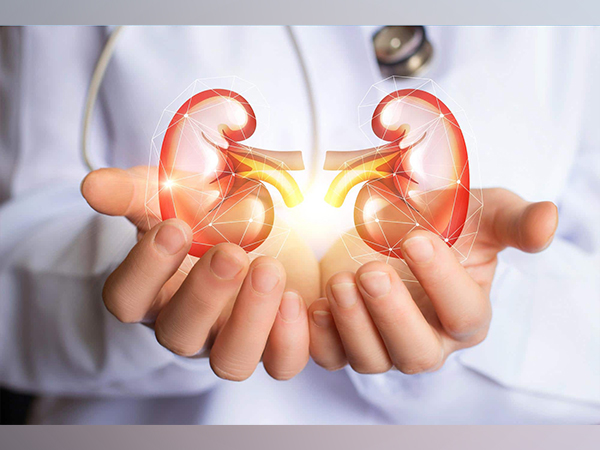
Representative image

Washington [US], January 6 (ANI): A study of kidney organoids in a novel lab environment might have downstream implications for the treatment of polycystic kidney disease (PKD), an incurable condition that affects more than 12 million people worldwide.
One key discovery of the study: Sugar appears to play a role in the formation of fluid-filled cysts that are PKD's hallmark. In people, these cysts grow big enough to impair kidney function and ultimately cause the organs to fail, necessitating dialysis therapy or transplant.
The findings were published in Nature Communications.
The co-lead authors are Sienna Li and Ramila Gulieva, research scientists in the lab of Benjamin Freedman, a nephrology investigator at the University of Washington School of Medicine.
"Sugar uptake is something that kidneys do all the time," said Freedman, a co-senior author. "We found that increasing the levels of sugar in the dish cultures caused cysts to swell. And when we employed drugs known to block sugar absorption in the kidneys, it blocked this swelling. But I think it relates less to blood sugar level and more to how kidney cells take in sugar -- which in this process seemed to go rogue and give rise to cysts."
For years Freedman has studied PKD in organoids grown from pluripotent stem cells. Organoids resemble miniature kidneys: They contain filtering cells connected to tubes and can respond to infection and therapeutics in ways that parallel the responses of kidneys in people.
Although his team can grow organoids that give rise to PKD cysts, the mechanisms of those cysts' formation are not yet understood. In this investigation, the researchers focused on how the flow of fluid within the kidney contributes to PKD.
To do so, they invented a new tool that merged a kidney organoid with a microfluidic chip. This allowed a combination of water, sugar, amino acids, and other nutrients to flow over organoids that had been gene-edited to mimic PKD.
"We were expecting the PKD cysts in the organoids to get worse under flow because the disease is associated with the physiological flow rates that we were exploring," Freedman explained. "The surprising part was that the process of cyst-swelling involved absorption: the intake of fluid inward through cells from outside the cyst. That's the opposite of what is commonly thought, which is that cysts form by pushing fluid outward through cells. It's a whole new way of thinking about cyst formation."
In the chips, the researchers observed that the cells lining the walls of the PKD cysts faced outward as they stretched and swelled, such that the tops of the cells were on the outside of the cysts. This inverted arrangement -- these cells would be facing inward in living kidneys -- suggests that cysts grow by pulling in sugar-rich fluid, not by secreting the liquid.
The observation gives researchers more information about how cysts form in organoids, a finding that will have to be tested further in vivo. As well, the fact that sugar levels drive cyst development points to new potential therapeutic options.
"The results of the experiment are significant because there is a whole class of molecules that block sugar uptake in the kidneys and are attractive therapeutics for a number of conditions," Freedman said. "They haven't been tested yet, but we view this as a proof-of-concept that these drugs could potentially help PKD patients." (ANI)


Get the App

What to Read Next

Science

Amphibians bounce-back from Earth’s greatest mass extinction

Amphibians bounce-back from Earth’s greatest mass extinction

Researchers at the University of Bristol discovered that ancient frog ancestors survived the biggest mass extinction of species by eating on freshwater prey that evaded terrestrial predators.

Read More
Science

New insights into how cancer evades the immune system: Study

New insights into how cancer evades the immune system: Study

Immunotherapy research primarily focuses on better recognition of cancer cells by the body's own immune system. Researchers at Amsterdam UMC and Moffitt Cancer Center have taken a different approach.

Read More
Science

Scientists use AI to better understand nanoparticles: Study

Scientists use AI to better understand nanoparticles: Study

A group of scientists has created a way to illuminate the dynamic behavior of nanoparticles, which are essential components in the production of pharmaceuticals, electronics, and industrial and energy-conversion materials.

Read More
Science

Strand Life Sciences launches portal for rare disease diagnosis

Strand Life Sciences launches portal for rare disease diagnosis

Marking Rare Disease Day, Strand Life Sciences, a subsidiary of Reliance Industries and a leading genomics research company, has launched the StrandOmics Portal, an innovative digital platform designed to assist doctors in diagnosing rare diseases more efficiently.

Read More
Science

COVID-19 severity may be predicted by White Blood Cell Count

COVID-19 severity may be predicted by White Blood Cell Count

A COVID-19 diagnosis is no longer as frightening as it used to be, thanks to developments in treatment choices. However, a new study reveals that leukocyte (white blood cell) count may now be used to identify who is more likely to develop more significant disease symptoms.

Read More
Science

New technology enhances gravitational-wave detection: Study

New technology enhances gravitational-wave detection: Study

A team of physicists led by Jonathan Richardson of the University of California, Riverside, demonstrated how new optical technology can extend the detection range of gravitational-wave observatories such as the Laser Interferometer Gravitational-Wave Observatory, or LIGO, and pave the way for future observatories.

Read More
Science

Discovery of unexpected collagen structure to influence research

Discovery of unexpected collagen structure to influence research

Collagen, the body's most abundant protein, has long been considered a predictable structural component of tissues.

Read More
Science

Shubhanshu Shukla: IAF officer becomes first Indian astronaut for

Shubhanshu Shukla: IAF officer becomes first Indian astronaut for

Shubhanshu Shukla, Indian Air Force (IAF) officer and one of four astronauts for Indian Space Research Organisation's (ISRO) Gaganyaan mission, has been sele Shubhanshu Shukla, Indian Air Force (IAF) officer and one of four astronauts for Indian Space Research Organisation's (ISRO) Gaganyaan mission, has been selected as the pilot for Axiom Mission 4, scheduled for Spring 2025.cted as the pilot for Axiom Mission 4, scheduled for Spring 2025.

Read More
Science

Weather change linked to heightened risk of Salmonella outbreaks

Weather change linked to heightened risk of Salmonella outbreaks

According to new research from the University of Surrey, climate change has an impact on Salmonella spread. This study builds on prior work by the researchers, which discovered that weather change is contributing to the spread of deadly diarrhoeal illnesses.

Read More
Science

Astronomers find the smallest main-belt asteroids ever detected:

Astronomers find the smallest main-belt asteroids ever detected:

The majority of known asteroids orbit inside the main asteroid belt, which is positioned between Mars and Jupiter at an average distance of around 250 million km from Earth. Since the discovery of the first asteroid in 1801, about 750.000 asteroids have been identified, primarily in the last decade thanks to several optical surveys that examine the sky on clear nights.

Read More
Home About Us Our Products Advertise Contact Us Terms & Condition Privacy Policy

Copyright © aninews.in | All Rights Reserved.


