

ADD ANI AS A TRUSTED SOURCE
googleads
ANI Logo
Menu
Science

Research says brain wave sleep data can predict future health outcomes

Washington [US], June 7 (ANI): According to a study from researchers at Massachusetts General Hospital and Beth Israel Deaconess Medical Center, the wealth of brain wave data collected during overnight sleep studies can predict future health outcomes, strengthening the concept of sleep as a "window" into health.

ANI Jun 07, 2022 00:15 IST googleads

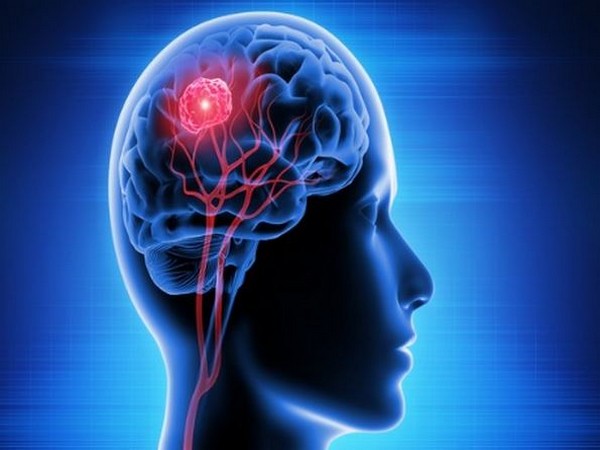
Representative image

Washington [US], June 7 (ANI): According to a study from researchers at Massachusetts General Hospital and Beth Israel Deaconess Medical Center, the wealth of brain wave data collected during overnight sleep studies can predict future health outcomes, strengthening the concept of sleep as a "window" into health.
Results show that a model based on quantitative analyses of sleep data was able to predict the 10-year risk of all 11 health outcomes selected for analysis. The three outcomes with the highest risk ratios associated with poor-to-average sleep were dementia (RR = 6.2), mortality (RR = 5.7), and mild cognitive impairment or dementia (RR = 4.0).
"It is surprising that sleep can predict the future incidence of 11 outcomes covering neurological, psychiatric, cardiovascular conditions, and mortality even before the actual diagnosis, using data where the outcomes occur about three years later from the baseline sleep recording," said lead author Haoqi Sun, who has a doctorate in machine learning and computational neuroscience and is an instructor in neurology at Massachusetts General Hospital. "We already know sleep is informative about health, but it is still quite a surprise that the brain activity during sleep can reflect so much information, let alone other important signals during sleep such as respiration and heart rates."
The study involved quantitative analyses of the sleep microstructure in 8,673 adults who had a diagnostic sleep study in a sleep center using polysomnography. The participants had an average age of 51 years; 51% were female.
The researchers extracted 86 features from the data generated by overnight EEG, a recording that measures brain waves. They sorted participants into three groups -- poor, average and good sleep --and used a statistical model to assess health risk. Health outcomes were determined using medical codes, brain imaging reports, medications, and/or cognition scores. Results were controlled for potential confounders including age, sex, body mass index, and certain prescription medication use.
While sleep medicine physicians routinely use sleep studies for the diagnosis of sleep disorders such as obstructive sleep apnea, Sun said the findings suggest that decoding sleep data could play a more significant role in health care.
"The ability to use noninvasive physiologic measurements of sleep to predict future incident health outcomes would be significant, because it might allow early interventions to prevent unfavorable outcomes," he said. (ANI)


Get the App

What to Read Next

Science

New method guides magnetism without magnets

New method guides magnetism without magnets

Researchers at Paul Scherrer Institute PSI have demonstrated an innovative method to control magnetism in materials using an energy-efficient electric field.

Read More
Science

Amphibians bounce-back from Earth’s greatest mass extinction

Amphibians bounce-back from Earth’s greatest mass extinction

Researchers at the University of Bristol discovered that ancient frog ancestors survived the biggest mass extinction of species by eating on freshwater prey that evaded terrestrial predators.

Read More
Science

New insights into how cancer evades the immune system: Study

New insights into how cancer evades the immune system: Study

Immunotherapy research primarily focuses on better recognition of cancer cells by the body's own immune system. Researchers at Amsterdam UMC and Moffitt Cancer Center have taken a different approach.

Read More
Science

Scientists use AI to better understand nanoparticles: Study

Scientists use AI to better understand nanoparticles: Study

A group of scientists has created a way to illuminate the dynamic behavior of nanoparticles, which are essential components in the production of pharmaceuticals, electronics, and industrial and energy-conversion materials.

Read More
Science

New device could allow you to taste cake in virtual reality

New device could allow you to taste cake in virtual reality

The 'e-Taste' interface employs sensors and wireless chemical dispensers to enable remote taste perception, often known as gestation. Field testing done by researchers at The Ohio State University confirmed the device's ability to digitally simulate a range of taste intensities, while still offering variety and safety for the user.

Read More
Science

Study reveals impact of animals as architects of Earth

Study reveals impact of animals as architects of Earth

A new study led by Professor Gemma Harvey from Queen Mary University of London has revealed how hundreds of species shape the landscapes we depend on, from termite mounds visible from space to beavers creating wetlands and hippos carving drainage systems.

Read More
Science

Opposing arrows of time emerge from certain quantum systems

Opposing arrows of time emerge from certain quantum systems

Researchers at the University of Surrey made a thought-provoking discovery. A new study reveals that opposing arrows of time can theoretically emerge from certain quantum systems.

Read More
Science

COVID-19 severity may be predicted by White Blood Cell Count

COVID-19 severity may be predicted by White Blood Cell Count

A COVID-19 diagnosis is no longer as frightening as it used to be, thanks to developments in treatment choices. However, a new study reveals that leukocyte (white blood cell) count may now be used to identify who is more likely to develop more significant disease symptoms.

Read More
Science

Seals can essentially act as 'smart sensors': Study

Seals can essentially act as 'smart sensors': Study

A new study by marine biologists reports that seals can essentially act as 'smart sensors' for monitoring fish populations in the ocean's eerily dim 'twilight zone.'

Read More
Science

'Creation of black holes without singularities through gravity'

'Creation of black holes without singularities through gravity'

Traditional black holes, as predicted by Albert Einstein's theory of General Relativity, contain what are known as singularities, i.e. points where the laws of physics break down. Identifying how singularities are resolved in the context of quantum gravity is one of the fundamental problems in theoretical physics. Now, a team of experts has described the creation of regular black holes from gravitational effects without the need for the existence of exotic matter required by some previous models.

Read More
Home About Us Our Products Advertise Contact Us Terms & Condition Privacy Policy

Copyright © aninews.in | All Rights Reserved.


