

ADD ANI AS A TRUSTED SOURCE
googleads
ANI Logo
Menu
Science

Research reveals self-driving cars could make traffic slower

According to a new study, "connected" vehicles, which wirelessly share data with one another, greatly enhance travel time through intersections – while automated vehicles can actually slow travel time through intersections if they are not connected to one another. The culprit? Safety.

ANI Aug 19, 2023 21:18 IST googleads

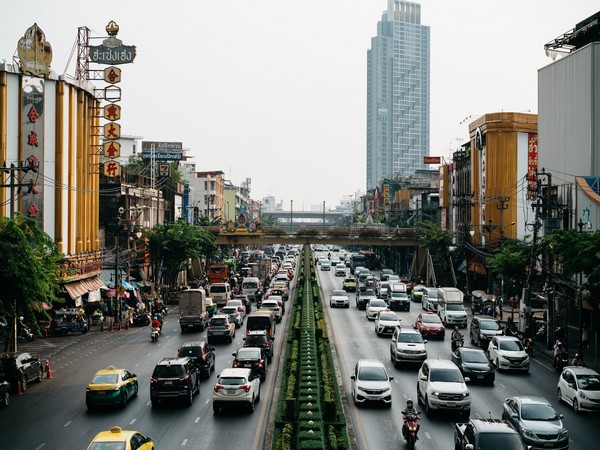
Representative Image

Washington DC [US], August 19 (ANI): According to a new study, "connected" vehicles, which wirelessly share data with one another, greatly enhance travel time through intersections – while automated vehicles can actually slow travel time through intersections if they are not connected to one another. The culprit? Safety.
"There are two significant reasons that people are interested in automated vehicles -- improving passenger safety and reducing travel time," says Ali Hajbabaie, first author of a paper on the work and an associate professor of civil, construction and environmental engineering at North Carolina State University.
"There is a lot of research showing that automated vehicles can improve safety. But our research here -- which relies on computational modeling -- suggests that if we want to also improve travel time, an increase in automated vehicles isn't enough; we need vehicles that are capable of communicating with each other and with the traffic-control systems that manage traffic flow at intersections."
For the study, the researchers used a computational model that simulates traffic conditions. The researchers accounted for four types of vehicles: human-driven vehicles (HVs); connected vehicles (CVs) -- which are driven by humans, but share information with other connected vehicles and with the control system that manages traffic lights; automated vehicles (AVs); and connected automated vehicles (CAVs).
"Because of their programming, AVs are assumed to move more cautiously compared to human drivers," Hajbabaie says. "Their safety stems, in part, from their being programmed to drive conservatively. CVs and CAVs are designed to receive information about the future state of traffic lights and adjust their speeds to avoid stopping at intersections. As a result, the movement of CVs and CAVs is expected to be smoother -- and have a lower number of stops -- than HVs and AVs."
The researchers ran 57 traffic simulations to assess the impact of a host of variables on travel time through an intersection. For example, the researchers looked at how traffic would be affected by various combinations of HVs, AVs, CVs and CAVs.
One clear takeaway was that the higher the percentage of CVs and CAVs, the greater the intersection capacity. In other words, when more vehicles on the road were connected, more vehicles could flow through the intersection more quickly. Higher capacity also means that, on average, you have fewer vehicles sitting in line at a red light.
"However, we found that higher percentages of AVs -- which are not connected -- actually slows travel times through intersections," Hajbabaie says. "This is because those AVs are programmed to drive conservatively in order to reduce the risk of collisions. Our findings underscore the importance of incorporating connectivity into both vehicles and traffic-control systems.
"This study was conducted using a computational model, which is a limiting factor," Hajbabaie says. "However, it's difficult and expensive to assemble a mixed fleet of HVs, AVs, CVs, and CAVs in a connected traffic-control system. Field tests involving human drivers can also raise safety concerns, making these modeling studies particularly important; we want to identify potential problems now, and not when real lives are at stake." (ANI)


Get the App

What to Read Next

Science

New method guides magnetism without magnets

New method guides magnetism without magnets

Researchers at Paul Scherrer Institute PSI have demonstrated an innovative method to control magnetism in materials using an energy-efficient electric field.

Read More
Science

Amphibians bounce-back from Earth’s greatest mass extinction

Amphibians bounce-back from Earth’s greatest mass extinction

Researchers at the University of Bristol discovered that ancient frog ancestors survived the biggest mass extinction of species by eating on freshwater prey that evaded terrestrial predators.

Read More
Science

New insights into how cancer evades the immune system: Study

New insights into how cancer evades the immune system: Study

Immunotherapy research primarily focuses on better recognition of cancer cells by the body's own immune system. Researchers at Amsterdam UMC and Moffitt Cancer Center have taken a different approach.

Read More
Science

Scientists use AI to better understand nanoparticles: Study

Scientists use AI to better understand nanoparticles: Study

A group of scientists has created a way to illuminate the dynamic behavior of nanoparticles, which are essential components in the production of pharmaceuticals, electronics, and industrial and energy-conversion materials.

Read More
Science

Strand Life Sciences launches portal for rare disease diagnosis

Strand Life Sciences launches portal for rare disease diagnosis

Marking Rare Disease Day, Strand Life Sciences, a subsidiary of Reliance Industries and a leading genomics research company, has launched the StrandOmics Portal, an innovative digital platform designed to assist doctors in diagnosing rare diseases more efficiently.

Read More
Science

New technology enhances gravitational-wave detection: Study

New technology enhances gravitational-wave detection: Study

A team of physicists led by Jonathan Richardson of the University of California, Riverside, demonstrated how new optical technology can extend the detection range of gravitational-wave observatories such as the Laser Interferometer Gravitational-Wave Observatory, or LIGO, and pave the way for future observatories.

Read More
Science

Discovery of unexpected collagen structure to influence research

Discovery of unexpected collagen structure to influence research

Collagen, the body's most abundant protein, has long been considered a predictable structural component of tissues.

Read More
Science

Shubhanshu Shukla: IAF officer becomes first Indian astronaut for

Shubhanshu Shukla: IAF officer becomes first Indian astronaut for

Shubhanshu Shukla, Indian Air Force (IAF) officer and one of four astronauts for Indian Space Research Organisation's (ISRO) Gaganyaan mission, has been sele Shubhanshu Shukla, Indian Air Force (IAF) officer and one of four astronauts for Indian Space Research Organisation's (ISRO) Gaganyaan mission, has been selected as the pilot for Axiom Mission 4, scheduled for Spring 2025.cted as the pilot for Axiom Mission 4, scheduled for Spring 2025.

Read More
Science

Weather change linked to heightened risk of Salmonella outbreaks

Weather change linked to heightened risk of Salmonella outbreaks

According to new research from the University of Surrey, climate change has an impact on Salmonella spread. This study builds on prior work by the researchers, which discovered that weather change is contributing to the spread of deadly diarrhoeal illnesses.

Read More
Science

Astronomers find the smallest main-belt asteroids ever detected:

Astronomers find the smallest main-belt asteroids ever detected:

The majority of known asteroids orbit inside the main asteroid belt, which is positioned between Mars and Jupiter at an average distance of around 250 million km from Earth. Since the discovery of the first asteroid in 1801, about 750.000 asteroids have been identified, primarily in the last decade thanks to several optical surveys that examine the sky on clear nights.

Read More
Home About Us Our Products Advertise Contact Us Terms & Condition Privacy Policy

Copyright © aninews.in | All Rights Reserved.
