

ADD ANI AS A TRUSTED SOURCE
googleads
ANI Logo
Menu
Science

Research reveals genetically modified bacteria break down plastics in saltwater

Researchers have genetically modified a marine microbe to break down plastic in salt water. The engineered organism can specifically degrade polyethylene terephthalate (PET), a plastic used in everything from water bottles to garments that contributes significantly to microplastic pollution in oceans.

ANI Sep 15, 2023 11:46 IST googleads

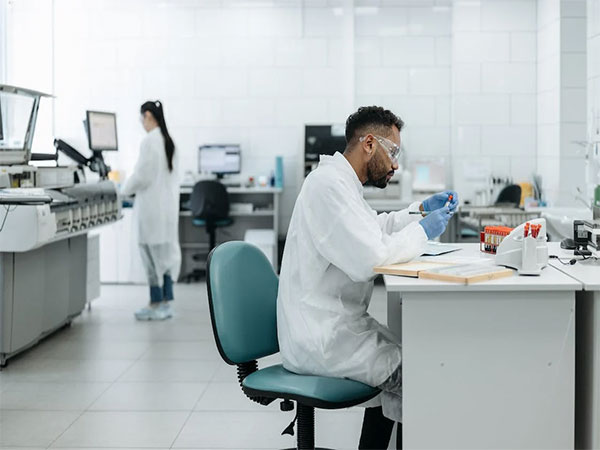
Representative Image

Washington DC [US], September 15 (ANI): Researchers have genetically modified a marine microbe to break down plastic in salt water. The engineered organism can specifically degrade polyethylene terephthalate (PET), a plastic used in everything from water bottles to garments that contributes significantly to microplastic pollution in oceans.
“This is exciting because we need to address plastic pollution in marine environments,” says Nathan Crook, corresponding author of a paper on the work and an assistant professor of chemical and biomolecular engineering at North Carolina State University.
“One option is to pull the plastic out of the water and put it in a landfill, but that poses challenges of its own. It would be better if we could break these plastics down into products that can be re-used. For that to work, you need an inexpensive way to break the plastic down. Our work here is a big step in that direction.”
To address this challenge, the researchers worked with two species of bacteria. The first bacterium, Vibrio natriegens, thrives in saltwater and is remarkable – in part – because it reproduces very quickly. The second bacterium, Ideonella sakaiensis, is remarkable because it produces enzymes that allow it to break down PET and eat it.
The researchers took the DNA from I. sakaiensis that is responsible for producing the enzymes that break down plastic, and incorporated that genetic sequence into a plasmid. Plasmids are genetic sequences that can replicate in a cell, independent of the cell’s own chromosome. In other words, you can sneak a plasmid into a foreign cell, and that cell will carry out the instructions in the plasmid’s DNA. And that’s exactly what the researchers did here.
By introducing the plasmid containing the I. sakaiensis genes into V. natriegens bacteria, the researchers were able to get V. natriegens to produce the desired enzymes on the surface of their cells. The researchers then demonstrated that V. natriegens was able to break down PET in a saltwater environment at room temperature.
“This is scientifically exciting because this is the first time anyone has reported successfully getting V. natriegens to express foreign enzymes on the surface of its cells,” Crook says.
“From a practical standpoint, this is also the first genetically engineered organism that we know of that is capable of breaking down PET microplastics in saltwater,” says Tianyu Li, first author of the paper and a Ph.D. student at NC State. “That’s important, because it is not economically feasible to remove plastics from the ocean and rinse high concentration salts off before beginning any processes related to breaking the plastic down.”
“However, while this is an important first step, there are still three significant hurdles,” Crook says. “First, we’d like to incorporate the DNA from I. sakaiensis directly into the genome of V. natriegens, which would make the production of plastic-degrading enzymes a more stable feature of the modified organisms. Second, we need to further modify V. natriegens so that it is capable of feeding on the byproducts it produces when it breaks down the PET. Lastly, we need to modify the V. natriegens to produce a desirable end product from the PET – such as a molecule that is a useful feedstock for the chemical industry.
“Honestly, that third challenge is the easiest of the three,” says Crook. “Breaking down the PET in saltwater was the most challenging part.
“We are also open to talking with industry groups to learn more about which molecules would be most desirable for us to engineer the V. natriegens into producing,” Crook says. “Given the range of molecules we can induce the bacteria to produce, and the potentially vast scale of production, which molecules could industry provide a market for?” (ANI)


Get the App

What to Read Next

Science

Strand Life Sciences launches portal for rare disease diagnosis

Strand Life Sciences launches portal for rare disease diagnosis

Marking Rare Disease Day, Strand Life Sciences, a subsidiary of Reliance Industries and a leading genomics research company, has launched the StrandOmics Portal, an innovative digital platform designed to assist doctors in diagnosing rare diseases more efficiently.

Read More
Science

Seals can essentially act as 'smart sensors': Study

Seals can essentially act as 'smart sensors': Study

A new study by marine biologists reports that seals can essentially act as 'smart sensors' for monitoring fish populations in the ocean's eerily dim 'twilight zone.'

Read More
Science

Gut microbes play role in regulating stress responsiveness

Gut microbes play role in regulating stress responsiveness

A groundbreaking study has revealed the critical role of gut bacteria in regulating stress responses through interactions with the body's circadian rhythms.

Read More
Science

Bacterial vaccine demonstrates potential as cancer treatment

Bacterial vaccine demonstrates potential as cancer treatment

Columbia researchers developed probiotic bacteria that train the immune system to eliminate cancer cells, paving the way for a new class of cancer vaccinations that take advantage of bacteria's innate tumour-targeting abilities. These microbial cancer vaccines can be tailored to each person's specific original tumour and metastases, perhaps preventing future recurrences.

Read More
Science

Alternate method to study changes during DNA replication process

Alternate method to study changes during DNA replication process

Researchers at Colorado State University discovered an alternative way for studying alterations during the DNA replication process in lab settings using genetically modified yeast. The novel methodology provides a clearer picture than current pharmacological methods for understanding cell cycle arrest, a fundamental mechanism critical to cancer treatment and genetic concerns.

Read More
Science

Researchers find how cells recognize, repair DNA damage

Researchers find how cells recognize, repair DNA damage

When cells divide, there is a substantial risk of genetic harm. After all, the cell must repeat its whole genetic material, including billions of genetic letters, before it can divide. This repeatedly produces "reading errors" in the genome. Other factors, including as exposure to sunlight, alcohol, and cigarettes, are also responsible for the buildup of DNA damage over a person's lifetime.

Read More
Science

Researchers shed light on possible endosymbiosis

Researchers shed light on possible endosymbiosis

Endosymbiosis is a remarkable biological phenomenon in which one creature resides within another. Such an unconventional partnership is usually advantageous to both parties. Even in human bodies, we find evidence of such cohabitation: mitochondria, the cells' powerhouses, originated from an ancient endosymbiosis. Bacteria long ago invaded and colonized other cells. This coexistence created the groundwork for mitochondria, which are found in the cells of plants, animals, and fungi.

Read More
Science

Researchers discover molecular mechanism for bacterial infection

Researchers discover molecular mechanism for bacterial infection

Researchers at Virginia Tech have discovered how bacteria change molecules in order to infect their host.

Read More
Science

Study: Connection between gene variants, breast, ovarian cancer

Study: Connection between gene variants, breast, ovarian cancer

Researchers have identified thousands of genetic variants in a gene that could raise an individual's risk of ovarian and breast cancer, opening the door to more accurate risk assessment and individualised treatment.

Read More
Science

More insight into cardiovascular health in early pregnancy

More insight into cardiovascular health in early pregnancy

According to research, maintaining good cardiovascular health during the first trimester of pregnancy may mitigate the genetic risk of developing preeclampsia and/or gestational hypertension.

Read More
Home About Us Our Products Advertise Contact Us Terms & Condition Privacy Policy

Copyright © aninews.in | All Rights Reserved.


