

ADD ANI AS A TRUSTED SOURCE
googleads
ANI Logo
Menu
Science

Research links vaccine immune response to age

Oregon [US], July 24 (ANI): Older people appear to have fewer antibodies against the novel coronavirus, suggests a new laboratory study from Oregon Health and Science University.

ANI Jul 24, 2021 16:26 IST googleads

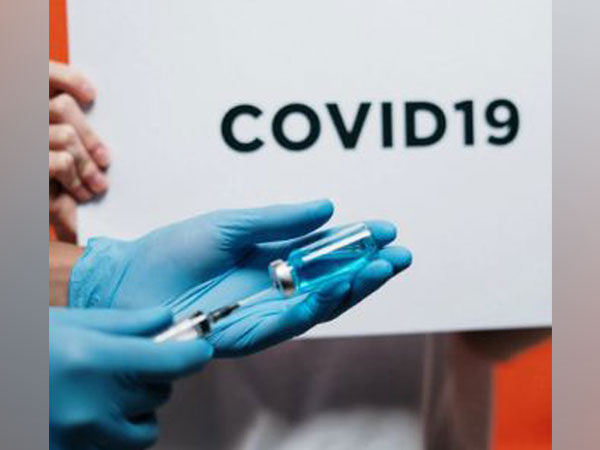
Representative image

Oregon [US], July 24 (ANI): Older people appear to have fewer antibodies against the novel coronavirus, suggests a new laboratory study from Oregon Health and Science University.
The study was published in the Journal of the American Medical Association. Antibodies are blood proteins that are made by the immune system to protect against infection. They are known to be key players in protection against SARS-CoV-2 infection.
"Our older populations are potentially more susceptible to the variants even if they are vaccinated," said senior author Fikadu Tafesse, PhD, assistant professor of molecular microbiology and immunology in the OHSU School of Medicine.
Tafesse and colleagues emphasized that even though they measured diminished antibody response in older people, the vaccine still appeared to be effective enough to prevent infection and severe illness in most people of all ages.
"The good news is that our vaccines are really strong," Tafesse said.
However, with vaccine uptake slowing in Oregon and across the United States, researchers say their findings underscore the importance of promoting vaccinations in local communities.
Vaccinations reduce the spread of the virus and new and potentially more transmissible variants, especially for older people who appear to be more susceptible to breakthrough infections.
"The more people get vaccinated, the less the virus circulates," Tafesse said. "Older people aren't entirely safe just because they're vaccinated; the people around them really need to be vaccinated as well. At the end of the day, this study really means that everybody needs to be vaccinated to protect the community."
Researchers measured the immune response in the blood of 50 people two weeks after their second dose of the Pfizer vaccine against COVID-19. They grouped participants into age groups and then exposed their blood serum in test tubes to the original "wild-type" SARS-CoV-2 virus and the P.1 variant (also known as gamma) that originated in Brazil.
The youngest group - all in their 20s - had a nearly seven-fold increase in antibody response compared with the oldest group of people between 70 and 82 years of age. In fact, the laboratory results reflected a clear linear progression from youngest to oldest: The younger a participant, the more robust the antibody response.
"Older people might be more susceptible to variants than younger individuals," Tafesse said.
The findings highlight the importance of vaccinating older people as well as others who may be more vulnerable to COVID-19, said co-author Marcel Curlin, M.D., associate professor of medicine (infectious diseases) in the OHSU School of Medicine.
"The vaccine still produces strong immune responses compared with natural infection in most older individuals, even if they are lower than their younger counterparts," Curlin said.
"Vaccination in this group may make the difference between serious and mild disease, and likely reduces the chances of transmitting SARS-CoV-2 to another person," Curlin concluded. (ANI)


Get the App

What to Read Next

Science

Amphibians bounce-back from Earth’s greatest mass extinction

Amphibians bounce-back from Earth’s greatest mass extinction

Researchers at the University of Bristol discovered that ancient frog ancestors survived the biggest mass extinction of species by eating on freshwater prey that evaded terrestrial predators.

Read More
Science

New insights into how cancer evades the immune system: Study

New insights into how cancer evades the immune system: Study

Immunotherapy research primarily focuses on better recognition of cancer cells by the body's own immune system. Researchers at Amsterdam UMC and Moffitt Cancer Center have taken a different approach.

Read More
Science

Scientists use AI to better understand nanoparticles: Study

Scientists use AI to better understand nanoparticles: Study

A group of scientists has created a way to illuminate the dynamic behavior of nanoparticles, which are essential components in the production of pharmaceuticals, electronics, and industrial and energy-conversion materials.

Read More
Science

New technology enhances gravitational-wave detection: Study

New technology enhances gravitational-wave detection: Study

A team of physicists led by Jonathan Richardson of the University of California, Riverside, demonstrated how new optical technology can extend the detection range of gravitational-wave observatories such as the Laser Interferometer Gravitational-Wave Observatory, or LIGO, and pave the way for future observatories.

Read More
Science

Astronomers find the smallest main-belt asteroids ever detected:

Astronomers find the smallest main-belt asteroids ever detected:

The majority of known asteroids orbit inside the main asteroid belt, which is positioned between Mars and Jupiter at an average distance of around 250 million km from Earth. Since the discovery of the first asteroid in 1801, about 750.000 asteroids have been identified, primarily in the last decade thanks to several optical surveys that examine the sky on clear nights.

Read More
Science

Study finds connection between quantum theory, information theory

Study finds connection between quantum theory, information theory

"Our results have no clear or direct application right now. It's basic research that lays the foundation for future technologies in quantum information and quantum computers. There's enormous potential for complete discoveries in many different research fields," said Guilherme B Xavier, a researcher in quantum communication at Linkoping University, Sweden.

Read More
Science

When devices can read human emotions without a camera: Study

When devices can read human emotions without a camera: Study

Tokyo Metropolitan University researchers employed long-term skin conductance measurements to distinguish between emotions. Volunteers were given videos representing frightening scenarios, family bonding, and humour, while their skin conductance was measured.

Read More
Science

'Nuroscience study results can be better predicted by AI'

'Nuroscience study results can be better predicted by AI'

Large language models, a type of AI that analyses text, can anticipate the results of proposed neuroscience studies more correctly than human experts, according to a new study led by UCL (University College London) researchers.

Read More
Science

Thermal imaging may help fruits, veggies stay fresher longer: Study

Thermal imaging may help fruits, veggies stay fresher longer: Study

Before your favourite produce arrives at the grocery store, it must be carefully harvested and stored for extended periods of time. A recent University of Georgia assessment argues that new temperature sensing devices could make that procedure considerably easier, as agricultural issues are exacerbated by changing climates.

Read More
Science

Study reveals how reminders can eliminate age-related memory loss

Study reveals how reminders can eliminate age-related memory loss

A recent study from UT Arlington showed that setting reminders can reverse some age-related memory deficits. The findings represent a significant breakthrough in tackling the cognitive issues that older persons confront, particularly in the context of prospective memory, which is the ability to remember to complete an intended activity at the appropriate time, such as taking medication or attending appointments.

Read More
Home About Us Our Products Advertise Contact Us Terms & Condition Privacy Policy

Copyright © aninews.in | All Rights Reserved.


