Research explores communication among fishes
New York [US], January 29 (ANI): Fishes are far more likely to communicate using sound than generally believed and some of them have been doing this for at least 155 million years, recent research has found.
ANI
Jan 29, 2022 23:33 IST

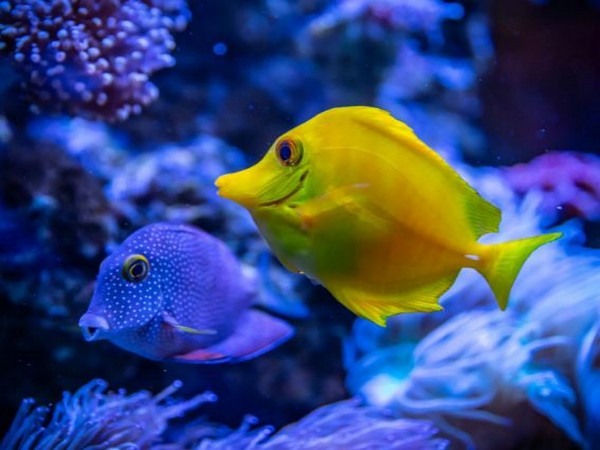
New York [US], January 29 (ANI): Fishes are far more likely to communicate using sound than generally believed and some of them have been doing this for at least 155 million years, recent research has found.
The research has been published in the 'Ichthyology and Herpetology Journal'.
"We've known for a long time that some fish make sounds," said lead author Aaron Rice, a researcher at the K. Lisa Yang Center for Conservation Bioacoustics at the Cornell Lab of Ornithology.
"But fish sounds were always perceived as rare oddities. We wanted to know if these were one-offs or if there was a broader pattern for acoustic communication in fishes," he added.
The authors looked at a branch of fish called the ray-finned fish. These are vertebrates (having a backbone) that comprise 99 per cent of the world's known species of fish. They found 175 families that contain two-thirds of fish species that do, or are likely to, communicate with sound. By examining the fish family tree, study authors found that sound was so important; it evolved at least 33 separate times over millions of years.
"Thanks to decades of basic research on the evolutionary relationships of fishes, we can now explore many questions about how different functions and behaviours evolved in the approximately 35,000 known species of fishes," said co-author William E. Bemis '76, Cornell professor of ecology and evolutionary biology in the College of Agriculture and Life Sciences.
"We're getting away from a strictly human-centric way of thinking. What we learn could give us some insight on the drivers of sound communication and how it continues to evolve," he added.
The scientists used three sources of information: existing recordings and scientific papers describing fish sounds; the known anatomy of a fish--whether they have the right tools for making sounds, such as certain bones, an air bladder, and sound-specific muscles; and references in 19th-century literature before underwater microphones were invented.
"Sound communication is often overlooked within fishes, yet they make up more than half of all living vertebrate species," said Andrew Bass, co-lead author and the Horace White Professor of Neurobiology and Behavior in the College of Arts and Sciences.
"They've probably been overlooked because fishes are not easily heard or seen, and the science of underwater acoustic communication has primarily focused on whales and dolphins. But fishes have voices, too!" he added.
What are the fish talking about? Pretty much the same things we all talk about--sex and food. Rice said that the fish are either trying to attract a mate, defend a food source or territory, or let others know where they are. Even some of the common names for fish are based on the sounds they make, such as grunts, croakers, hogfish, squeaking catfish, trumpeters, and many more.
Rice intends to keep tracking the discovery of sound in fish species and add them to his growing database -- a project he began 20 years ago with study co-authors Ingrid Kaatz '85, MS '92, and Philip Lobel, a professor of biology at Boston University. Their collaboration has continued and expanded since Rice came to Cornell.
"This introduces sound communication to so many more groups than we ever thought," said Rice.
"Fish do everything. They breathe air, they fly, they eat anything and everything--at this point, nothing would surprise me about fishes and the sounds that they can make," he added. (ANI)
Get the App