

ADD ANI AS A TRUSTED SOURCE
googleads
ANI Logo
Menu
Science

Research: Climate change associated with coastal glacier retreat

Washington [US], July 15 (ANI): Researchers at the University of Texas Institute for Geophysics (UTIG) and Georgia Tech have developed a methodology that they think cracks the code to why coastal glaciers are retreating, and in turn, how much can be attributed to human-caused climate change.

ANI Jul 15, 2022 23:43 IST googleads

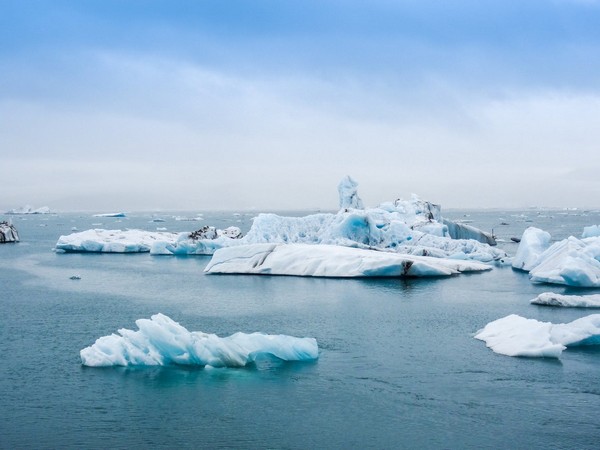
Representative image

Washington [US], July 15 (ANI): Researchers at the University of Texas Institute for Geophysics (UTIG) and Georgia Tech have developed a methodology that they think cracks the code to why coastal glaciers are retreating, and in turn, how much can be attributed to human-caused climate change.
Attributing the human role for coastal glaciers - which melt directly into the sea - could pave the way to better predictions about sea level rise. The study was published in the journal The Cryosphere.
So far, scientists have tested the approach only in computer models using simplified glaciers. They found that even modest global warming caused most glaciers to melt, or retreat.
The next step, the researchers said, is for scientists to simulate the coastal glaciers of a real ice sheet, like Greenland's, which holds enough ice to raise sea level by about 22 feet (7 meters). That will reveal whether they are retreating due to climate change and help predict when major ice loss might next occur.
"The methodology we're proposing is a road map towards making confident statements about what the human role is [in glacial retreats]," said glaciologist John Christian, who is a postdoctoral researcher at both The University of Texas at Austin and Georgia Tech. "Those statements can then be communicated to the public and policymakers, and help in their decision making."
The methodology is unique because it treats rapid glacier retreat as an individual probabilistic event, like a wildfire or tropical storm. For a large retreat to happen, the glacier must retreat past its "stability threshold," which is usually a steep rise in the underlying bedrock that helps slow its flow.
The probability of that happening varies depending on local climate and ocean conditions that change with natural fluctuations and human-caused warming. Even small variations can cause large changes in a glacier's behaviour, making them hard to predict and leading to cases where glaciers were found retreating right next to ones that weren't.
That, said co-author and UTIG glaciologist Ginny Catania, is why the last Intergovernmental Panel on Climate Change report found there was still too much uncertainty about coastal glaciers to say whether their retreat is due to human-caused climate change or natural climate fluctuations.
The new study shows how to overcome the uncertainty by providing a methodology that accounts for differences between glaciers and natural climate fluctuations while testing the effect of background trends such as global warming. According to Catania, the study means they can now attribute mass coastal glacier retreat to climate change and not just natural variability.
"And that's the first time anyone's done that," she said.
To test the methodology, the team ran thousands of simulations of the past 150 years with and without global warming. The simulations showed that even modest warming dramatically increased the probability of ice sheet-wide glacier retreat.
When the scientists ran models without human-caused climate change, they found it virtually impossible for more than a few of the glaciers to begin retreating within years of each other.
By contrast, since 2000, nearly all (200) of Greenland's 225 coastal glaciers have been in varying states of retreat.
"This study gives us a toolbox to determine the role of humans in the loss of ice from Greenland and Antarctica, to say with confidence that it's not just coincidence," said Georgia Tech glaciologist and co-author Alex Robel. (ANI)


Get the App

What to Read Next

Science

New method guides magnetism without magnets

New method guides magnetism without magnets

Researchers at Paul Scherrer Institute PSI have demonstrated an innovative method to control magnetism in materials using an energy-efficient electric field.

Read More
Science

Amphibians bounce-back from Earth’s greatest mass extinction

Amphibians bounce-back from Earth’s greatest mass extinction

Researchers at the University of Bristol discovered that ancient frog ancestors survived the biggest mass extinction of species by eating on freshwater prey that evaded terrestrial predators.

Read More
Science

New insights into how cancer evades the immune system: Study

New insights into how cancer evades the immune system: Study

Immunotherapy research primarily focuses on better recognition of cancer cells by the body's own immune system. Researchers at Amsterdam UMC and Moffitt Cancer Center have taken a different approach.

Read More
Science

Scientists use AI to better understand nanoparticles: Study

Scientists use AI to better understand nanoparticles: Study

A group of scientists has created a way to illuminate the dynamic behavior of nanoparticles, which are essential components in the production of pharmaceuticals, electronics, and industrial and energy-conversion materials.

Read More
Science

New device could allow you to taste cake in virtual reality

New device could allow you to taste cake in virtual reality

The 'e-Taste' interface employs sensors and wireless chemical dispensers to enable remote taste perception, often known as gestation. Field testing done by researchers at The Ohio State University confirmed the device's ability to digitally simulate a range of taste intensities, while still offering variety and safety for the user.

Read More
Science

Strand Life Sciences launches portal for rare disease diagnosis

Strand Life Sciences launches portal for rare disease diagnosis

Marking Rare Disease Day, Strand Life Sciences, a subsidiary of Reliance Industries and a leading genomics research company, has launched the StrandOmics Portal, an innovative digital platform designed to assist doctors in diagnosing rare diseases more efficiently.

Read More
Science

Study reveals impact of animals as architects of Earth

Study reveals impact of animals as architects of Earth

A new study led by Professor Gemma Harvey from Queen Mary University of London has revealed how hundreds of species shape the landscapes we depend on, from termite mounds visible from space to beavers creating wetlands and hippos carving drainage systems.

Read More
Science

Opposing arrows of time emerge from certain quantum systems

Opposing arrows of time emerge from certain quantum systems

Researchers at the University of Surrey made a thought-provoking discovery. A new study reveals that opposing arrows of time can theoretically emerge from certain quantum systems.

Read More
Science

COVID-19 severity may be predicted by White Blood Cell Count

COVID-19 severity may be predicted by White Blood Cell Count

A COVID-19 diagnosis is no longer as frightening as it used to be, thanks to developments in treatment choices. However, a new study reveals that leukocyte (white blood cell) count may now be used to identify who is more likely to develop more significant disease symptoms.

Read More
Science

Seals can essentially act as 'smart sensors': Study

Seals can essentially act as 'smart sensors': Study

A new study by marine biologists reports that seals can essentially act as 'smart sensors' for monitoring fish populations in the ocean's eerily dim 'twilight zone.'

Read More
Home About Us Our Products Advertise Contact Us Terms & Condition Privacy Policy

Copyright © aninews.in | All Rights Reserved.


