

ADD ANI AS A TRUSTED SOURCE
googleads
ANI Logo
Menu
Science

Reprogramming form of virus capsids could help in progress of biomedicine: Research

By combining viral protein building blocks with DNA templates, bioengineers have developed a method to regulate the size and shape of virus particles.

ANI Jul 22, 2023 10:50 IST googleads

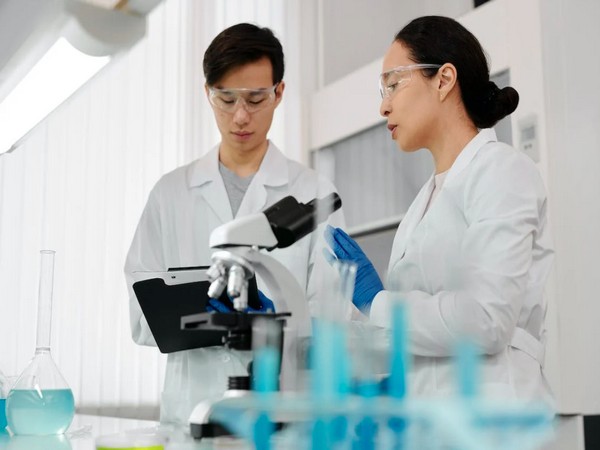
Representative Image

Washington DC [US], July 22 (ANI): Bioengineers have developed a method to regulate the size and shape of virus particles by combining viral protein building blocks with DNA templates.
The resultant nanostructures may be used in vaccine development and medicine delivery inside the body.
Virus capsid proteins—the proteins that shield the genome of a virus—can be used to build precisely structured protein assemblies.
Their shapes and geometry, however, depend largely on the virus strain. Reprogramming these assemblies, no matter the original viral blueprint is an intriguing possibility for drug delivery and vaccine development.
Scientists tackled the challenge by generating a “structured genome” template on which capsid proteins can assemble. To avoid deforming the flexible genome and creating unintended shapes, they used rigid DNA origami structures.
These structures are only tens to hundreds of nanometres in length but are entirely made of DNA, which is folded accurately into the desired template shape.
"Our approach is based on electrostatic interactions between the negative charge of the DNA nanostructures and a positively charged domain of the capsid proteins, paired with intrinsic interactions between the single proteins. By altering the amount of protein used, we can fine-tune the number of highly-ordered protein layers, which encapsulate the DNA origami," says Iris Seitz, lead author and doctoral researcher at Aalto University.
"By using DNA origami as a template, we can direct the capsid proteins into a user-defined size and shape, resulting in assemblies that are well-defined, both in length and diameter. By testing a variety of DNA origami structures, we also learned how the templates’ geometry affected the whole assembly," Seitz adds.
"With the help of cryogenic electron microscopy imaging, we were able to visualise the highly ordered proteins upon assembly and, with that, measure even small changes in the geometry of the assembly arising from different templates," explains professor Juha Huiskonen, a collaborating scientist from the University of Helsinki.
"We have found a simple but effective strategy to (re)direct capsid proteins to a desired shape. Our approach is adaptable and therefore not limited to a single capsid protein type, as we demonstrated with capsid proteins from four different viruses. Additionally, we can tweak our template to be more application-relevant, for instance by integrating RNA into the origami, which could subsequently be translated into useful or site-specific proteins," explains Aalto professor Mauri Kostiainen, leader of the research project.
Although DNA origami structures are a promising material for interfacing biological systems, they suffer from instability, especially in the presence of DNA-degrading enzymes.
In experiments, however, "we can clearly observe that the protein layer efficiently protects the encapsulated DNA nanostructures from degradation. By combining protection with the functional properties of nucleic acid origami, including the possibility to deliver DNA or messenger RNA together with other cargo molecules, we believe that our approach provides interesting future directions for biomedical engineering," concludes Kostiainen. (ANI)


Get the App

What to Read Next

Science

Alternate method to study changes during DNA replication process

Alternate method to study changes during DNA replication process

Researchers at Colorado State University discovered an alternative way for studying alterations during the DNA replication process in lab settings using genetically modified yeast. The novel methodology provides a clearer picture than current pharmacological methods for understanding cell cycle arrest, a fundamental mechanism critical to cancer treatment and genetic concerns.

Read More
Science

Study finds new ways to prevent, treat type 2 diabetes

Study finds new ways to prevent, treat type 2 diabetes

Pancreatic cells, like human cells, have a limit to how much stress they can handle before they start to break down. Through overstimulation of these cells, certain stresses like inflammation and hyperglycemia lead to the onset of type 2 diabetes.

Read More
Science

Researchers find how cells recognize, repair DNA damage

Researchers find how cells recognize, repair DNA damage

When cells divide, there is a substantial risk of genetic harm. After all, the cell must repeat its whole genetic material, including billions of genetic letters, before it can divide. This repeatedly produces "reading errors" in the genome. Other factors, including as exposure to sunlight, alcohol, and cigarettes, are also responsible for the buildup of DNA damage over a person's lifetime.

Read More
Science

Fever promotes increased activity, mitochondrial damage

Fever promotes increased activity, mitochondrial damage

Researchers at Vanderbilt University Medical Centre showed that fever temperatures increase immune cell metabolism, proliferation, and activity, but they also promote mitochondrial stress, DNA damage, and cell death in a specific subgroup of T cells.

Read More
Science

Study: Connection between gene variants, breast, ovarian cancer

Study: Connection between gene variants, breast, ovarian cancer

Researchers have identified thousands of genetic variants in a gene that could raise an individual's risk of ovarian and breast cancer, opening the door to more accurate risk assessment and individualised treatment.

Read More
Science

Weight loss could reduce chances of severe infections in people

Weight loss could reduce chances of severe infections in people

According to new research, weight loss therapies may lower the risk of severe flu cases and other infections in patients with diabetes.

Read More
Science

Immune cells prevent lung healing following viral infection

Immune cells prevent lung healing following viral infection

Researchers found a mechanism by which immune cells impede the regeneration of the lungs' defensive barrier following viral infections such as COVID-19.

Read More
Science

Study finds how genetic diagnostics of ultra-rare diseases

Study finds how genetic diagnostics of ultra-rare diseases

Most rare diseases are caused by genetics. A molecular genetic diagnosis can be made more quickly and readily by identifying the underlying genetic change, for instance by exome sequencing (ES). The analysis of every region of our DNA that codes for a protein is known as ES.

Read More
Science

Study finds new genetic mutation for congenital thyroid illness

Study finds new genetic mutation for congenital thyroid illness

A team of researchers discovered a genetic mutation in a non-coding region of DNA that changes thyroid regulation, resulting in a rare type of congenital thyroid abnormality.

Read More
Science

Novel immune cell therapy can fight hepatitis B infections

Novel immune cell therapy can fight hepatitis B infections

Researchers found out how chronic infection with the hepatitis B virus (HBV) causes gradual liver damage, and eradicating the virus remains a daunting challenge.

Read More
Home About Us Our Products Advertise Contact Us Terms & Condition Privacy Policy

Copyright © aninews.in | All Rights Reserved.
