

ADD ANI AS A TRUSTED SOURCE
googleads
ANI Logo
Menu
Science

Red wine compound may help astronauts stay strong: Study

Washington D.C. [USA], July 18 (ANI): A compound made with red wine called resveratrol could help Mars explorer stay strong, suggests a Harvard study.

ANI Jul 18, 2019 17:55 IST googleads

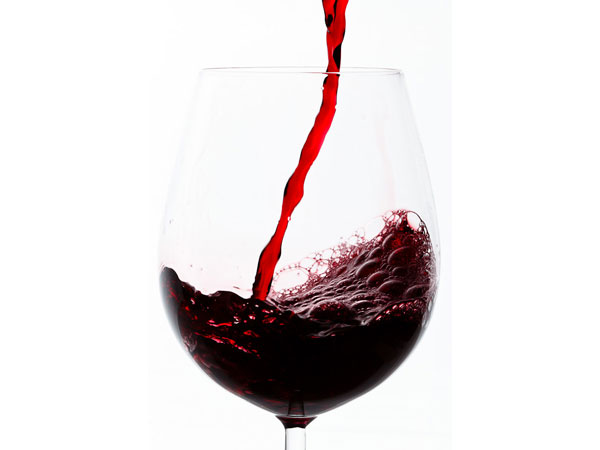
Representative Image

Washington D.C. [USA], July 18 (ANI): A compound made with red wine called resveratrol could help Mars explorer stay strong, suggests a Harvard study.
Mars is about nine months from Earth and when the explorer reaches the finish line the resveratrol could help them stay strong.
The study published in the journal 'Frontiers in Physiology' shows that resveratrol substantially preserves muscle mass and strength in rats exposed to the wasting effects of simulated Mars gravity.
Out in space, unchallenged by gravity, muscles and bones weaken. Weight-bearing muscles are hit first and worst, like the soleus muscle in the calf.
"After just three weeks in space, the human soleus muscle shrinks by a third," said Dr Marie Mortreux, lead author of the study.
"This is accompanied by a loss of slow-twitch muscle fibers, which are needed for endurance," said Mortreux.
To allow astronauts to operate safely on long missions to Mars - whose gravitational pull is just 40 per cent of Earth's - mitigating strategies will be needed to prevent muscle deconditioning.
"Dietary strategies could be key," said Dr Mortreux, "especially since astronauts travelling to Mars won't have access to the type of exercise machines deployed on the International Space Station (ISS)."
A strong candidate is resveratrol: a compound commonly found in grape skin and blueberries that has been widely investigated for its anti-inflammatory, anti-oxidative, and anti-diabetic effects.
"Resveratrol has been shown to preserve bone and muscle mass in rats during complete unloading, analogous to microgravity during spaceflight. So, we hypothesised that a moderate daily dose would help mitigate muscle deconditioning in a Mars gravity analogue, too."
To mimic Mars gravity, the researchers used an approach in which rats were fitted with a full-body harness and suspended by a chain from their cage ceiling.
Thus, 24 male rats were exposed to normal loading (Earth) or 40 per cent loading (Mars) for 14 days. In each group, half received resveratrol (150 mg/kg/day) in water; the others got just the water. Otherwise, they fed freely from the same chow.
Calf circumference and front and rear paw grip force were measured weekly, and at 14 days the calf muscles were analysed.
As expected, the 'Mars' condition weakened the rats' grip and shrank their calf circumference, muscle weight and slow-twitch fibre content.
But incredibly, resveratrol supplementation almost entirely rescued front and rear paw grip in the Mars rats, to the level of the non-supplemented Earth rats.
What's more, resveratrol completely protected muscle mass (soleus and gastrocnemius) in the Mars rats, and in particular reduced the loss of slow-twitch muscle fibres.
"Further studies are needed to explore the mechanisms involved, as well as the effects of different doses of resveratrol (up to 700 mg/kg/day) in both males and females," said Dr Mortreux. (ANI)

Get the App

What to Read Next

Science

New method guides magnetism without magnets

New method guides magnetism without magnets

Researchers at Paul Scherrer Institute PSI have demonstrated an innovative method to control magnetism in materials using an energy-efficient electric field.

Read More
Science

Amphibians bounce-back from Earth’s greatest mass extinction

Amphibians bounce-back from Earth’s greatest mass extinction

Researchers at the University of Bristol discovered that ancient frog ancestors survived the biggest mass extinction of species by eating on freshwater prey that evaded terrestrial predators.

Read More
Science

New insights into how cancer evades the immune system: Study

New insights into how cancer evades the immune system: Study

Immunotherapy research primarily focuses on better recognition of cancer cells by the body's own immune system. Researchers at Amsterdam UMC and Moffitt Cancer Center have taken a different approach.

Read More
Science

Scientists use AI to better understand nanoparticles: Study

Scientists use AI to better understand nanoparticles: Study

A group of scientists has created a way to illuminate the dynamic behavior of nanoparticles, which are essential components in the production of pharmaceuticals, electronics, and industrial and energy-conversion materials.

Read More
Science

New device could allow you to taste cake in virtual reality

New device could allow you to taste cake in virtual reality

The 'e-Taste' interface employs sensors and wireless chemical dispensers to enable remote taste perception, often known as gestation. Field testing done by researchers at The Ohio State University confirmed the device's ability to digitally simulate a range of taste intensities, while still offering variety and safety for the user.

Read More
Science

Study reveals impact of animals as architects of Earth

Study reveals impact of animals as architects of Earth

A new study led by Professor Gemma Harvey from Queen Mary University of London has revealed how hundreds of species shape the landscapes we depend on, from termite mounds visible from space to beavers creating wetlands and hippos carving drainage systems.

Read More
Science

Opposing arrows of time emerge from certain quantum systems

Opposing arrows of time emerge from certain quantum systems

Researchers at the University of Surrey made a thought-provoking discovery. A new study reveals that opposing arrows of time can theoretically emerge from certain quantum systems.

Read More
Science

COVID-19 severity may be predicted by White Blood Cell Count

COVID-19 severity may be predicted by White Blood Cell Count

A COVID-19 diagnosis is no longer as frightening as it used to be, thanks to developments in treatment choices. However, a new study reveals that leukocyte (white blood cell) count may now be used to identify who is more likely to develop more significant disease symptoms.

Read More
Science

Seals can essentially act as 'smart sensors': Study

Seals can essentially act as 'smart sensors': Study

A new study by marine biologists reports that seals can essentially act as 'smart sensors' for monitoring fish populations in the ocean's eerily dim 'twilight zone.'

Read More
Science

New technology enhances gravitational-wave detection: Study

New technology enhances gravitational-wave detection: Study

A team of physicists led by Jonathan Richardson of the University of California, Riverside, demonstrated how new optical technology can extend the detection range of gravitational-wave observatories such as the Laser Interferometer Gravitational-Wave Observatory, or LIGO, and pave the way for future observatories.

Read More




