

ADD ANI AS A TRUSTED SOURCE
googleads
ANI Logo
Menu
Science

Plant roots change shape and branch out for water: Study

Researchers have discovered how plant roots adapt their shape to maximise their uptake of water, pausing branching when they lose contact with water and only resuming once they reconnect with moisture, ensuring they can survive even in the driest conditions.

ANI Nov 18, 2022 13:56 IST googleads

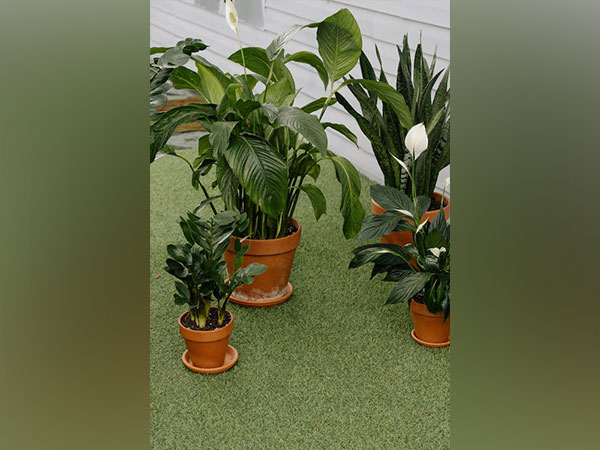
Representative Image

Washington [US], November 18 (ANI): Researchers have discovered how plant roots adapt their shape to maximise their uptake of water, pausing branching when they lose contact with water and only resuming once they reconnect with moisture, ensuring they can survive even in the driest conditions.
Plant scientists from the University of Nottingham have discovered a novel water sensing mechanism that they have called 'Hydro-Signalling', which shows how hormone movement is linked with water fluxes. The findings have been published today in Science.
Water is the rate-limiting molecule for life on earth. The devastating impact of climate change is enhancing the effects of water stress on global agriculture. Climate change is causing rainfall patterns to become more erratic, impacting rain-fed crops in particular.
Roots play a critical role to reduce the impact of water stress on plants by adapting their shape (such as branching or growing deeper) to secure more water. Discovering how plant roots sense and adapt to water stress is vital importance for helping 'future proof' crops to enhance their climate resilience.
Using X-ray micro-CT imaging researchers were able to reveal that roots alter their shape in response to external moisture availability by linking the movement of water with plant hormone signals that control root branching.
The study provides critical information about the key genes and processes controlling root branching in response to limited water availability, helping scientists design novel approaches to manipulate root architecture to enhance water capture and yield in crops.
Dr. Poonam Mehra, postdoctoral fellow, from the School of Biosciences is one of the lead authors and explains: "When roots are in contact with moisture, a key hormone signal (auxin) moves inwards with water, triggering new root branches. However, when roots lose contact with moisture, they rely on internal water sources that mobilises another hormone signal (ABA) outwards, which acts to block the inwards movement of the branching signal. This simple, yet elegant mechanism enables plant roots to fine tune their shape to local conditions and optimize foraging."
Professor Malcolm Bennett, co-lead on the research adds: "Our plant research is vitally important for understanding how we can futureproof crops and find ways to ensure successful crop yields even in the most challenging climates. We are already experiencing a hotter climate and designing plants that can still access water in these conditions is vital and this research is an all important step in understanding how to do this." He continued: "These new discoveries were only possible because of the cutting-edge tools and collaborative approaches of the authors, which involved an international team of scientists based in the UK, Belgium, Sweden, USA and Israel." (ANI)


Get the App

What to Read Next

Science

New method guides magnetism without magnets

New method guides magnetism without magnets

Researchers at Paul Scherrer Institute PSI have demonstrated an innovative method to control magnetism in materials using an energy-efficient electric field.

Read More
Science

Amphibians bounce-back from Earth’s greatest mass extinction

Amphibians bounce-back from Earth’s greatest mass extinction

Researchers at the University of Bristol discovered that ancient frog ancestors survived the biggest mass extinction of species by eating on freshwater prey that evaded terrestrial predators.

Read More
Science

New insights into how cancer evades the immune system: Study

New insights into how cancer evades the immune system: Study

Immunotherapy research primarily focuses on better recognition of cancer cells by the body's own immune system. Researchers at Amsterdam UMC and Moffitt Cancer Center have taken a different approach.

Read More
Science

Scientists use AI to better understand nanoparticles: Study

Scientists use AI to better understand nanoparticles: Study

A group of scientists has created a way to illuminate the dynamic behavior of nanoparticles, which are essential components in the production of pharmaceuticals, electronics, and industrial and energy-conversion materials.

Read More
Science

New device could allow you to taste cake in virtual reality

New device could allow you to taste cake in virtual reality

The 'e-Taste' interface employs sensors and wireless chemical dispensers to enable remote taste perception, often known as gestation. Field testing done by researchers at The Ohio State University confirmed the device's ability to digitally simulate a range of taste intensities, while still offering variety and safety for the user.

Read More
Science

Strand Life Sciences launches portal for rare disease diagnosis

Strand Life Sciences launches portal for rare disease diagnosis

Marking Rare Disease Day, Strand Life Sciences, a subsidiary of Reliance Industries and a leading genomics research company, has launched the StrandOmics Portal, an innovative digital platform designed to assist doctors in diagnosing rare diseases more efficiently.

Read More
Science

Study reveals impact of animals as architects of Earth

Study reveals impact of animals as architects of Earth

A new study led by Professor Gemma Harvey from Queen Mary University of London has revealed how hundreds of species shape the landscapes we depend on, from termite mounds visible from space to beavers creating wetlands and hippos carving drainage systems.

Read More
Science

Opposing arrows of time emerge from certain quantum systems

Opposing arrows of time emerge from certain quantum systems

Researchers at the University of Surrey made a thought-provoking discovery. A new study reveals that opposing arrows of time can theoretically emerge from certain quantum systems.

Read More
Science

COVID-19 severity may be predicted by White Blood Cell Count

COVID-19 severity may be predicted by White Blood Cell Count

A COVID-19 diagnosis is no longer as frightening as it used to be, thanks to developments in treatment choices. However, a new study reveals that leukocyte (white blood cell) count may now be used to identify who is more likely to develop more significant disease symptoms.

Read More
Science

Seals can essentially act as 'smart sensors': Study

Seals can essentially act as 'smart sensors': Study

A new study by marine biologists reports that seals can essentially act as 'smart sensors' for monitoring fish populations in the ocean's eerily dim 'twilight zone.'

Read More
Home About Us Our Products Advertise Contact Us Terms & Condition Privacy Policy

Copyright © aninews.in | All Rights Reserved.


