

ADD ANI AS A TRUSTED SOURCE
googleads
ANI Logo
Menu
Science

Phones divert teens' attention from bad thoughts before sleep: Research

As per Flinders University research, excessive use of mobile devices has a bad rap, but one advantage may be their capacity to provide a distraction and improve teens' ability to sleep.

ANI Mar 12, 2023 15:54 IST googleads

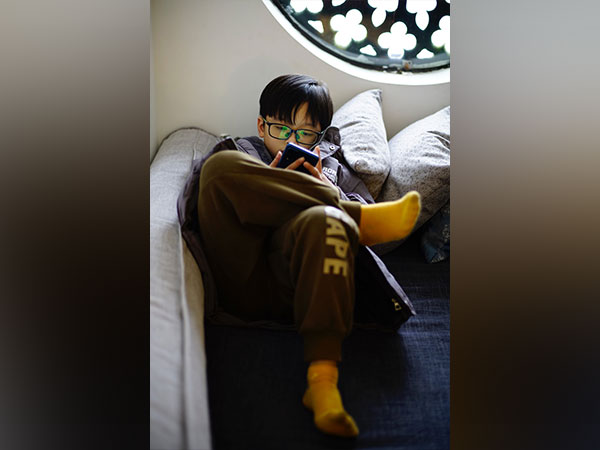
Representative Image

Adelaide [Australia], March 12 (ANI): As per Flinders University research, excessive use of mobile devices has a bad rap, but one advantage may be their capacity to provide a distraction and improve teens' ability to sleep.
Feedback from more than 600 teenagers from age 12 to 18 at South Australian schools between June and September 2019 has led the international research group to point to a more nuanced view on using the wide range of mobile content -- led by YouTube, music apps, Instagram and Snapchat -- before young people's bedtime.
"Many teenagers struggle with a racing mind when sleep doesn't come easy," said lead corresponding author Dr Serena Bauducco, a visiting postdoctoral researcher from Orebro University, Sweden.
"This study shows that many adolescents use technology to distract themselves from negative thoughts, which may help them manage the sleep-onset process. Thus, distraction may be one mechanism explaining how sleep affects technology use, rather than vice-versa," the study concludes.
The majority of 631 adolescents surveyed used technology as a distraction from negative or distressing thoughts, with 23.6% answering "yes" and 38.4% "sometimes," according to the study published in the journal Sleep Advances (Oxford Academic).
However, the study did reveal a higher tendency of app use among the young people with existing sleep problems compared to those not reporting a sleep problem, leading researchers to caution that other solutions are needed to help teenagers to fall asleep.
Passive entertainment, via music apps or Youtube video clips, or interacting with peers via Instagram or Snapchat were considered the most popular distractions.
First author of the study, Flinders University psychology graduate Ms Alexandra Daniels, says the complex relationship between sleep and technology is illustrated by a tendency for some adolescents with sleep problems to more frequently use devices before bed.
"This study helps to provide evidence to suggest that the relationship between teenagers, technology and sleep is much more complex than the previously accepted idea that technology use prior to sleep onset is always negative and harmful," she said.
South Australian child and adolescent sleep expert Professor Michael Gradisar, who conceived the idea behind the study, says the research suggests that recommendations for focused use of certain apps could become an integral part of some adolescents' sleep routines, to help them regulate their negative thoughts.
Flinders University sleep psychology graduate Professor Gradisar, who now focuses on a range of technologies as Head of Sleep Science at Sleep Cycle in Sweden, says good sleep habits from infancy through adolescence is important to set healthy sleep routines into adulthood.
Respondents in the study were asked which app was likely to distract them from any negative or distressing thoughts - from messaging, phone calls, Instagram, Facebook, Snapchat, Twitter, Youtube, Reddit, Tumblr and the Spotify/iTunes/Apple Music, Netflix/Stan, Viber/WhatsApp, gaming app, audiobook or 'other'.Participants reported multiple technology preferences including mobile phone, iPad, laptop, desktop computer, iPod/MP3 player, television, gaming console or 'other'.Researchers note the recent rise in popularity of TikTok and other apps in a rapidly changing field.
A previous study in Sleep Medicine by the Flinders University researchers aligned use of phones, laptops and gaming consoles by secondary school students in the hour before bed, or in bed before sleep onset, were associated with increased odds of insufficient sleep in school nights."Evening technology use should be monitored for feasible limits and harm minimisation because technology will remain an integral part of adolescents' evenings," they conclude.The National Sleep Foundations recommends that adolescents aged 14-17 years sleep between 8 and 10 hours per night. (ANI)


Get the App

What to Read Next

Science

New method guides magnetism without magnets

New method guides magnetism without magnets

Researchers at Paul Scherrer Institute PSI have demonstrated an innovative method to control magnetism in materials using an energy-efficient electric field.

Read More
Science

Amphibians bounce-back from Earth’s greatest mass extinction

Amphibians bounce-back from Earth’s greatest mass extinction

Researchers at the University of Bristol discovered that ancient frog ancestors survived the biggest mass extinction of species by eating on freshwater prey that evaded terrestrial predators.

Read More
Science

New insights into how cancer evades the immune system: Study

New insights into how cancer evades the immune system: Study

Immunotherapy research primarily focuses on better recognition of cancer cells by the body's own immune system. Researchers at Amsterdam UMC and Moffitt Cancer Center have taken a different approach.

Read More
Science

Scientists use AI to better understand nanoparticles: Study

Scientists use AI to better understand nanoparticles: Study

A group of scientists has created a way to illuminate the dynamic behavior of nanoparticles, which are essential components in the production of pharmaceuticals, electronics, and industrial and energy-conversion materials.

Read More
Science

New device could allow you to taste cake in virtual reality

New device could allow you to taste cake in virtual reality

The 'e-Taste' interface employs sensors and wireless chemical dispensers to enable remote taste perception, often known as gestation. Field testing done by researchers at The Ohio State University confirmed the device's ability to digitally simulate a range of taste intensities, while still offering variety and safety for the user.

Read More
Science

Strand Life Sciences launches portal for rare disease diagnosis

Strand Life Sciences launches portal for rare disease diagnosis

Marking Rare Disease Day, Strand Life Sciences, a subsidiary of Reliance Industries and a leading genomics research company, has launched the StrandOmics Portal, an innovative digital platform designed to assist doctors in diagnosing rare diseases more efficiently.

Read More
Science

Study reveals impact of animals as architects of Earth

Study reveals impact of animals as architects of Earth

A new study led by Professor Gemma Harvey from Queen Mary University of London has revealed how hundreds of species shape the landscapes we depend on, from termite mounds visible from space to beavers creating wetlands and hippos carving drainage systems.

Read More
Science

Opposing arrows of time emerge from certain quantum systems

Opposing arrows of time emerge from certain quantum systems

Researchers at the University of Surrey made a thought-provoking discovery. A new study reveals that opposing arrows of time can theoretically emerge from certain quantum systems.

Read More
Science

COVID-19 severity may be predicted by White Blood Cell Count

COVID-19 severity may be predicted by White Blood Cell Count

A COVID-19 diagnosis is no longer as frightening as it used to be, thanks to developments in treatment choices. However, a new study reveals that leukocyte (white blood cell) count may now be used to identify who is more likely to develop more significant disease symptoms.

Read More
Science

Seals can essentially act as 'smart sensors': Study

Seals can essentially act as 'smart sensors': Study

A new study by marine biologists reports that seals can essentially act as 'smart sensors' for monitoring fish populations in the ocean's eerily dim 'twilight zone.'

Read More
Home About Us Our Products Advertise Contact Us Terms & Condition Privacy Policy

Copyright © aninews.in | All Rights Reserved.


