

ADD ANI AS A TRUSTED SOURCE
googleads
ANI Logo
Menu
Science

Patient of chemo-resistant recurrent carcinoma treated using Y-shaped tracheal stent

New Delhi [India], July 25 (ANI): Doctors recently treated a 51-year-old patient suffering from a recurrent chemo-resistant carcinoma in his trachea by using a Y-shaped tracheal stent. The patient had a few days or weeks to live but stenting prolonged life.

ANI Jul 25, 2021 17:21 IST googleads

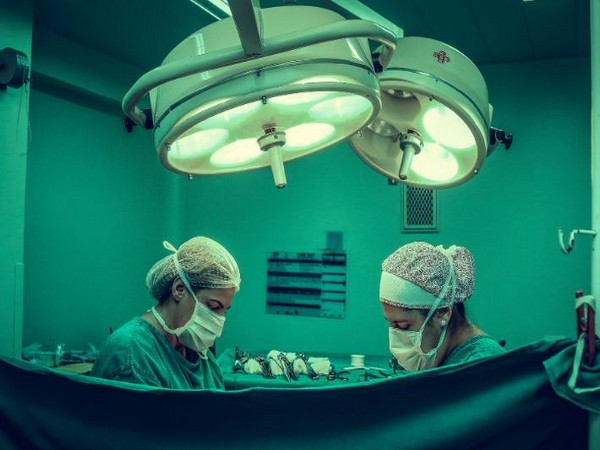
Representative image

New Delhi [India], July 25 (ANI): Doctors recently treated a 51-year-old patient suffering from a recurrent chemo-resistant carcinoma in his trachea by using a Y-shaped tracheal stent. The patient had a few days or weeks to live but stenting prolonged life.
The patient's carcinoma extended to the carina (tracheal bifurcation) and involved the right upper lobe. A team of doctors, led by Dr Vikas Maurya, Director and Head of Department, Pulmonology, Fortis Hospital Shalimar Bagh performed the stenting procedure within a span of 30 minutes, extending the life of the patient.
Previously, the same patient had sought treatment in four different hospitals before presenting to Fortis Hospital Shalimar Bagh. On evaluation, it was determined that he has a recurrent chest infection, shortness of breath, and haemoptysis.
Despite undergoing chemotherapy, the tumour continued to grow, and the lumen (air passage) was getting narrower on account of the same, making it difficult for the patient to breathe. This gave rise to further infection, with blood collecting and oozing from the site.
Talking about the treatment, Dr Vikas Maurya, Director and HOD, Pulmonology, Fortis Hospital, Shalimar Bagh, said, "The case was complicated as we could not treat the patient with chemotherapy right away as it was a chemo-resistant tumour and had infection as well. Also, patient and family didn't want any general anaesthesia being given in operation theatre due to advanced nature of the disease."
Explaining the procedure, he continued, "So, first we controlled the infection and then we put in a Y-shaped trachea-bronchial stent under conscious sedation, in our bronchoscopy suite, thereby covering the tracheal length, carina and upper portion of both right and left main stem bronchi, which covered the growth and after expanding increased the air passage making it smoother."
"It was a half an hour procedure that was carried out smoothly and through this, we have successfully prolonged the patient's life, he could have otherwise died in few days to weeks due to airway obstruction caused by increasing tracheal cancer growth. The patient is doing fine now, breathing is comfortable, and has been coming to the hospital regularly for regular check-up and is on targeted therapy by Medical Oncologist," concluded Maurya.
Similar to this, in 2012, the Department of Surgical Oncology, Research Institute for Radiation Biology and Medicine, Hiroshima University, Hiroshima, Japan retrospectively analyzed the outcomes of airway stenting for esophageal cancer.
Nine patients who underwent airway stenting were reviewed during the study, with all the patients having poor respiratory status due to esophagorespiratory fistula and/or respiratory stenosis.
Researchers had retrospectively assessed the results of airway stenting as five grades of respiratory symptoms, regarding stent-related complications and clinical course and survival.
Another 2010 research by the Department of Respiratory Medicine, Nagoya Medical Center, Nagoya, Japan, which focused on double Y-stent placement for tracheobronchial stenosis, reported 2 cases of malignant disease who underwent double Y-stent placement on the involved carina between the right upper lobe bronchus and the bronchus intermedius as well as on the involved main carina as a unit. The procedure provided successful palliation. (ANI)


Get the App

What to Read Next

Science

Biomarker may predict response to immunotherapy in liver cancer

Biomarker may predict response to immunotherapy in liver cancer

According to a preclinical study conducted by Weill Cornell Medicine researchers, it may soon be feasible to detect whether individuals with hepatocellular carcinoma, a kind of liver cancer, may benefit from immunotherapy.

Read More
Science

Bacterial vaccine demonstrates potential as cancer treatment

Bacterial vaccine demonstrates potential as cancer treatment

Columbia researchers developed probiotic bacteria that train the immune system to eliminate cancer cells, paving the way for a new class of cancer vaccinations that take advantage of bacteria's innate tumour-targeting abilities. These microbial cancer vaccines can be tailored to each person's specific original tumour and metastases, perhaps preventing future recurrences.

Read More
Science

Study discovers how special immune cells stop metastatic cancer

Study discovers how special immune cells stop metastatic cancer

The majority of cancer deaths are caused by metastatic disease, which occurs when cancer spreads from the primary tumour to other areas of the body. and researchers understand how cancer cells escape the primary location to seed new tumours, it is unclear why some cancer cells produce new tumours decades later and others do not.

Read More
Science

Study: New imaging method accurately detects kidney cancer

Study: New imaging method accurately detects kidney cancer

A recent study conducted by UCLA Health Jonsson Comprehensive Cancer Center researchers found that new, non-invasive imaging technology can detect clear-cell renal cell carcinoma, the most common kind of kidney cancer.

Read More
Science

Researchers find treatment for a cause of pregnancy loss

Researchers find treatment for a cause of pregnancy loss

Approximately 20 per cent of women, who have recurrent pregnancy loss, test positive for a particular antibody that attacks the mother's own body.

Read More
Science

Study finds how cancer develops when immune system fails

 Study finds how cancer develops when immune system fails

It has been suggested that the immune system is unable to eradicate invasive tumour cells by referring to cancer as "a wound that does not heal."

Read More
Science

Fossil study finds how sea level changes shaped early life

Fossil study finds how sea level changes shaped early life

A newly developed timeline of early animal fossils suggests a relationship between sea level fluctuations, variations in marine oxygen, and the appearance of the earliest ancestors of present-day animals.

Read More
Science

Study finds how new blood test helps improve cancer treatments

Study finds how new blood test helps improve cancer treatments

The likelihood that treatment will be successful for cancer increases with early detection. Almost every kind of cancer is covered by this. Evaluating the advantages and disadvantages of each type of therapy on an individual basis and keeping a regular eye on treatment outcomes are also essential components of effective patient care.

Read More
Science

Study gives more insight into type 2 diabetes

Study gives more insight into type 2 diabetes

Having high fasting glucose levels is one of the most perplexing characteristics of type 2 diabetes mellitus patients.

Read More
Science

New therapeutic targets to fight against type 2 diabetes

New therapeutic targets to fight against type 2 diabetes

The fact that individuals with type 2 diabetes have elevated fasting glucose levels is among the most perplexing factors for them. This is due to the fact that in these insulin-resistant individuals, the liver produces glucose, a process that still raises many unanswered issues for scientists.

Read More
Home About Us Our Products Advertise Contact Us Terms & Condition Privacy Policy

Copyright © aninews.in | All Rights Reserved.
