

ADD ANI AS A TRUSTED SOURCE
googleads
ANI Logo
Menu
Science

Parasite strain from cats killing sea otters

Washington D.C. [USA], Aug 24 (ANI): Researchers have identified that infection by land-based protozoan parasites such as Toxoplasma and related parasites that come from domestic cats are common causes of illness and death of southern sea otters.

ANI Aug 24, 2019 14:16 IST googleads

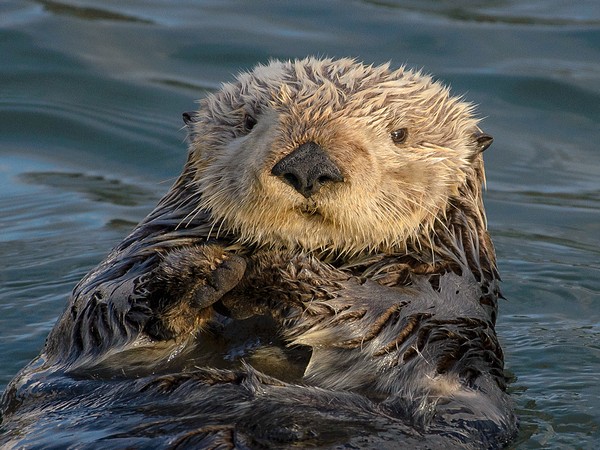
Representative image

Washington D.C. [USA], Aug 24 (ANI): Researchers have identified that infection by land-based protozoan parasites such as Toxoplasma and related parasites that come from domestic cats are common causes of illness and death of southern sea otters.
The study, published in the journal, 'Proceedings of the Royal Society B,' marked the first time a genetic link has been clearly established between the Toxoplasma strains in felid hosts and parasites causing fatal disease in marine wildlife.
"This is decades in the making. We now have a significant link between specific types of the parasite and the outcome for fatal toxoplasmosis in sea otters. We are actually able to link deaths in sea otters with wild and feral cats on land," said corresponding author Karen Shapiro, an associate professor with the UC Davis School of Veterinary Medicine and its One Health Institute.
Wild and domestic cats are the only known hosts of Toxoplasma, in which the parasite forms egglike stages, called oocysts, in their faeces. Shapiro led the initial effort to show how oocysts accumulate in kelp forests and are taken up by snails, which are eaten by sea otters.
For this study, the authors characterised Toxoplasma strains for more than 100 stranded southern sea otters examined by the CDFW between 1998 and 2015.
CDFW Veterinary Pathologist Melissa Miller assessed the otters for Toxoplasma as a primary or contributing cause of death.
The scientists compared pathology data with the parasite strains found in sea otters and nearby wild and domestic cats to identify connections between the disease-causing pathogen and its hosts.
The study's results highlight how infectious agents like Toxoplasma can spread from cat faeces on land to the sea, leading to detrimental impacts on marine wildlife.
Southern sea otters are among the most intensely studied marine mammals in California because they are a threatened species and an iconic animal for the state.
They live within just a few hundred meters of the coastline, allowing for the close observation that enables a wealth of scientific data.
Previous research showed that up to 70 per cent of stranded southern sea otters were infected with Toxoplasma, yet the infection becomes fatal for only a fraction of them.
Shapiro noted that Toxoplasma can also affect other wildlife species, but there are more robust data for the otters.
"Toxoplasma is one heavily studied pathogen that we care about, but there are many other viruses and bacteria that are on land and being flushed to the ocean that we probably aren't aware of yet," Shapiro said.
People can help reduce the spread of Toxoplasma by keeping their cats inside and disposing of cat faeces in a bag in the trash, not outdoors or in the toilet because wastewater treatment is not effective in killing oocysts. (ANI)

Get the App

What to Read Next

Science

Fossil study finds how sea level changes shaped early life

Fossil study finds how sea level changes shaped early life

A newly developed timeline of early animal fossils suggests a relationship between sea level fluctuations, variations in marine oxygen, and the appearance of the earliest ancestors of present-day animals.

Read More
Science

Rising sea levels may lead to more methane emitted from wetlands

Rising sea levels may lead to more methane emitted from wetlands

Global warming is causing sea levels to rise, which is altering ecosystems. Scientists assumed that the tidal wetlands present in estuaries could create less methane, a strong greenhouse gas because the increased influx of seawater renders these habitats less hospitable to methane-producing microorganisms.

Read More
Science

Warming, deep-sea mining cause stress in midwater animals

Warming, deep-sea mining cause stress in midwater animals

In the scientific journal Nature Communications, a recent study headed by scientists at the GEOMAR Helmholtz Centre for Ocean Research Kiel offers the first insights into the stress response of a deep pelagic jellyfish to ocean warming and sediment plumes caused by deep-sea mining.

Read More
Science

Scientists detect sea star hybridization in North Atlantic Ocean

Scientists detect sea star hybridization in North Atlantic Ocean

In the chilly waters of the North Atlantic Ocean, scientists have long speculated that two kinds of sea stars—commonly known as starfish—found along the rocky coastlines of Europe and North America may have interbred. Hybrid starfish are already present and prospering along the coasts of New England and the Canadian Maritimes, according to freshly analysed genomic data.

Read More
Science

Study sheds more light on 'Atlantification' of Arctic Ocean

Study sheds more light on 'Atlantification' of Arctic Ocean

Researchers have discovered the source of the Arctic Ocean's sea ice decline. The findings indicate that stronger declines in sea ice will occur when an atmospheric feature known as the Arctic dipole reverses itself in its recurring cycle.

Read More
Science

New study explains 'Atlantification' of the Arctic Ocean

New study explains 'Atlantification' of the Arctic Ocean

Researchers have discovered the cause of the Arctic Ocean sea ice decrease since 2007. The results suggest that when an atmospheric phenomenon known as the Arctic dipole reverses itself in its periodic cycle, there will be more pronounced drops in sea ice.

Read More
Science

Reefs can help revive aquatic life in waters that are in danger

Reefs can help revive aquatic life in waters that are in danger

Researchers have demonstrated that sinking fruit trees that have been cut down into the sea is an inexpensive and efficient approach to generating new reefs and increasing the variety and number of marine life in the area.

Read More
Science

Study finds how oceans release microplastics into atmosphere

Study finds how oceans release microplastics into atmosphere

Microplastic waste can be discovered in the marine environment even at far-off places in the world. According to research led by Dr Barbara Scholz-Bottcher of the University of Oldenburg, these tiny particles originate on land but are also released back into the atmosphere by the sea.

Read More
Science

Microplastics are released into the atmosphere by oceans

Microplastics are released into the atmosphere by oceans

Even in remote parts of the world, microplastic particles can be found in the marine environment. These tiny particles originate on land but are also re-emitted into the atmosphere by the sea, according to a study led by Dr Barbara Scholz-Böttcher of the University of Oldenburg.

Read More
Science

Categorization of cats likely to remain problematic: Study

Categorization of cats likely to remain problematic: Study

Experts have warned that the categorization of domestic and wild cats will likely remain problematic for the foreseeable future, endangering current efforts to protect and restore native biodiversity.

Read More
Home About Us Our Products Advertise Contact Us Terms & Condition Privacy Policy

Copyright © aninews.in | All Rights Reserved.




