

ADD ANI AS A TRUSTED SOURCE
googleads
ANI Logo
Menu
Science

Old newspapers can be used to grow carbon nanotubes: Study

Washington D.C. [USA], Nov 24 (ANI): Old newspapers are the solution towards providing a cheap and green solution for the bulk production of single-walled carbon nanotubes, suggest researchers.

ANI Nov 24, 2019 18:50 IST googleads

Representative Image

Washington D.C. [USA], Nov 24 (ANI): Old newspapers are the solution towards providing a cheap and green solution for the bulk production of single-walled carbon nanotubes, suggest researchers.
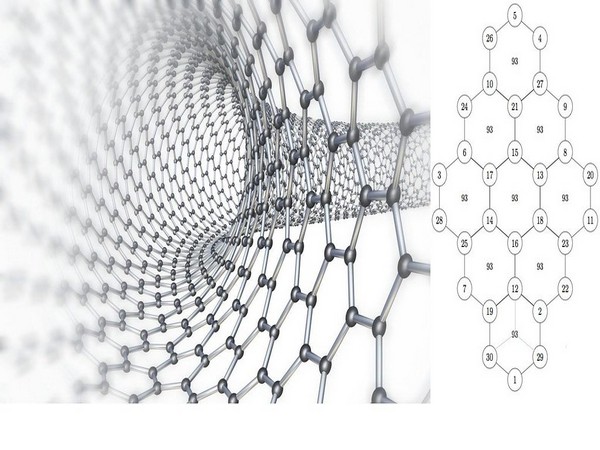
Carbon nanotubes are tiny molecules with incredible physical properties that can be used in a huge range of things, such as conductive films for touchscreen displays, flexible electronics, fabrics that create energy and antennas for 5G networks.
The new study, published in the -- MDPI Journal C -- details the research experiments carried out in producing carbon nanotubes which could have the potential to solve some of the problems associated with their large scale production such as the high cost of preparing a suitable surface for chemical growth and the difficulties in scaling up the process, as only single surface growth processes have been previously available.
The research team discovered that the large surface area of newspapers provided an unlikely but ideal way to chemically grow carbon nanotubes.
"Newspapers have the benefit of being used in a roll-to-roll process in a stacked form making it an ideal candidate as a low-cost stackable 2D surface to grow carbon nanotubes," said the lead researcher Bruce Brinson.
However, not all newspaper is equally good -- only newspaper produced with sizing made from kaolin, which is china clay, resulting in carbon nanotube growth.
"Many substances including talc, calcium carbonate, and titanium dioxide can be used in sizing in papers which act as a filler to help with their levels of absorption and wear. However it was our observation that kaolin sizing, and not calcium carbonate sizing, showed us how the growth catalyst, which in our case was iron, is affected by the chemical nature of the substrate," said co-author Varun Shenoy Gangoli.
"While there has been previous research that shows that graphene, carbon nanotubes and carbon dots can be been synthesised on a variety of materials, such as food waste, vegetation waste, animal, bird or insect waste and chemically grown on natural materials, to date, this research has been limited," said ESRI Director Andrew Barron, also a professor at Rice University in the USA.
"With our new research, we have found a continuous flow system that dramatically reduces the cost of both substrate and post-synthesis process which could impact on the future mass manufacture of single-walled carbon nanotubes," added Barron. (ANI)

Get the App

What to Read Next

Science

Microbes help detoxify our atmosphere, says study 

Microbes help detoxify our atmosphere, says study 

Melbourne researchers have uncovered important new information on how microbes absorb huge amounts of carbon monoxide (CO) and assist in reducing levels of this deadly gas.

Read More
Science

Memory problems in old age may be linked to key enzyme: Study

Memory problems in old age may be linked to key enzyme: Study

Everyone experiences occasional episodes of forgetfulness, particularly as they age. It's not only that fresh material is hard for older folks to remember. Moreover, when new information becomes available, they find it more difficult to change those thoughts. Nevertheless, not much is understood about the processes that underlie memory updating and how they malfunction as we age.

Read More
Science

Chemists design novel method for generating sustainable fuel

Chemists design novel method for generating sustainable fuel

Tuning this environment by controlling how the CoPc catalyst was distributed on the carbon nanotube surface allowed carbon dioxide to be as much as eight times more likely to produce methanol, a discovery that could increase the efficiency of other catalytic processes and have a widespread impact on other fields, said Robert Baker, co-author of the study and a professor in chemistry and biochemistry at The Ohio State University.

Read More
Science

Plastic waste can be converted to electronic devices

Plastic waste can be converted to electronic devices

The University of Delaware and the Argonne National Laboratory have developed a chemical process that converts Styrofoam into the high-value conducting polymer PEDOT:PSS. The researchers show how improved plastic trash may be successfully integrated into functional electronic devices such as silicon-based hybrid solar cells and organic electrochemical transistors.

Read More
Science

Climate policies and children's health

Climate policies and  children's health

A recent study suggests that efforts to limit carbon dioxide (CO2) emissions from motor vehicles, along with investments in electric vehicles and public transit, would reduce air pollution and have a significant impact on children's health. They'd also save money.

Read More
Science

Study reveals air pollution hides increases in rainfall

Study reveals air pollution hides increases in rainfall

We know that greenhouse gas emissions, such as carbon dioxide, should increase rainfall. The emissions warm the atmosphere, resulting in a one-two punch: warmer oceans make it easier for water to evaporate, and warmer air can store more water vapour, allowing more moisture to fall as rain. However, for long of the twentieth century, the data did not clearly reveal a rise in precipitation.

Read More
Science

Study gives insight into significance of genetic sequencing

Study gives insight into significance of genetic sequencing

Brazilian researchers described the case of a nine-year-old boy admitted to the hospital with multiple symptoms and overlapping conditions that made diagnosis difficult, including short stature, thin tooth enamel (dental enamel hypoplasia), moderate mental deficiency, speech delay, asthma, mildly altered blood sugar, and a history of recurring infections in infancy.

Read More
Science

Rising sea levels may lead to more methane emitted from wetlands

Rising sea levels may lead to more methane emitted from wetlands

Global warming is causing sea levels to rise, which is altering ecosystems. Scientists assumed that the tidal wetlands present in estuaries could create less methane, a strong greenhouse gas because the increased influx of seawater renders these habitats less hospitable to methane-producing microorganisms.

Read More
Science

Study finds way to produce high-purity boron nitride nanotubes

Study finds way to produce high-purity boron nitride nanotubes

Rice University researchers have developed a new method for producing high-purity boron nitride nanotubes. These hollow cylindrical structures can withstand temperatures up to 900 degrees Celsius (~1652 Fahrenheit) and are stronger than steel by weight.

Read More
Science

Ice age may help predict oceans’ response to global warming

Ice age may help predict oceans’ response to global warming

A team of scientists led by a Tulane University oceanographer discovered that deposits deep beneath the ocean floor provide a means to estimate ocean oxygen levels and their relationship to carbon dioxide in the Earth's atmosphere during the last ice age, which ended more than 11,000 years ago.

Read More
Home About Us Our Products Advertise Contact Us Terms & Condition Privacy Policy

Copyright © aninews.in | All Rights Reserved.


