New view of oldest light adds a twist to debate over the Universe's Age
Santiago [Chile], July 17 (ANI): From a mountain high in Chile's Atacama Desert, astronomers with the National Science Foundation's Atacama Cosmology Telescope (ACT) have taken a fresh look at the oldest light in the universe.
ANI
Jul 17, 2020 08:19 IST

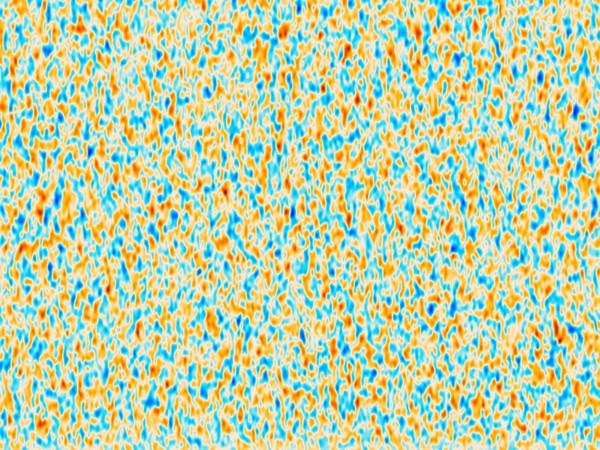
Santiago [Chile], July 17 (ANI): From a mountain high in Chile's Atacama Desert, astronomers with the National Science Foundation's Atacama Cosmology Telescope (ACT) have taken a fresh look at the oldest light in the universe.
Their new observations plus a bit of cosmic geometry suggest that the universe is 13.77 billion years old, give or take 40 million years.
The new estimate matches the one provided by the standard model of the universe and measurements of the same light made by the Planck satellite. This adds a fresh twist to an ongoing debate in the astrophysics community, said Simone Aiola, first author of one of two new papers on the findings posted to arXiv.org.
In 2019, a research team measuring the movements of galaxies calculated that the universe is hundreds of millions of years younger than the Planck team predicted. That discrepancy suggested that a new model for the universe might be needed and sparked concerns that one of the sets of measurements might be incorrect.
"Now we've come up with an answer where Planck and ACT agree. It speaks to the fact that these difficult measurements are reliable," said Aiola, a researcher at the Flatiron Institute's Center for Computational Astrophysics in New York City.
The age of the universe also reveals how fast the cosmos is expanding, a number quantified by the Hubble constant. The ACT measurements suggest a Hubble constant of 67.6 kilometres per second per megaparsec. That means an object 1 megaparsec (around 3.26 million light-years) from Earth is moving away from us at 67.6 kilometres per second due to the expansion of the universe.
This result agrees almost exactly with the previous estimate of 67.4 kilometres per second per megaparsec by the Planck satellite team, but it's slower than the 74 kilometres per second per megaparsec inferred from the measurements of galaxies.
"I didn't have a particular preference for any specific value -- it was going to be interesting one way or another," said Steve Choi of Cornell University, first author of the other paper posted to arXiv.org.
"We find an expansion rate that is right on the estimate by the Planck satellite team. This gives us more confidence in measurements of the universe's oldest light," added Choi.
The close agreement between the ACT and Planck results and the standard cosmological model is bittersweet, Aiola said.
"It's good to know that our model right now is robust, but it would have been nice to see a hint of something new," he said.
The disagreement with the 2019 study of the motions of galaxies maintains the possibility that unknown physics may be at play, he says.
Like the Planck satellite, ACT peers at the afterglow of the Big Bang. This light, known as the cosmic microwave background (CMB), marks a time 380,000 years after the universe's birth when protons and electrons joined to form the first atoms. Before that time, the cosmos was opaque to light.
If scientists can estimate how far light from the CMB travelled to reach Earth, they can calculate the universe's age. That's easier said than done, though. Judging cosmic distances from Earth is hard.
So instead, scientists measure the angle in the sky between two distant objects, with Earth and the two objects forming a cosmic triangle. If scientists also know the physical separation between those objects, they can use high school geometry to estimate the distance of the objects from Earth.
Subtle variations in the CMB's glow offer anchor points to form the other two vertices of the triangle. Those variations in temperature and polarization resulted from quantum fluctuations in the early universe that got amplified by the expanding universe into regions of varying density. (The denser patches would go on to form galaxy clusters.)
Scientists have a strong enough understanding of the universe's early years to know that these variations in the CMB should typically be spaced out every billion light-years for temperature and half that for polarization. (For scale, our Milky Way galaxy is about 200,000 light-years in diameter.)
ACT measured the CMB fluctuations with unprecedented resolution, taking a closer look at the polarization of the light.
"The Planck satellite measured the same light, but by measuring its polarization in higher fidelity, the new picture from ACT reveals more of the oldest patterns we've ever seen," said Suzanne Staggs, ACT's principal investigator and the Henry deWolf Smyth Professor of Physics at Princeton University.
As ACT continues making observations, astronomers will have an even clearer picture of the CMB and a more exact idea of how long ago the cosmos began. The ACT team will also scour those observations for signs of physics that doesn't fit the standard cosmological model.
Such strange physics could resolve the disagreement between the predictions of the age and expansion rate of the universe arising from the measurements of the CMB and the motions of galaxies.
"We are continuing to observe half the sky from Chile with our telescope. As the precision of both techniques increases, the pressure to resolve the conflict will only grow," said Mark Devlin, ACT's deputy director and the Reese W. Flower Professor of Astronomy and Astrophysics at the University of Pennsylvania. (ANI)
Get the App