 हिंदी खबर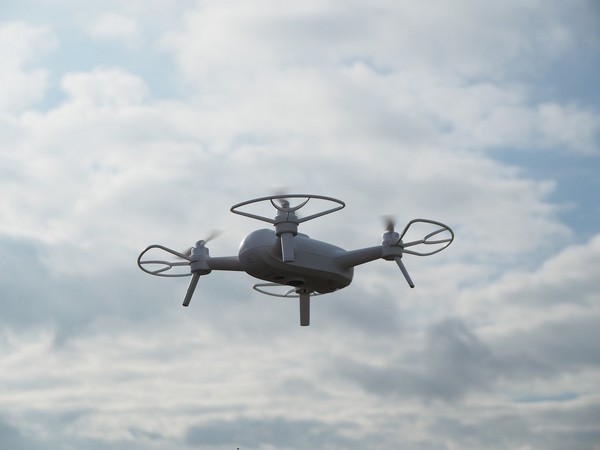

Washington D.C. [USA], Oct 26 (ANI): Using new technology, researchers have discovered a computer vision system capable of spotting survivors in disaster zones from a distance of 4 to 8 metres.
Autonomous drone cameras have been trialled for several years to detect signs of life in disaster zones. Now, in a world-first study, researchers from Adelaide and Iraq have taken this a step further.
As long as the upper torso of a human body is visible, the cameras can pick up the tiny movements in the chest cavity that indicate a heartbeat and breathing rate. Unlike previous studies, the system doesn't rely on skin colour changes or body temperature.
The breakthrough is a more accurate means of detecting signs of life, the researchers from the University of South Australia and Middle Technical University in Baghdad said.
UniSA Professor Javaan Chahl and Dr Ali Al-Naji, the study leaders, made global headlines in 2017 when they showed for the first time that a camera on a drone could measure heart and respiratory rates.
At the time, their technique was based on detecting changes in the human skin tone and the camera needed to be within three metres of the person.
The technique was also limited to one pose where the subject stood in front of the drone, not lying prone as it would be in a disaster zone.
Other techniques using thermal cameras can only detect signs of life where there is a contrast between body temperature and the background, making this difficult in warm environments.
Thermal cameras are also unreliable where people are wearing insulated clothing, according to the study published in Remote Sensing.
"This study, based on cardiopulmonary motion, is the first of its type and was performed using eight people (four of each gender) and a mannequin, all lying on the ground in different poses," Prof Chahl said.
"Videos were taken of the subjects in daylight, up to eight metres away, and in relatively low wind conditions for one minute at a time, with the cameras successfully distinguishing between the live bodies and the mannequin," added Prof Chahl.
He said the technology could be used to look for signs of life where time is critical, helping first responders in their search to find survivors in disaster zones.
This system would be ideal for many situations, including earthquakes and floods, nuclear disasters such as Fukushima, chemical explosions, bio attacks, mass shootings, combat search, and rescue or where a plane has crashed in a remote area.
Current ground-based operations for rescuing survivors in disaster zones include using rescue robots and rescue dogs, which are expensive and hampered by restricted access.
He said the motion-based system needs additional testing in adverse weather conditions and to ensure accurate readings when bodies are partially obscured. (ANI)
New technique in drone camera helps separate living from the dead
ANI | Updated: Oct 26, 2019 22:34 IST




